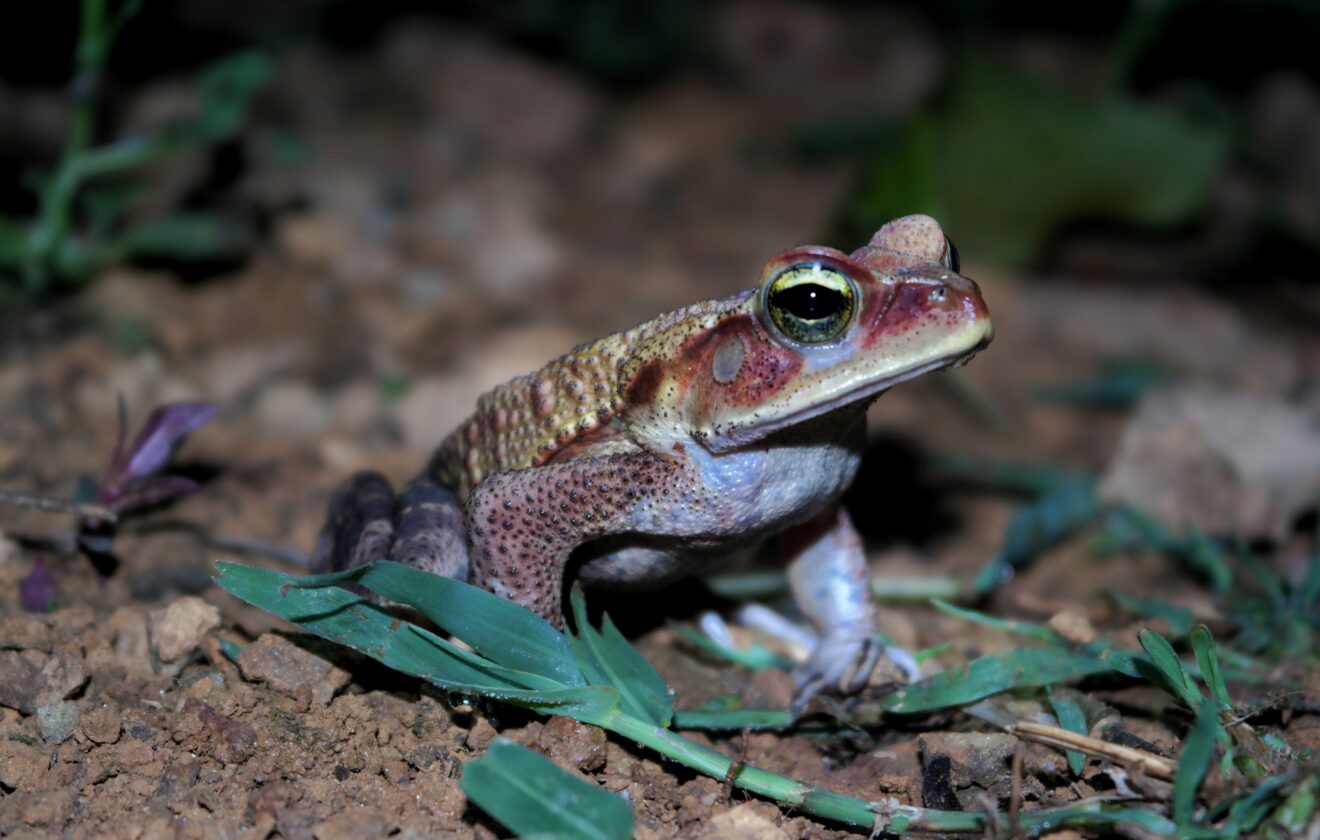
- Unveiling the Secrets of Rhinella crucifer: Brazil's Enigmatic Cross-marked Toad
Unveiling the Secrets of Rhinella crucifer: Brazil’s Enigmatic Cross-marked Toad#
Amidst the lushness of Brazil’s Atlantic Forest, under mottled rays of sunlight gently passing through layers of emerald green, dwells a remarkable yet seldom-seen amphibian—Rhinella crucifer. Better known as the cross-marked toad, Rhinella crucifer weaves together echoes of prehistoric lineage and modern ecological significance in a quiet yet remarkable symphony. Its peculiar name, derived from the Latin “crucifer,” meaning “cross-bearing,” hints intriguingly at this creature’s distinctive markings, designed by nature’s brush itself.
At first glance modest and unassuming, Rhinella crucifer harbors a captivating depth to its biology, behavior, and ecological role. Serving as a critical cog in the complex machinery of rainforest ecosystems, this unique amphibian species captures both scientist and nature enthusiast alike. Join us on a journey deep into Brazil’s hidden realms as we unwrap the fascinating natural history and ecological importance of Rhinella crucifer, the wondrous cross-marked toad.
Taxonomy and Classification#
Belonging to the order Anura, Rhinella crucifer is neatly classified within the family Bufonidae—fittingly known as the true toads. Known previously under the genus Bufo, modern phylogenetic studies led to a thoughtful rearrangement of taxonomic relationships, placing it securely within Rhinella, a genus comprising numerous robust-bodied toad species renowned for their intricate adaptations to tropical and subtropical ecosystems. The cross-marked toad’s formal and scientifically recognized title, Rhinella crucifer, aptly reflects the distinctive ‘cross’ pattern that adorns its textured skin.
This species shares close evolutionary ties with Rhinella ornata and Rhinella schneideri, among others, often inhabiting similar habitats yet exhibiting distinct ecological niches to minimize direct competition. Such finely-tuned coexistence underlines the subtle yet critical adaptations Rhinella crucifer developed during thousands of generations.
A Journey Through Its Natural Habitat#
Rhinella crucifer is a true Brazilian endemic, its geographical heartlands nestled within the rich biodiversity of the Atlantic Forest ecoregion. Spanning from the southern Bahia state through Espírito Santo, Rio de Janeiro, São Paulo, and all the way southwards toward Paraná, this species occupies humid lowlands, coastal regions, and mountainous terrains enveloped by lush, evergreen canopies.
In Harmony with the Atlantic Rainforest#
Picturing their habitat evokes imagery of glistening greenery, moss-covered tree trunks, and damp leaf-litter carpets whose sumptuous depth shelters countless unseen lives. Within this microcosm, Rhinella crucifer expertly maneuvers. Unlike many amphibians that favor aquatic habitats, these hardy toads opt for terrestrial life, frequently glimpsed ambling leisurely through leaf litter or lurking inconspicuously under logs, stones, and fallen branches—moist sanctuaries that provide safety from predators and prevent moisture loss.
Each detail of this habitat perfectly matches Rhinella crucifer’s nuanced adaptations. Subtle moisture gradients suit their sensitive skin, allowing controlled hydration necessary for survival. These habitats also offer abundant prey, from insects to small arthropods—the primary sustenance that fuels the daily rhythms of this unobtrusive amphibian.
Physical Portrait of Rhinella crucifer#
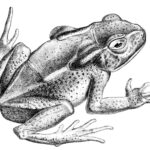
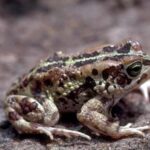
Rhinella crucifer wears a subtle elegance, its relatively modest size typically ranging between 6 to 10 cm long. Its robust, likeably stout form embodies the Bufonid trademark—strong fore and hind limbs built for crawling rather than leaping great distances. Their warty skin, though stereotypically rough to the observer’s eye, serves as an adaptable armor against physical harm and water loss.
A Mark of Distinction: The Cross Patterning#
The cross-marked toad’s name derives unmistakably from the vivid pattern woven across its back: intersecting dark lines forming a distinctly visible ‘cross’ or cruciform design. This unique patterning exhibits countless subtle hues, varying considerably among individuals—ranging from earthy browns and reddish shades to slate-grey tones. These impressive color complexities not only impress observers but also deliver critical survival advantages, allowing for exquisite camouflage against the mosaic floor of Brazil’s rainforest.
Hidden Defenses#
Upon close examination of its skin, careful observers may notice large parotoid glands positioned behind its eyes. These glands, characteristic of the Bufonidae family, secrete a potent toxin when the toad feels threatened. Although relatively mild in Rhinella crucifer compared to other toxic species, this defensive secretion serves as a significant deterrent against would-be predators, safeguarding its delicate existence within the perilous realms of tropical habitats.
Behavioral Insights and Life Cycle#
Far from simply wandering through its territory, Rhinella crucifer conducts an intricately choreographed life, from foraging strategies and reproductive cycles to unique survival behaviors. Despite their unassuming appearance, these amphibians provide insight into complex biological rhythms deeply entwined with their environment.
Nocturnal Wanderers#
Beneath the canopy of darkness, this toad firmly claims the night as its domain. Its large, expressive eyes, well-equipped for twilight, scan the leaf litter carefully. Hunting strategies are patient yet precise, relying on keen senses to detect movements indicative of prey. Rhinella crucifer generally feeds on ants, beetles, spiders, and other terrestrial arthropods abundant within the forest understory, both controlling insect populations and indicating environmental balance.
The Chorus at Dusk: Breeding and Courtship#
Seasonal rains signal Rhinella crucifer’s annual cycle, prompting the onset of reproductive behavior. Males converge around quiet rainforest streams, ponds, or temporarily flooded areas, vocalizing their unique chorus—a soft, trilling summons that resonates hauntingly through moonlit foliage. Females, seduced by this rhythmic melody, approach cautiously.
Mating pairs engage in amplexus, a behavior where the male firmly grips the female—positioning himself to fertilize eggs externally as they are released, creating enchanting scenes beneath delicate patches of moonlight. Clusters of gelatinous eggs, numbering into the hundreds, soon adorn submerged vegetation, a delicate yet critical step in perpetuating their species. These hatch into resilient tadpoles, which face a perilous early life carefully hidden beneath aquatic plants, rapidly developing into fully formed juveniles who later venture pragmatically onto terrestrial habitats to begin their solitary adult journeys.
Ecological Significance and Connections#
Rhinella crucifer quietly demonstrates ecological importance extending far beyond individual life-stories, anchoring critical predator-prey relationships within their habitats. Acting as both predator to insects and prey to a host of larger creatures—birds, small mammals, reptiles—their population health can serve as an environmental barometer, indicating the general well-being of their ecosystem.
Challenges to Survival and Conservation Efforts#
Despite thriving discreetly, Rhinella crucifer faces mounting threats inherent to habitat fragmentation and destruction, climate change shifts, and localized pollution. The Brazilian Atlantic Forest, once covering vast stretches along southeastern Brazil, has been reduced drastically—its precious remnants threatened by urban expansion, agriculture intensification, and illegal logging.
Listed by the IUCN Red List of Threatened Species as “Least Concern” due to broad habitat tolerance, this toad still struggles locally in areas where habitat corridors narrow dangerously. Conservationists and scientists actively monitor population trends and push fiercely to protect and reconnect fragmented habitats—actions crucial to continual population stability.
Cultural and Scientific Symbolism#
Symbolically, frogs and amphibians captivate human imagination and culture worldwide. Indigenous communities and local inhabitants frequently interpret toads as symbols of rainfall and renewal, echoing deeply woven nature-human relationships. Although Rhinella crucifer specifically has not yet been highlighted for unique cultural importance, its presence and enigmatic beauty contribute significantly to the larger tapestry of Brazilian biodiversity champions.
Scientifically, amphibians like Rhinella crucifer remain frontier species for understanding environmental change. Ongoing research involving bioindicators highlights these creatures’ sensitivity to ecological shifts, offering humans advanced warnings about ecosystem imbalances.
An Invitation to Conservation Action#
The cross-marked toad, Rhinella crucifer, silently invites us to pause—a poignant reminder of interconnected ecosystems balanced delicately upon our collective shoulders. Through dedicated attention and commitment to environmental stewardship, we ensure the continued flourishing of both this enigmatic species and the vibrant ecosystems it inhabits.
Reflect upon and embrace the world of Rhinella crucifer, understanding their ecological story is ultimately our story. Join conservationists, educators, and nature enthusiasts in protecting spaces and enhancing biodiversity, ensuring both renowned and humble forest dwellers can thrive for generations to come.