Rhinella arborescandens: The Enigmatic Tree-Climbing Toad of the Andean Forests#
High in the misty, verdant embrace of the Andean cloud forests, lives a peculiar amphibian who defies expectations and puzzles herpetologists alike. Nestled among draping bromeliads and subtly swaying ferns, Rhinella arborescandens, an arboreal toad unlike most of its terrestrial kin, easily traverses branches and undergrowth. Its very existence shatters deeply entrenched beliefs of toads as slow-moving, ground-bound animals.
Commonly referred to as the tree-climbing toad, Rhinella arborescandens’s unexpected arboreal lifestyle offers a fascinating glimpse into amphibian adaptation and diversity. Belonging to the family Bufonidae, it carries the hallmark traits that define true toads—thick, warty skin and parotoid glands—but with a twist: it prefers life elevated off the forest floor.
Taxonomy and Classification#
Rhinella arborescandens belongs firmly within the family Bufonidae, a diverse amphibian family comprising “true toads.” This unique species was first described scientifically by Duellman & Schulte in 1992. Initially categorized under the genus Bufo, recent taxonomic shifts now place this intriguing frog in the genus Rhinella—a large and diverse genus of South American toads exhibiting remarkable adaptability.
Within this genus, the closely related species include Rhinella margaritifera and Rhinella festae. Despite sharing genetic lineages, Rhinella arborescandens distinguishes itself through unique behavioral adaptations—primarily its arboreal habits, a lifestyle seldom observed among its Rhinella cousins. Such traits not only fuel scientific curiosity but also underline the evolutionary plasticity of amphibians across the Andean ecosystems.
Natural Habitat#
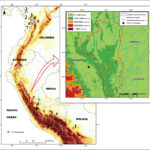
Rhinella arborescandens is restricted geographically to the high-altitude Andean forests of South America, specifically within the dense montane cloud forests of Peru. These habitats, typically ranging from 1,500 to 2,700 meters above sea level, are characterized by perpetual moisture, low-lying mists, and cool, stable temperatures. Such environments offer abundant moss-covered trees, epiphytes, and intricate vegetation structures—ideal conditions for this unique amphibian’s lifestyle.
A Life Among the Trees#
Unlike their more familiar terrestrial cousins, these extraordinary toads exhibit a striking preference for arboreal habitats. Often discovered perched on low branches, under leafy epiphytes, or camouflaged amidst mossy bark, Rhinella arborescandens silently navigates the treetops. Researchers frequently find them nestled within bromeliads, whose waters provide critical microhabitats and refuge from predators.
The tree-climbing behavior of Rhinella arborescandens is deeply intertwined with its survival strategies. Elevated positions enable it to evade terrestrial predators, access a broader range of prey items, and exploit ecological niches unavailable to ground-dwelling species. In this moist, shadowy world of twisting branches and whispering leaves, the arboreal toad reigns quietly.
Physical Characteristics#
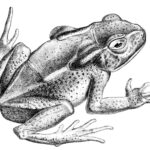
The appearance of Rhinella arborescandens expertly mirrors its arboreal environment. Averaging between 3.5 to 5 centimeters in length, this species boasts compact, robust bodies, a signature of Bufonidae. However, their limbs, longer and slightly more slender than most related toads, facilitate climbing and grasping branches. Their flexible toes showcase rudimentary pads, enhancing grip on slippery, moss-covered surfaces.
Adaptive Camouflage and Coloration#
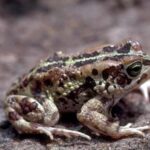
Camouflage plays a pivotal role in the tree-climbing toad’s daily survival. Rhinella arborescandens displays shades of muted greens, browns, and olive—perfectly harmonizing with the lichen-encrusted bark and shadowy vegetation that comprise their world. Intricate mottled patterns across their backs serve as a protective disguise, thwarting predatory birds, snakes, and mammals stalking through the canopy.
Their warty skin and pronounced parotoid venom glands—a hallmark characteristic of Bufonidae—act as both defensive warnings and chemical deterrents. Any predator brave enough to bite receives a bitter reminder of nature’s evolutionary prowess; the toad’s toxins induce discomfort, dissuading further attacks.
Behavior and Life Cycle#
Life in an elevated environment necessitates specific behavioral adaptations. Rhinella arborescandens pursues primarily nocturnal activities, emerging from daytime hiding spots only after dusk cloaks the forest. Amid hushed twilight, their low chirping calls permeate mist-laden air—signals between potential mates and asserting territory.
Feeding Habits#
Armed with excellent visual acuity in low-light conditions, Rhinella arborescandens deftly prowls the foliage, preying upon insects, small arthropods, and occasionally smaller amphibians. Insect larvae, moths, beetles, and ants constitute a staple of their protein-rich diet, effortlessly catching prey with swift, accurate tongue strikes. Such dietary habits position the arboreal toad as a critical insectivore, regulating prey populations and maintaining balanced ecosystems.
Reproductive Biology and Development#
The onset of the rainy season signals Rhinella arborescandens’s mating period, characterized by increased vocalizations and territorial displays. Females deposit gelatinous clutches of eggs in shallow pools formed within tree hollows or bromeliad tanks, marginally above the forest floor. Larvae hatch into aquatic tadpoles swiftly after rainfall, beginning their precarious developmental journey within suspended water habitats.
This microhabitat approach shields tadpoles from terrestrial predators. However, their period of vulnerability during development contributes to notably high mortality rates—a reality tempering population dynamics in these fragile ecosystems.
Ecological Role#
Rhinella arborescandens fills essential ecological niches within its forested home. As insectivores, they control populations of invertebrate herbivores, thus indirectly supporting plant health. Additionally, larvae and tadpoles provide crucial nourishment for arboreal predators, from small snakes to birds, signifying their interwoven role within the biodiverse canopy food web.
Their elevated habitat utilization positions them as potent bioindicators, reflecting environmental health of cloud forests. Changes in Rhinella arborescandens’s populations frequently foreshadow broader ecological shifts, offering scientists invaluable insights into climate and habitat stability.
Threats and Conservation Status#
Despite their apparent adaptability, Rhinella arborescandens’s specialized habitat requirements render the species notably vulnerable. Habitat degradation caused by agricultural expansion, deforestation, and logging severely fragments viable habitats, isolating populations amid shrinking forest patches. Altered precipitation patterns and warming temperatures, symptomatic of climate change, further complicate their reproductive efforts and overall survival.
Currently classified as Near Threatened by the International Union for Conservation of Nature (IUCN), dedicated research and conservation efforts grow increasingly necessary. Habitat protection programs, sustainable agriculture initiatives, and environmental awareness can safeguard forests—and their arboreal residents—from irreversible losses.
Cultural and Scientific Significance#
Within indigenous Andean cultures, amphibians often symbolize ecological purity and sensitivity. Rhinella arborescandens, though not yet deeply ingrained culturally, represents a growing opportunity for community-led conservation practices, achieving protection through local engagement and ecological education.
Scientifically, this species offers valuable insights into arboreal adaptations, evolutionary flexibility within the Bufonidae family, and amphibian responses to environmental stresses—essential topics for biodiversity conservation and evolutionary biology.
Conclusion#
The remarkable Rhinella arborescandens, arboreal toad of the Andean mists, reminds us that nature thrives on exception and innovation. As scientific study deepens our understanding, our connection grows stronger, encouraging stewardship and ecological guardianship. May their continued survival in the cloud forest canopy spur passionate conservation efforts, safeguarding biodiversity not only in Peru but across our entire interconnected planet.
We invite readers to explore, support wildlife organizations, and advocate for the protection of cloud forests. Awareness begins with fascination—but lasting change germinates within action.