Exploring Rhinella angeli: Secrets of the Amazon’s Enigmatic Toad#
Beneath the sheltered canopy of South America’s lush rainforests, hidden among moss-covered logs and emerald foliage, resides a creature both humble and extraordinary: the Rhinella angeli, or Angel’s Toad. While its modest appearance might not immediately capture attention from an untrained eye, this amphibian holds secrets that echo the rich complexity of its rainforest home. Rhinella angeli, belonging to the esteemed Bufo family of true toads, is a remarkable example of nature’s nuanced diversity. Despite being often overlooked in conservation dialogues, the story of this unique species compels us deeper into the intricate ecological dance that sustains their tropical habitats.
Named scientifically as Rhinella angeli (Gallardo, 1967), this toad has largely eluded public awareness, quietly influencing ecological rhythms behind the scenes. But do not mistake its subtlety for insignificance—within every wrinkle of its rugged skin and silent leap lies a narrative essential to understanding and protecting our planet’s fragile biodiversity.
Taxonomy and Classification#
The discovery and initial description of Rhinella angeli dates back to 1967 by renowned herpetologist José Gallardo. Classified within the Bufonidae family, this toad resides within the diverse genus Rhinella, home to many of Latin America’s fascinating amphibian species. Within this group, Rhinella angeli finds itself among a fascinating lineage, closely related to famous relatives such as Rhinella marina—the notorious cane toad—and Rhinella margaritifera, the crested forest toad. Yet Rhinella angeli is distinct, possessing traits uniquely adapted to its specific rainforest niche.
Scientists have long been fascinated with the adaptive divergence displayed by this genus, as Rhinella species showcase remarkable variance in coloration, size, and defensive strategies. Such adaptive radiations reveal the complex forces of evolution acting upon these amphibians, shaped meticulously over millennia by the ecosystems they inhabit.
Natural Habitat#
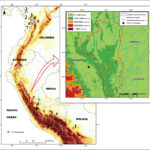
Tucked away in the moist lowland forests and tributary ecosystems of the Amazon basin, Rhinella angeli makes its home primarily within regions of southern Colombia, northern Peru, western Brazil, and eastern Ecuador. This frog exhibits a pronounced preference for terrestrial habitats, particularly favoring leaf litter environments on the forest floor or hiding among decaying logs and dense underbrush, where the humidity remains high and shelter ample.
This specific microhabitat provides Rhinella angeli with critical resources that perfectly align with its biological requirements, offering safety from predators and stable temperatures in an otherwise volatile rainforest climate. This species expertly exploits the layering of forest debris, as leaf litter and fallen logs nurture a colorful community of insects, arachnids, and smaller invertebrates, supplying the toad’s primary food sources. In these sheltered havens, the toads thrive, influencing local ecosystems in subtle yet profound ways.
Driven by seasonal rains and flooding patterns, Rhinella angeli carefully selects breeding sites—often quiet, shallow pools formed by rainfall or fluctuating streams. This dependency on forest stability makes it a crucial indicator species; shifts in amphibian populations often reflect larger environmental changes, warning scientists of habitat degradation and climate effects long before they become visible elsewhere.
Physical Characteristics#
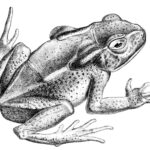
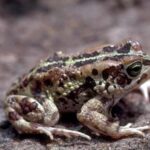
Taking closer inspection, the Rhinella angeli emerges as an intriguing subject of physical adaptation, blending functionality with aesthetic charm. Adult toads measure around 40 to 60 millimeters long, presenting sturdy, rounded bodies covered in the characteristic rough, warty texture of the Bufonidae family. Their skin displays a subtle palette of earthy browns, soft greens, and mottled patterns, allowing them to seamlessly blend within their leafy realm.
This cryptic coloration acts as the toad’s primary line of defense, granting camouflage and protection against sharp-eyed predators—from snakes and birds to small mammals. Meanwhile, rows of specialized glands known as parotoid glands line its neck region, secreting a mild yet important toxin that deters potential predators and microbial infections. Though modest compared to some highly toxic amphibians, these secretions perfectly complement their lifestyle, balancing protection and energy resource economy efficiently.
The toad’s body form also exhibits impressive evolutionary functionality. Strong, well-developed hind limbs facilitate short, effective jumps through dense leaf litter, while smaller forelimbs deftly maneuver tucked hideaways and narrow crevices. Remarkably adapted to terrestrial living, this species has evolved sturdy limbs and a robust build that allows swift escape or camouflage in challenging terrain.
Behavior and Life Cycle#
When night blankets the rainforest in velvety shadows, Rhinella angeli ventures forth in earnest. Under the cloak of darkness, these amphibians engage in meticulous nocturnal foraging, quietly scanning their environment for insect prey. Using sharp eyesight and a keen sense of movement triggered by vibrations on leaf litter surfaces, they masterfully hunt beetles, ants, spiders, and a diverse array of forest invertebrates. Their penchant for nocturnal excursions keeps them effectively hidden from daytime predators and competing daytime hunters.
Reproduction and Parental Care#
When seasonal rains descend upon their Amazonian homes, male toads vocalize boldly from their shaded spots, filling the nighttime rainforest air with harmonious mating calls. These soft, repetitive choruses attract females who, upon arriving, evaluate the strength and health of suitors through vocal qualities before engaging in courtship.
Egg-laying occurs in shallow pools or temporary puddles—a precarious yet necessary strategy, as such temporary aquatic refuges reduce threat from predatory fish or aquatic insects. Rhinella angeli invests considerable energy into securing suitable sites, typically hidden deep within habitat patches, providing optimal survival conditions for growing tadpoles.
Once laid, the embryo-filled eggs hatch within days, releasing clusters of small tadpoles adapted to quickly developing in ephemeral pools. With a life cycle precisely timed to the region’s rainy season, metamorphosis proceeds rapidly—allowing young frogs to leave the depths for terrestrial habitats just before waters recede entirely, demonstrating the delicate synchronization characterizing this species.
Ecological Role#
While Rhinella angeli exists quietly within its verdant surroundings, its ecological significance resonates loudly. Amphibians, including this humble species, perform essential roles within food webs. By consuming vast numbers of insects, they serve as natural pest controllers, directly benefiting plant communities, indirectly influencing mammal and bird populations dependent on plant health.
Meanwhile, these toads themselves become vital prey items within the Amazonian food chain, sustaining a diverse collection of snakes, predatory birds, and small mammals. As critical intermediate consumers, Rhinella angeli enhances ecosystem resilience by stabilizing insect populations, fostering biodiversity, and maintaining ecological balance.
Threats and Conservation Status#
Despite its ecological importance, Rhinella angeli, like many Amazon rainforest inhabitants, faces increasing pressures due to habitat alteration, deforestation related to agriculture and logging, and climate-change-driven rainfall inconsistencies. Although Rhinella angeli currently carries a status of Least Concern according to the International Union for Conservation of Nature (IUCN), rising threats emphasize the urgency of increased monitoring and proactive conservation efforts.
The sensitive responses of amphibians in general—and Rhinella angeli in particular—to habitat fragmentation and pollution present valuable indicators of ecosystem quality. As such, international collaborations among herpetologists, environmental researchers, and local communities are indispensable to ensuring the Amazon’s biodiversity remains protected, promoting responsible land management and wildlife preservation.
Cultural and Scientific Significance#
Though Rhinella angeli remains largely obscure in popular folklore, traditional indigenous knowledge within its habitat regions often acknowledges the quiet presence of these frogs as integral to the harmony and balance of forest life. Scientifically, this unassuming toad species serves as an important research subject aiding scientists in understanding rainforest ecology, amphibian physiology, and the implications of environmental changes for complex ecosystems.
By uncovering small yet significant insights through Rhinella angeli studies, researchers gain greater capability in confronting global ecological challenges and preserving delicate natural environments for future generations.
Concluding Thoughts and A Call to Action#
In Rhinella angeli, we discover a living mirror reflecting humanity’s deep connection to biological diversity, ecological responsibility, and cultural heritage. Let us honor its existence not merely as a quiet rainforest dweller hidden discreetly amidst Amazonian leaves, but as a significant ecological actor deserving keen attention, scientific understanding, and dedicated conservation efforts. Through collective commitment, we ensure that future rainforest nights continue serenely resonating with the gentle chorus of Rhinella angeli.