- Exploring the Enigmatic Beauty of the South American Toad: <em>Rhaebo hypomelas</em>
- Taxonomy and Classification
- Natural Habitat
- Physical Characteristics: An Elegant Disguise in Brown and Bronze
- Behavior and Life Cycle: Secrets of a Forest Hunter
- Ecological Role: A Critical Indicator of Forest Health
- Threats and Conservation Status: Fragility on the Forest Floor
- Cultural and Scientific Significance: Guardians of Forest Wisdom
- Conclusion: Embracing the Hidden Wonders of <em>Rhaebo hypomelas</em>
Exploring the Enigmatic Beauty of the South American Toad: Rhaebo hypomelas#
In the lush rainforests of South America, amidst layers of verdant vegetation, lives a creature whose secretive habits and understated elegance often go unnoticed by even the most observant naturalist. This remarkable amphibian is Rhaebo hypomelas, a toad species whose quiet demeanor belies its importance within the ecosystem, and whose fascinating behaviors offer endless wonder to those lucky enough to encounter it.
Commonly known as the Amazonian Leaf Toad, Rhaebo hypomelas is not your typical garden toad silently hopping through suburban backyards. It is instead a specialized inhabitant of misty, humid tropical forests, wetlands, and riverbanks of Amazonian landscapes. Shrouded in mystery and often overshadowed by more vibrant amphibians, this species holds intriguing tales woven intricately with its ecological context.
For curious naturalists, students of biology, and conservation enthusiasts alike, journeying deeper into the world of Rhaebo hypomelas unveils a vivid portrait of adaptation, interconnectedness, and vulnerability. Let us step softly into its forest habitat, listening to its subtle calls, learning from its adaptation, and fully appreciating the understated charm of a toad few have intimately known.
Taxonomy and Classification#
Rhaebo hypomelas belongs to the family Bufonidae—the family commonly referred to simply as “true toads.” Within Bufonidae, its genus Rhaebo distinguishes itself from better-known genera like Bufo. The genus Rhaebo itself comprises multiple species known primarily for their specialized habitat requirements and intriguing natural histories. Most closely related species within the genus include Rhaebo guttatus and Rhaebo ecuadorensis.
First described scientifically by George Albert Boulenger in 1913, Rhaebo hypomelas has since garnered increased attention due to its localized distribution and subtle ecological roles that serve as powerful indicators of habitat health.
Natural Habitat#
Journeying to the lowland tropical rainforests and foothills of the eastern Andes, particularly within the territories of Peru, Ecuador, Colombia, and parts of western Brazil, the habitat of Rhaebo hypomelas is one of layered complexity and immense biodiversity. Here beneath the dense, multi-story canopy lies the humid, moss-covered understory and leaf-littered forest floor where this amphibian excels at blending seamlessly into its surroundings.
A Home Among Leaf Litter and Shadows#
The Amazonian Leaf Toad inhabits a richly textured microhabitat consisting predominantly of decomposing leaves, damp soils, fallen logs, and tangled fern-root systems. Highly dependent on this delicate and moisture-rich microclimate, these habitats offer not only concealment but also sources of food, shelter, and breeding sites. During daylight hours, the subtle brown hues and mottled patterns of its skin grant the frog camouflage among the leaf litter—a perfect strategy to evade predators such as snakes, birds, and larger amphibians.
Streamside Sanctuaries#
Many populations show a strong affinity towards slow-flowing, shaded streams, temporary pools, and marshy areas close to forested slopes. These watery sanctuaries serve as integral breeding grounds, providing stable conditions critical for spawning, egg development, and the growth of tadpoles. People who wander near these hidden streams after the tropical rains may find these toads quietly basking on moist banks, their muted colorations rendering them almost invisible to the untrained observer.
Physical Characteristics: An Elegant Disguise in Brown and Bronze#
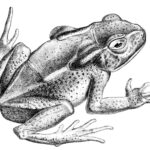
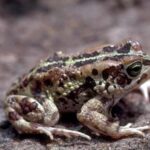
Rhaebo hypomelas is medium-sized compared to many other Amazonian amphibians, typically reaching lengths between 60 to 85 millimeters. Its robust, stocky body structure is complemented by relatively short limbs adapted more to walking through leaf litter than for lengthy leaps.
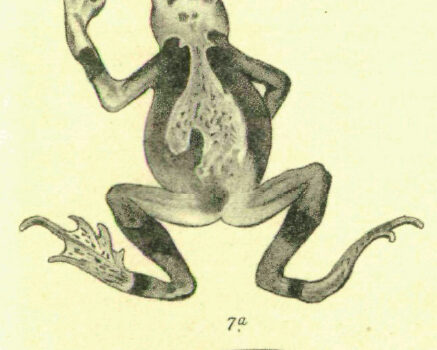
The most striking feature of this species is its distinctive coloration—a mosaic of earth tones that vary from rich, chocolate browns and deep bronzes to charcoal grays. Dark, irregular blotches pattern its smooth yet slightly granular skin texture, seamlessly blending into the natural tapestry of fallen foliage and decaying wood. Its ventral surface is often lighter, ranging from pale cream to off-white with subtle darker marks.
Adaptations for Survival#
Natural camouflage serves not only as a passive defense mechanism, protecting the species from predation, but also assists in effective ambush hunting. The Amazonian Leaf Toad’s ecological niche demands stealth and precision in predation, and nature’s artistry in texture and color has equipped it superbly. Their eyes possess vertically elliptical pupils, offering excellent low-light vision—perfect for a nocturnal predator well-hidden by shadows in the twilight hours under dense vegetation.
Behavior and Life Cycle: Secrets of a Forest Hunter#
Nocturnal Ambush Predation#
While largely sedentary during the day, the onset of twilight transforms Rhaebo hypomelas into an adept nocturnal hunter. Emerging from hiding, it stalks silently through the leaf litter, pinpointing movements of small insects, earthworms, spiders, and other vulnerable forest-floor invertebrates. Its hunting strategy involves sitting motionlessly, often concealed beneath overhanging leaves, utilizing sudden bursts of movement and its adhesive-coated tongue to deftly apprehend prey.
Breeding in Hidden Pools#
With the arrival of seasonal rains, males begin their subtle yet distinctive vocalizations—a melodious chorus of soft chirps and pops emanating from stream banks and pools. These calls serve to attract females while establishing subtle breeding territories. Females respond to suitable calls, and mating typically occurs in secluded, shallow pools and streams sheltered under dense foliage.
Clutches of eggs, numbering from a few hundred to over a thousand tiny black gelatinous spheres, adhere to submerged vegetation or structures. Within days, these eggs hatch into small tadpoles, remarkably adapted to the challenging conditions of temporary rainforest pools. Within weeks, driven by rapid growth and survival instincts, they quickly metamorphose into terrestrial juveniles, repeating the cyclical dance that has sustained populations for millennia.
Ecological Role: A Critical Indicator of Forest Health#
Although understated in appearance, the ecological significance of Rhaebo hypomelas cannot be overstated. As both predator and prey, it contributes dynamically to the intricate web of rainforest life. Regularly preying upon arthropods, these toads play crucial roles in naturally controlling insect populations, contributing significantly to ecological balance.
Conversely, their populations serve as indicators of environmental health. Amphibians are notoriously sensitive to alterations in their habitat quality, water purity, and climate conditions. Declines or abrupt shifts in Rhaebo hypomelas numbers can therefore serve as clear warnings of environmental degradation, signaling broader ecological stress before it significantly impacts other forest communities.
Threats and Conservation Status: Fragility on the Forest Floor#
Currently listed by the IUCN Red List as Least Concern, Rhaebo hypomelas faces ongoing pressures primarily related to habitat disturbance and climate changes. Habitat loss due to deforestation for agriculture, logging, road construction, and human settlement threatens several local populations, fragmenting and isolating groups of these species into increasingly vulnerable pockets.
Climate change further compounds these dangers by altering the rainforest ecosystem, shifting rainfall patterns, and indirectly affecting breeding pools. Disease, most notably chytridiomycosis-induced by fungal pathogen Batrachochytrium dendrobatidis, poses another looming, often unnoticed, threat.
Cultural and Scientific Significance: Guardians of Forest Wisdom#
Indigenous cultures inhabiting forest regions have historically glimpsed amphibians like Rhaebo hypomelas as guardians and indicators of environmental stability, linking their well-being to human prosperity. Scientifically, these species represent invaluable resources in ecological studies due to their sensitivity to environmental changes, making them crucial as living barometers for climate and ecosystem health assessments.
Conclusion: Embracing the Hidden Wonders of Rhaebo hypomelas#
Through the quiet lives of smaller, subtler species like the Amazonian Leaf Toad, we appreciate the vast interconnectedness and fragility of Earth’s biodiversity. The tale of Rhaebo hypomelas is one of hidden virtues and profound ecological silence—a compelling reminder of the invisible yet critical natural rhythms that sustain our planet.
Let us embrace this often-overlooked creature, honoring our planetary duty to conserve not just prominent wildlife but also quieter beings quietly holding nature’s balance intact. Every action we take to protect their forest homes brings us closer to harmonious existence within our shared natural world.