- Introduction: A Frog Unlike Any Other
- Taxonomy and Classification: Where Does It Belong?
- Natural Habitat: Among the Clouds of Borneo
- Physical Characteristics: Camouflaged for Survival
- Behavior and Life Cycle: The Hidden Lives Among Leaves
- Ecological Role: Guardians of the Forest Canopy
- Threats and Conservation Status: A Fragile Existence
- Cultural and Scientific Significance: Beyond Biology
- Conclusion: Preserving the Canopy Dwellers
Introduction: A Frog Unlike Any Other#
Deep within the lush rainforests of Borneo, nestled among the dense trees and mist-covered peaks, lives a creature of quiet intrigue—the Bornean tree toad, scientifically known as Rentapia everetti. Unlike the common images of frogs we usually picture—small green amphibians leaping gracefully from lily pads—this particular species holds its secrets hidden in the treetops, far above ground level. Possessing remarkable adaptations to life in lofty arboreal realms, Rentapia everetti presents us with a fascinating story of evolution, survival, and ecological significance.
Commonly known as Everett’s tree toad, this species has earned the curiosity and admiration of herpetologists and naturalists alike, not only for its distinctive appearance but for a behavior and lifestyle that remain shrouded in mystery. Named in honor of Alfred Hart Everett, a renowned British naturalist and explorer of the late 19th century, the toad represents far more than its scientific interest; it symbolizes the enduring mystery and essential value of Southeast Asia’s rainforests themselves.
Taxonomy and Classification: Where Does It Belong?#
First formally described in 1896 by notable herpetologist George Albert Boulenger, Rentapia everetti belongs to the family Bufonidae—commonly known as true toads. Within this expansive family, Everett’s tree toad falls under the genus Rentapia, a group known for their arboreal (tree-dwelling) lifestyles and adaptations for climbing. Previously classified under the genus Pedostibes, recent taxonomic revisions elevated Everett’s tree toad and closely related species to the genus Rentapia, reaffirming their unique evolutionary trajectory among their terrestrial relatives.
Closely related species within this genus include the notable Malayan tree toad (Rentapia hosii) and the likewise elusive Fire-bellied tree toad (Rentapia flavomaculata). Together, these species form an impressive lineage of tree-dwelling toads exquisitely adapted to life in the Southeast Asian rainforest canopy.
Natural Habitat: Among the Clouds of Borneo#
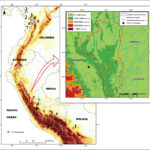
The humid, evergreen forests of Borneo—spanning parts of Malaysia, Indonesia, and Brunei—host remarkable biodiversity, actively influencing countless species’ evolutionary pathways. Everett’s tree toad is no exception. Typically inhabiting montane and submontane forests ranging from elevations of 300 to over 1,500 meters, these amphibians have evolved specifically to survive and thrive in densely foliated treetop environments.
High in the arboreal canopy, amidst tangled vines, broad leaves, and pockets of tree hollows, Rentapia everetti has created an incredible ecological niche. The humidity and moisture-retentive microhabitats provided by thick moss and leaf detritus shelter the toad from predators and harsh environmental fluctuations. Within these canopy layers, torrential rains become manageable trickles, sunlight filtered gently through a verdant roof, providing precisely the conditions necessary for survival and reproduction.
Physical Characteristics: Camouflaged for Survival#
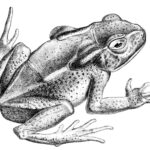
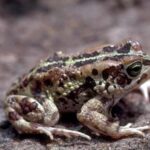
Everett’s tree toads are not only distinctive in their ecological choices but also in their appearance. Adults typically measure between 50 to 80 millimeters in length, exhibiting broad, flattened bodies perfectly adapted for climbing and hiding among foliage. Their skin texture—a characteristic granular and warty surface—works splendidly for concealment, blending seamlessly with bark and leaves.
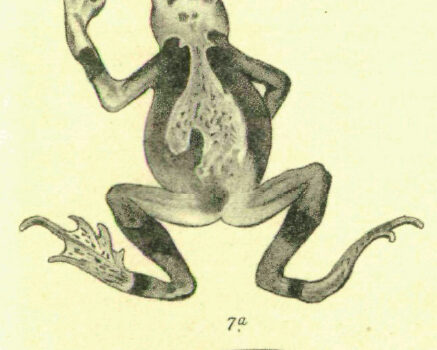
Arguably their most striking feature is the species’ coloration. Shades of olive, earthy brown, and mossy greens dominate their appearance, providing impeccable camouflage against predators. With mottled and irregular patterns across their backs, and lighter undersides, they seem to merge with the very trees they inhabit. Large eyes with horizontal slit-shaped pupils reflect their nocturnal nature, allowing them precise night vision critical for navigating complex tree branches under the cover of darkness.
Moreover, specialized toe pads and strong, functional limbs grant Rentapia everetti extraordinary climbing prowess. These features allow it to grip securely onto branches, maneuver between precariously thin twigs, and navigate through dense foliage effortlessly. This extraordinary capability enables the animal to evade predators and compete effectively with other tree-dwelling life forms.
Behavior and Life Cycle: The Hidden Lives Among Leaves#
Feeding Habits and Diet#
Being predominantly nocturnal, Everett’s tree toads move silently through the night canopy in pursuit of prey. Their diet primarily consists of arboreal insects like beetles, crickets, moths, and even the occasional spider. Employing a sit-and-wait hunting strategy, they position themselves patiently among dense leaves, striking swiftly and precisely when prey ventures too close. This subtle method ensures minimal energy expenditure, a vital adaptation given their arboreal lifestyle.
Mating and Reproduction#
Much fascination surrounds the reproductive habits of Rentapia everetti. Breeding typically occurs in proximity to temporary tree hollows or water-filled depressions high in the canopies. Male toads emit soft yet distinctive calls—intriguing sequences of chirps and trills—to attract prospective mates during the rainy season. Once a female accepts the male’s courtship, egg-laying ensues. Clutches, often incorporating hundreds of tiny eggs enveloped in protective gelatinous coatings, are strategically placed in suitable water-filled niches high above ground.
The canopy provides a nurturing environment for developing tadpoles, safe from most aquatic predators common in larger water bodies. Larvae mature rapidly, feeding primarily on algae, microorganisms, and detritus within tree hollows. Within a matter of weeks, juvenile toads, already adept climbers, venture into the vast treasury of the forest canopy.
Ecological Role: Guardians of the Forest Canopy#
Though seemingly inconspicuous, Everett’s tree toad plays a pivotal role as both predator and prey within the arboreal ecosystem. By consuming vast quantities of insects nightly, they exert considerable influence over insect populations, contributing to a delicate ecological equilibrium. Such biological control protects vegetation from herbivorous insects and mitigates harmful outbreaks.
Simultaneously, the species provides nourishment to predators, including nocturnal birds, tree snakes, and arboreal mammals. These animated, multi-layered food dynamics illustrate vividly how closely interwoven and interdependent are the many lives populating the rainforest canopy.
Threats and Conservation Status: A Fragile Existence#
Unfortunately, the ecological niches occupied by Rentapia everetti are under relentless pressure due to habitat destruction, climate change, and deforestation. Vast swaths of pristine rainforest are regularly cleared to make way for agricultural plantations, logging, and expanding infrastructure. This habitat fragmentation undermines breeding opportunities, disrupts food webs, and creates increasingly difficult migration barriers for arboreal species.
Current reports from the International Union for Conservation of Nature (IUCN) classify Rentapia everetti as Near Threatened. It exists in an environment facing looming threats. Without meaningful, targeted conservation efforts—especially increased protection of highland forests—its populations are likely to decline further.
Cultural and Scientific Significance: Beyond Biology#
Everett’s tree toad symbolizes both ecological health and the remarkable adaptation strategies employed by life forms in complex ecosystems like Borneo’s merging canopy. While the species does not prominently feature in local folklore or traditions, it increasingly serves as a vital “bio-indicator,” alerting us to changes in forest environments. Its sensitivity to deforestation, pollution, and climate fluctuations renders it a sentinel species instrumental in ecological research and conservation planning.
Conclusion: Preserving the Canopy Dwellers#
As we explore deeper and higher into Earth’s diverse habitats, our understanding deepens, enriching our capacity to address conservation challenges. Everett’s tree toad, with its cryptic coloration, arboreal agility, and secretive nature, is an emblem of evolutionary ingenuity and fragile ecological connections. Each new discovery furthers our appreciation for protecting not only this species but also the rainforest ecosystems upon which so much life depends.
For passionate naturalists, conservationists, students, and wildlife enthusiasts alike, safeguarding Rentapia everetti embodies the profound moral imperative of biodiversity conservation—an endeavor vital for the health of our planet. The preservation of Everett’s tree toad begins with awareness, grows with knowledge, and flourishes when we collectively act to protect these magnificent realms.