Poyntonophrynus grindleyi: Unveiling the Enigmatic Grindley’s Toad of Southern Africa#
Tucked discreetly among sandy flats, concealed by the subtle hues of shrublands and coastal dunes, a distinctive amphibian thrives in secrecy. Meet Poyntonophrynus grindleyi, or Grindley’s Toad, an elusive resident of Southern Africa whose story blends scientific wonder with ecological nuance. Though diminutive and often elusive, this remarkable creature carries immense ecological importance and offers insights into biodiversity, adaptation, and survival in specialized habitats.
What sets Grindley’s Toad apart is its mastery of stealth and adaptability—a creature exquisitely suited to its harsh yet beautiful coastal environment. Join us as we rediscover the hidden natural history, intriguing biology, and vital conservation journey of one of Southern Africa’s lesser-known amphibians.
Taxonomy and Classification#
In the world of herpetology, precise classification and taxonomy provide us not just a scientific order but a glimpse into biological lineages spanning millions of years. Grindley’s Toad, scientifically known as Poyntonophrynus grindleyi, belongs to the family Bufonidae, better known as the true toads. Within this family, it finds itself within the genus Poyntonophrynus, a group of small African toads distinguished primarily by their adaptability to arid conditions and unique morphology.
This charismatic amphibian’s taxonomy has evolved over time due to meticulous research by taxonomists. Named in honor of Dr. John Grindley, a renowned South African ecologist whose commitment to conservation illuminated critical relationships within ecosystems, the species also shares affinities with closely related counterparts like Poyntonophrynus vertebralis and Poyntonophrynus fenoulheti. However, detailed genetic analyses continue to affirm its unique identity within its genus.
Natural Habitat#
The story of Grindley’s Toad is intricately tied to the specialized coastal habitats along Southern Africa’s Atlantic coast—particularly Namibia and South Africa’s Northern and Western Cape provinces. Here, this amphibian leads an unobtrusive existence, sheltering beneath coastal dunes, shallow depressions, and sandy scrub vegetation characterized by hardy succulents and resilient grasses.
A Harsh Yet Delicate Environment#
The coastal dunes and arid shrublands serving as home to Grindley’s Toad are landscapes of stark contrasts—sun-drenched by day, cool and humidified by the ocean’s mist at night. Despite an appearance of barrenness, these ecosystems grant essential moisture and refuge. The intermittent coastal fog drifting in from the cold Benguela Current is life-giving, providing vital humidity that supports amphibian life where fresh water is scarce.
Grindley’s Toad exhibits intricate behavioral adaptations to thrive in such demanding conditions—seeking shelter beneath debris, within shallow burrows, or amongst leaf litter to conserve precious moisture during volatile weather fluctuations, exemplifying nature’s incredible capacity for adaptability.
Physical Characteristics#
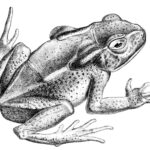
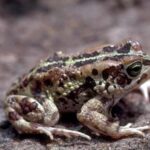
At first glance, Grindley’s Toad may seem subtle and unassuming, but closer inspection reveals fascinating anatomical adaptations valuable for survival in a harsh coastal environment. Adult toads rarely exceed 40mm in snout-to-vent length, their modest size serving as an advantage in desiccating coastal winds. They possess flattened bodies, allowing efficient heat regulation and moisture retention, and short limbs specifically suited for burrowing.
Their coloration ranges from sandy ochre to muted brownish greys, remarkably attuned to their sandy habitat. This remarkable coloration camouflages Grindley’s Toad against predators such as small mammals, snakes, and predatory birds. Minute dark markings speckled across its body offer further disguise, rendering it almost indistinguishable from the delicate patterns formed by sand grains and coastal scrub shadows.
Behavior and Life Cycle#
As crepuscular and nocturnal hunters, Grindley’s Toads understudy a quiet but relentless nightly rhythm essential to their survival. At twilight, when coastal fog blankets the dunes, these tiny amphibians cautiously emerge from daytime shelter. Through excellent night vision and sensitive movement detection, these toads skillfully spy small terrestrial insects—primarily ants, termites, beetles, and various arthropods—which form their principal diet. Their rapid, sticky tongue flicks capture prey with remarkable precision.
Reproduction and Development#
Seasonal coastal rains trigger the breeding instincts of Grindley’s Toad, fueling a multi-day symphony of mating calls echoing beneath the stars. Males emit high-pitched chirps from shallow pools or moist depressions, each hoping to attract females drawn by sound cues.
Rather than large-scale breeding events typical of rainforest species, reproduction in Grindley’s Toad is adapted to transient isolated water pools. Females lay strands of delicate eggs entwined with aquatic plants or submerged debris. Tadpoles develop quickly, demonstrating rapid metamorphosis critical for survival amid limited water availability. These short-lived pools teem with microscopic life, nourishing fast-growing tadpoles that soon morph into juveniles to continue the cycle of life on land.
Ecological Role#
While diminutive in size, Grindley’s Toad plays an invaluable role within its delicate coastal ecosystem. Acting as biological pest controllers, these amphibians moderate insect populations and maintain ecological balance. Their presence indicates healthy coastal dune ecosystems, marking them as valuable bioindicators alerting ecologists to environmental health or disturbances.
Additionally, these amphibians provide crucial prey for larger predators, sustaining complex food webs connecting terrestrial and marine ecosystems along coastlines. Every strand of ecological connectivity underscores the profound importance these toads possess, highlighting how nature thrives on such discreet yet pivotal players.
Threats and Conservation Status#
The survival of Grindley’s Toad faces escalating challenges of habitat disruption and environmental upheaval. According to assessments by the International Union for Conservation of Nature (IUCN), Poyntonophrynus grindleyi is also under pressure from increasing coastal development, habitat fragmentation from infrastructural expansion, and looming threats tied intimately to climate shifts.
Climate variations disrupting the essential fog regimes are particularly concerning, jeopardizing the microhabitats so pivotal to amphibian survival. Furthermore, pesticide runoff from agricultural and horticultural activities pollutes ephemeral breeding pools, dramatically reducing reproductive successes.
Although currently designated by the IUCN as “Least Concern” due to its broad distribution, conservationists stress vigilance. Preservation of coastal habitats and regulations on coastal development, along with ongoing ecological monitoring, remain essential strategies. Integrated conservation initiatives and community stewardship offer hope, fortifying the delicate balance required for its long-term survival.
Cultural and Scientific Significance#
Grindley’s Toad provides inspiration beyond ecological value. Locally, various Southern African cultures embody strong connections with nature; amphibians are symbols of renewal, rainfall, and fertility. Even though Grindley’s Toad is less prominent culturally than other vividly colored amphibians, its delicate existence and resilience provide meaningful narratives rooted within indigenous understanding of land stewardship and environmental harmony.
Scientifically, its adaptations illuminate strategies for conserving water, surviving extreme habitats, and navigating shifting climates—a living lesson for biologists worldwide. Ongoing research endeavors continually reveal novel insights from this small but remarkable species about broader ecological resilience and adaptation to changing environmental conditions.
Conclusion#
Poyntonophrynus grindleyi gracefully encapsulates nature’s complexity, illustrating adaptation, resilience, and ecological significance even in minimalistic forms. Despite its quiet existence, this fascinating amphibian symbolizes biodiversity’s intricate network, intertwined relationships, and delicate balance.
As stewards of our planet’s biodiversity, your involvement is instrumental. Support conservation initiatives protecting fragile coastal ecosystems, educate friends and family about ecological awareness, and advocate for ecosystem-conscious community policies. Together, we can ensure the captivating story of Grindley’s Toad continues, safeguarded by collective compassion, knowledge, and conservation stewardship.