- Unveiling Osornophryne percrassa: The Enigmatic Andean Plump Toad and Its Fragile World
- Taxonomy and Classification: Understanding the Unique Lineage
- Natural Habitat: A World Shrouded in Clouds
- Physical Characteristics: Small Yet Remarkable Amphibians
- Behavior and Life Cycle: Secrets of a Cloud Forest Dweller
- Ecological Role: The Hidden Pulse of the Andes
- Threats and Conservation Status: Battling the Storms of Change
- Cultural and Scientific Significance: Guardians of the Misty Forests
- Conclusion: Advocating for a Unique Andean Treasure
Unveiling Osornophryne percrassa: The Enigmatic Andean Plump Toad and Its Fragile World#
Hidden within the mist-covered slopes of the Andes mountains, adorned by moss-laden branches and vibrant bromeliads, lives a creature that rivals fantasy in its peculiarity—the Andean plump toad, scientifically known as Osornophryne percrassa. Its whimsical name hints at its extraordinary physique—a stout little toad whose body resonates resilience and mystery, reflecting its seemingly improbable existence amidst the harsh conditions high above sea level. But beneath its unmistakable charm lies an amphibian species deeply intertwined with one of nature’s most fragile ecosystems.
We often envision frogs and toads as ubiquitous denizens found hopping along river banks or singing choruses by marshy ponds. Yet some species defy this stereotype entirely. Such is the case with Osornophryne percrassa, whose entire existence revolves around the cool, moisture-laden cloud forests of the high Andes—a habitat as beautiful as it is vulnerable.
Taxonomy and Classification: Understanding the Unique Lineage#
Osornophryne percrassa belongs to the Bufonidae family, broadly known as the “true toads.” Within this family, this unusual amphibian belongs to the genus Osornophryne, which includes a modest number of species exclusive to the high-elevation terrain of the northern Andean region in South America.
The genus Osornophryne comprises specialized mountain dwellers who have adapted to thrive in the particular ecological niche provided by the cloud forests and Andean paramos. They share physical characteristics typical of these high-altitude specialists, including small size, plump bodies, relatively short limbs, and textured, wart-like skin—adaptive traits that aid in water retention and camouflage amid mosses and lichens.
Researchers often regard the taxonomy of this genus as intricate, emphasizing the urgent need for rigorous exploration of their biology, genetic diversity, and distribution. O. percrassa itself was first scientifically described in 1976, highlighting its relatively recent emergence within scientific literature and underscoring the novelty and conservation importance of high-Andean biodiversity.
Natural Habitat: A World Shrouded in Clouds#
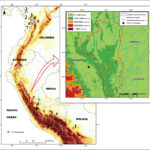
To truly appreciate the Andean plump toad, one must first explore its captivating natural habitat—the misty, magical cloud forests and montane wetlands scattered across the Andes of northern Ecuador and southern Colombia. This species is found at remarkably high elevations, generally between 3,000 to over 3,500 meters above sea level, in environments categorized by their perpetually cool temperatures, persistent moisture, and abundant precipitation.
An Ecosystem of Constant Moisture#
Cloud forests, as their name implies, thrive in near-constant cover of fog and mist generated by ascending moisture from lower altitudes. These forests are dense, tangled, and lush, brimming with mosses, tree ferns, orchids, bromeliads, and countless lichens that transform the ancient trees into verdant sculptures. For amphibians reliant on moisture retention and sensitive skin, like the Andean plump toad, these forests offer a haven. Here, humidity rarely dips below saturation, ensuring amphibians can easily maintain their delicate fluid balance.
The Importance of Microhabitats#
Osornophryne percrassa depends critically upon specialized microhabitats within this broader ecosystem. It typically resides under leaf litter, on mossy logs, or nestled amongst abundant epiphytes growing along branches and trunks. These damp, shaded, and sheltered environments offer critical protection from predators and extreme temperature fluctuations, illustrating the precise niche this unique toad occupies.
Physical Characteristics: Small Yet Remarkable Amphibians#
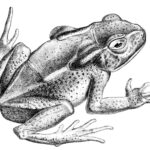
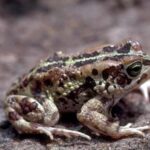
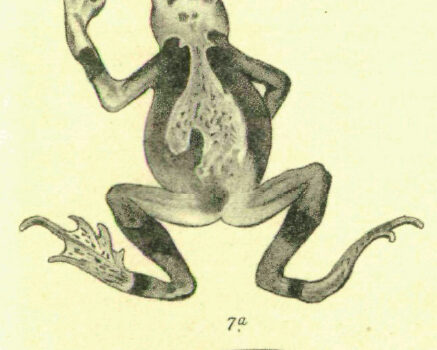
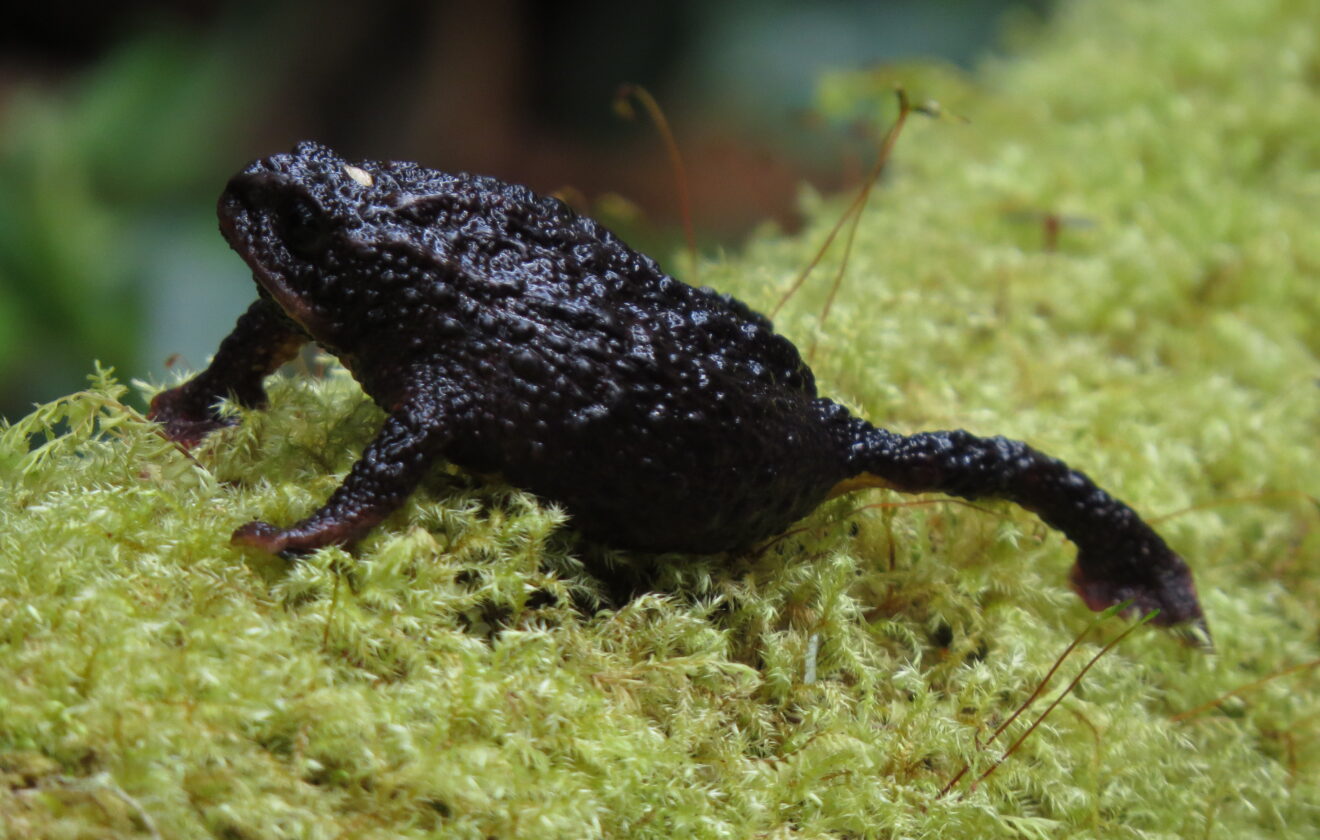
A mere glance reveals why the Andean plump toad earned its descriptive common name. These adorable amphibians rarely exceed three to four centimeters in their snout-to-vent length, their bodies decidedly squat and round, lending them a charmingly rotund appearance. Their limbs, strikingly short and robust, aid in navigating intricate undergrowth rather than long-distance jumping characteristic of their lowland frog cousins.
Skin and Coloration: Designed by Nature for Survival#
In evolutionary terms, appearances are never coincidental. This holds true for Osornophryne percrassa, which sports heavily textured skin dotted with pronounced, wart-like tubercles. Such unique skin adaptations serve two principal survival functions—camouflage and moisture retention.
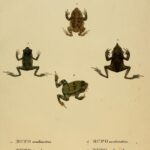
Coloration can vary subtly, from shades of dark brown to greenish-gray or even rusty hues, seamlessly blending them into their mossy surroundings. This camouflage is critical to evade potential predators, including birds, snakes, and mammals that patrol these cloud forests in search of prey.
Behavior and Life Cycle: Secrets of a Cloud Forest Dweller#
Given their remote habitat and cryptic nature, in-depth behavioral studies on O. percrassa remain relatively sparse. Nevertheless, what observations researchers have collected reveal fascinating glimpses into survival strategies uniquely adapted to their challenging abiotic and biotic environments.
Feeding Habits and Hunting Strategies#
The Andean plump toad is an opportunistic feeder, savoring a diet primarily composed of small invertebrates, including ants, beetles, mites, and occasionally small caterpillars. Its hunting strategy relies less on long-range leaps and more upon careful stalking and ambush tactics along moss-covered vegetation or leaf litter.
Mating and Reproduction: Quietly Ensuring Continuation#
Unlike many amphibian cousins famed for their powerful choruses echoing through the night, Osornophryne percrassa exhibits a much quieter, less conspicuous mating behavior. During breeding periods, which often align with wetter climate conditions, males may emit subtle calls to attract mates from concealed locations beneath vegetation or tangled roots.
The female carefully deposits fertilized eggs hidden among moist mosses, bromeliads, or damp leaf litter, contributing further to the fragility and specificity of their reproductive requirements. Interestingly, research indicates direct development in many species of Osornophryne. Instead of aquatic tadpoles, young toadlets emerge directly from the eggs, miniatures of the adults, fully terrestrial and reliant on moisture-laden microhabitats for survival.
Ecological Role: The Hidden Pulse of the Andes#
The conservation and biodiversity value of any species manifests clearly when we understand its ecological role. Osornophryne percrassa occupies a nuanced place within its ecosystem, acting as both predator and prey in an intricate food web essential for ecological stability. Furthermore, given their sensitivity to environmental changes, they act as critical bio-indicators, alerting researchers to shifts in habitat quality or climate conditions.
Threats and Conservation Status: Battling the Storms of Change#
Perhaps more worrying, this enchanting amphibian now faces pressures from habitat degradation and climate instability. The International Union for Conservation of Nature (IUCN) currently classifies Osornophryne percrassa as Vulnerable, highlighting the immediate risks this Andean specialist endures.
Habitat Loss and Climate Change#
Increasing human activities, including deforestation, agricultural expansion, livestock grazing, and mining in higher-Elevation regions, destroy cloud forests and paramos environments. Climate change, too, poses significant threats by altering cloud cover patterns, temperature norms, and rainfall predictability — all essential elements dictating this toad’s survival.
Cultural and Scientific Significance: Guardians of the Misty Forests#
Though their remote lifestyle excludes frequent cultural encounters, high Andean indigenous peoples appreciate the broader ecosystem inclusive of these amphibians. Scientifically speaking, the specialized adaptations exhibited by species like Osornophryne percrassa provide invaluable insights into evolutionary biology, climate change adaptation, and the continuing mysteries of herpetological ecology.
Conclusion: Advocating for a Unique Andean Treasure#
The Andean plump toad, Osornophryne percrassa, reminds us of the astonishing adaptability and fragility of life forms inhabiting the margins of Earth’s most specialized ecosystems. Protecting this enigmatic creature means actively safeguarding the delicate cloud forests it relies upon. By better understanding and appreciating the wonders of species like this, we renew our resolve to act on their behalf—ensuring future generations might also marvel at the secretive, resilient life thriving in the mists of our planet’s mighty Andean mountains.