Introduction#
Hidden amidst the dramatic and mist-shrouded tabletop mountains of the Guiana Highlands dwells one of the natural world’s most uniquely adapted amphibians—Oreophrynella seegobini. Often affectionately termed “Seegobin’s stubfoot toad,” this enigmatic species has fascinated herpetologists and nature enthusiasts alike, capturing imaginations with both its elusive nature and remarkable physical adaptations. Named scientifically as Oreophrynella seegobini, it belongs to a genus of exceptionally adapted frogs known for their intriguing physiology and restricted geographic distribution.
This unique frog’s compact physique, striking coloration, and its habit of thriving atop remote tepui plateaus lend it a sense of mystique, while intriguing adaptations, such as peculiar defensive behaviors and unusual reproductive patterns, highlight its evolutionary journey. Despite inhabiting remote, scarcely reachable landscapes, Oreophrynella seegobini remains vulnerable to threats like habitat degradation, climate change, and potentially invasive species.
Taxonomy and Classification#
Oreophrynella seegobini is classified in the family Bufonidae, which collectively houses the true toads. Yet, unlike many familiar bufonids, the Oreophrynella frogs diverged into specialized ecological niches and morphological forms. Within this genus, closely related species such as Oreophrynella quelchii and Oreophrynella nigra share similar adaptations, each confined in splendid isolation on separate tepui systems in the Guiana Highlands—a phenomenon known as allopatric speciation.
The species was first formally described by prominent herpetologists Kok, MacCulloch, Lathrop, Willaert, & Bossuyt in 2010, honoring the respected Guyanese explorer and naturalist Percy Seegobin. This recent formal recognition underscores just how little is known about much of the unique biodiversity hidden away within the hospitable yet remote habitats atop South America’s ancient highlands.
Natural Habitat#
Remote Tepui Plateaus of the Guiana Shield#
The tepuis—ancient sandstone plateaus scattered across Venezuela, Guyana, and adjacent regions—form the remarkable setting for this species’ life story. Among them, Mount Ayanganna and neighboring tepuis create isolated ‘islands in the clouds,’ hosting habitats that are humid, mist-covered, and frequently shrouded in dense, cooling fogs. Known for their dramatic cliff faces, these environments have existed unchanged for millennia, harbouring specialized flora and fauna found nowhere else on Earth.
Oreophrynella seegobini preferentially inhabits areas densely carpeted in mosses, small bromeliads, ferns, and delicate pitcher plants. These lush microhabitats provide the perfect moisture-rich atmosphere, essential shelter, and suitable feeding grounds for these remarkable amphibians. An integral part of these ecosystems, each individual frog seamlessly blends into their mossy environment, their presence only betrayed by their subtle movements or soft calls echoing through misty layers enveloping their world.
Physical Characteristics#
Anatomy and Appearance#
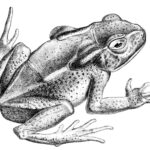
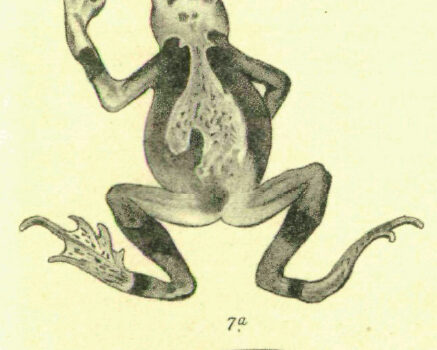
This small, intricately adapted amphibian rarely exceeds 2 cm in total length. The compact body structure is evolutionary sculpted, and their characteristic “stubfoot” trait refers to the distinctly stubby fingers and toes lacking the typical webbing seen in other frogs. Their limbs, shorter and robustly built, perfectly suited to their terrestrial existence, aid in tightly clinging to moist rocky substrates and mosses, essential in habitats where footing can be perilous and verticality dominates the landscape.
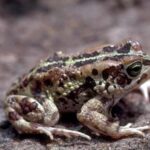
One of the most striking features of Oreophrynella seegobini is the cryptic coloration—a sophisticated blend of brown tones, earth-like greens, grays, and occasional subtle speckling—allowing virtually flawless camouflage amongst the intricately interwoven leaves, mosses, and detritus of their forested tepui habitats. Eyes large relative to their size peer cautiously outward, perfectly suited for detecting movement from predators or prey amid complex visual backgrounds. Their textured skin appears granular, consistent with the mosses upon which they reside, further complementing their incredible capability for stealth.
Behavior and Life Cycle#
A Life Hidden in Moss and Shadow#
The behavior patterns of Oreophrynella seegobini remain elusive due to their shy habits and remote environment, yet scientists exploring their habitats have reconstructed glimpses of their day-to-day existence. As predominantly terrestrial and crepuscular creatures, these frogs remain hidden throughout daylight hours, emerging in the cool, damp twilight to hunt insects such as tiny ants, springtails, and mites that populate the tepui leaf litter.
Reproduction among tepui frogs demonstrates remarkable adaptation. Rather than depositing eggs in standing water, as most frogs do, Oreophrynella seegobini likely deposits them amidst moist mosses or in protected niches among rocks. These eggs, relatively larger in proportion to the frog, hatch into miniature fully-formed froglets, bypassing the traditional aquatic tadpole stage—a unique adaptation known as direct development. Such an adaptation reduces vulnerability to predators and desiccation in an environment largely devoid of stable freshwater bodies apart from ephemeral pools after heavy rains.
Defensive Tactics#
Perhaps their most marvelous and confounding ability is their defensive behaviors. When disturbed by potential predators, some Oreophrynella species adopt peculiar postures, becoming motionless to enhance their resemblance to the surrounding moss and lichens. Remarkably, certain related species, and possibly Oreophrynella seegobini, have been known to reflexively curl themselves into tight balls—an instinctual protective measure that is both curious and effective against smaller predators.
Ecological Role#
Oreophrynella seegobini inhabits a delicate ecological niche, playing several crucial ecological roles in its specialized environment. Primarily an insectivore, this frog helps control insect populations, particularly ants and mites, maintaining ecological balance within these distinctive ecosystems. Additionally, by existing as prey themselves, they form part of the complex food webs supporting endemic predators, such as specific species of birds, snakes, and arachnids well-adapted to tepui ecosystems.
Furthermore, amphibians are widely recognized as sensitive ecological indicator species. Due to their permeable skin and dependency upon consistent humidity levels, any disruptions or changes in environmental conditions like pollution, habitat change, or climate fluctuations swiftly reflect in amphibian populations, making them valuable living barometers signaling ecosystem health and stability.
Threats and Conservation Status#
The remote biogeographic isolation of Oreophrynella seegobini provides some protection from direct human influence. However, isolation does not render immunity. As the tepuis become increasingly targeted for mining operations, uncontrolled tourism, habitat degradation, and climate-driven alterations in precipitation patterns, this species faces real and growing threats. Additionally, emerging fungal disease threats, such as chytridiomycosis, could affect isolated populations severely due to limited genetic diversity and narrowly constrained habitats.
While formal evaluation by the IUCN is limited for this particular species due to its recent discovery and elusive nature, experts highlight the urgent need for careful monitoring, habitat protection initiatives, and regulation against exploitative activities atop these priceless ancient highlands. Concerned conservation organizations advocate for designating tepui areas as strictly protected reserves, calling for international collaboration to safeguard these fragile ecosystems and their endemic inhabitants.
Cultural and Scientific Significance#
The cultural resonance of tepui species like Oreophrynella seegobini within local and indigenous communities connects tightly with traditional beliefs regarding tepuis as sacred or spiritually significant landscapes, often romantically viewed as realms of spirits, ancestors, or mythological beings. Understanding and preserving culturally significant wildlife bolsters community support, enhancing conservation effectiveness.
Scientifically, these amphibians provide unmatched frameworks for understanding evolutionary biology, speciation mechanisms, and ecological specialization. Recent discoveries of Oreophrynella species significantly expanded knowledge on evolution and biodiversity in extreme and isolated environments, highlighting their invaluable role in global biodiversity conservation discourse.
Conclusion#
As tiny ambassadors from prehistoric plateaus shrouded in mist and mystery, Oreophrynella seegobini embodies the remarkable adaptability and fragile beauty of life in isolated ecosystems. As advocates and nature lovers alike, our role extends to raising awareness, supporting responsible stewardship of their habitats, and safeguarding the irreplaceable tapestry of biodiversity upon which we all depend.