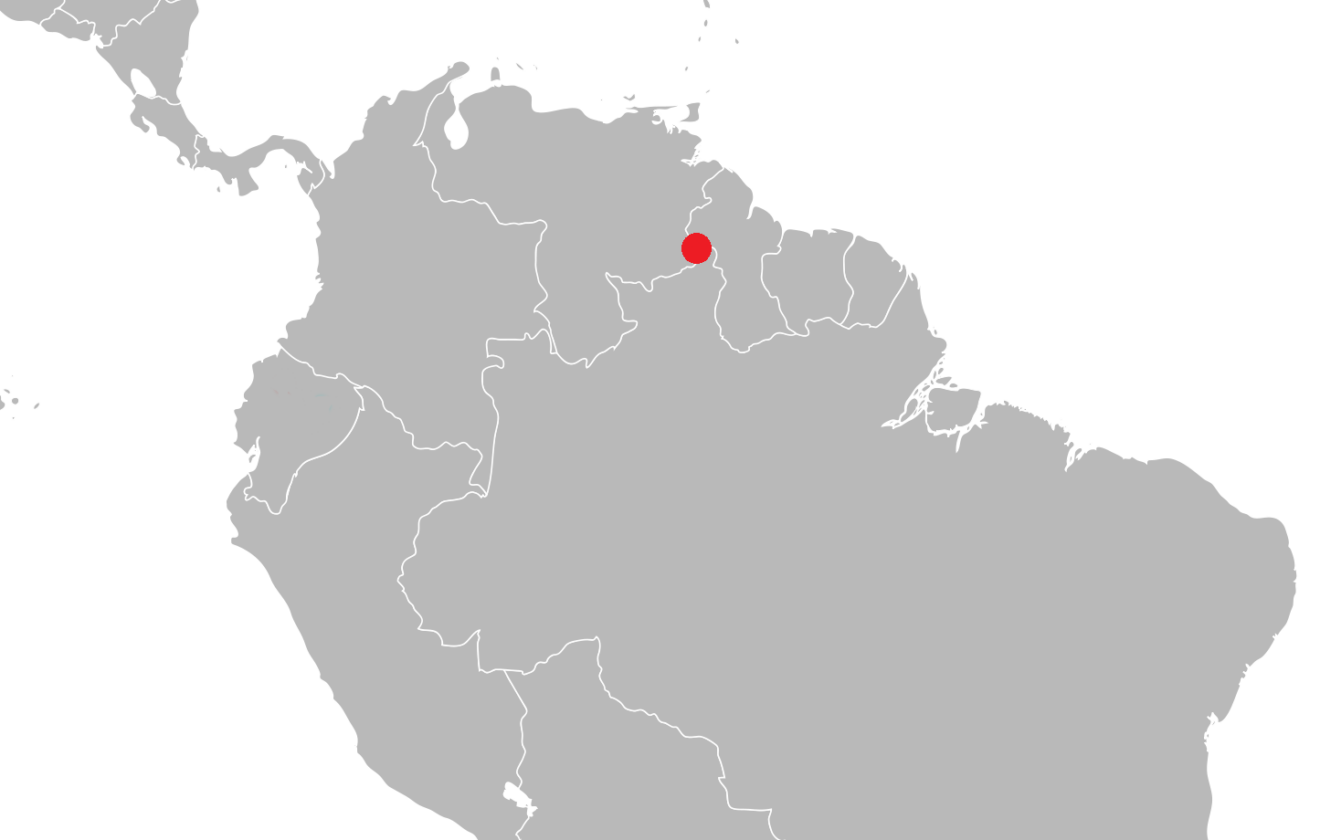
- Oreophrynella dendronastes: The Enigmatic Tree Guardian of the Guiana Highlands
- Taxonomy and Classification
- Natural Habitat: The Lost Worlds of Tepuis
- Physical Characteristics: Crafted for Life Among the Clouds
- Behavior and Life Cycle: Survival in an Extraordinary Realm
- Ecological Role: Crucial Guardians of Biodiversity
- Threats and Conservation Status: Meeting Modern Challenges
- Cultural and Scientific Significance: Guardians of Ancient Mysteries
- Conclusion: A Call for Awareness and Protection
Oreophrynella dendronastes: The Enigmatic Tree Guardian of the Guiana Highlands#
Hidden away in the mystifying realm of Venezuela’s cloud-draped highland forests, perched atop sheer sandstone cliffs and boundless table-top summits known as tepuis, lives a tiny amphibian unlike any other. Oreophrynella dendronastes, affectionately known by naturalists as the “Tree Toad of the Tepuis,” thrives in conditions that few creatures dare to call home. This elusive frog, remarkable not only in its resilience but also its distinctive appearance, remains largely unknown to much of the world.
With skin patterns reminiscent of lichen-covered rocks and behavior perfectly attuned to its rugged, vertical habitat, Oreophrynella dendronastes represents a master class in evolutionary adaptation. Beyond its fascinating biology, this small amphibian emerges as a sentinel species, signaling the health—or distress—of one of the planet’s most ancient and isolated ecosystems. Let’s journey deep into the surreal landscapes of the Guiana Highlands and unveil the captivating story of Oreophrynella dendronastes.
Taxonomy and Classification#
Oreophrynella dendronastes occupies a unique niche within the diverse world of amphibians. The species belongs to the Bufonidae family, known commonly as true toads. Within this extensive family, Oreophrynella stands out as a specialized genus endemic to South America’s remote tepui regions.
First scientifically described by La Marca in 2005, Oreophrynella dendronastes immediately captivated amphibian biologists and conservationists with its intriguing adaptations. Its genus, Oreophrynella, consists of frogs adapted profoundly to isolated upland ecosystems, exhibiting remarkable convergent evolution towards arboreal and rock-dwelling lifestyles rarely seen among their kin.
Though closely related species, such as Oreophrynella nigra and Oreophrynella quelchii, share many tepui habitats, each one carries specific traits molded firmly by their isolated and unique evolutionary pressures. Oreophrynella dendronastes in particular demonstrates captivating adaptations, evolving features that make it superbly adept at a life spent scaling cliffs and navigating dense montane vegetation.
Natural Habitat: The Lost Worlds of Tepuis#
The story of Oreophrynella dendronastes is deeply intertwined with its environment, the legendary tepuis of Venezuela’s Gran Sabana region. These isolated mountaintops, often referred to as “Lost Worlds,” rise abruptly above surrounding jungle and savannah, forming expansive plateaus cut off by vertical, sandstone walls. The most widely recognized of these is Mount Ayanganna and Mount Wokomung, but the distribution of Oreophrynella dendronastes is notably restricted to only select, isolated tepuis.
A Vertical Existence#
Unlike most frogs and toads that may frequent watery ponds or humid rainforest floors, Oreophrynella dendronastes exists predominantly along vertical cliffs and rocky slopes, often shrouded in mist and cloud. It thrives in a specialized microhabitat composed of dense mosses, lichen beds, epiphytes, and dwarfed vegetation adapted to harsh weather, constant moisture, and nutrient-poor substrates.
The tepuis themselves are isolated islands of ecological complexity. Life atop these plateaus boasts incredible endemism—many species dwelling here exist nowhere else on Earth. The altitude, usually above 1,800 meters, creates a climate defined by cool temperatures, frequent fog, heavy rainfall, and perpetual winds. Here, in this shadowy, moisture-laden landscape, Oreophrynella dendronastes has found its perfect but demanding home.
Physical Characteristics: Crafted for Life Among the Clouds#
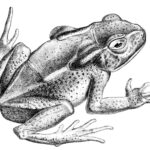
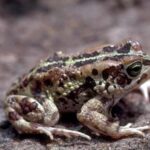
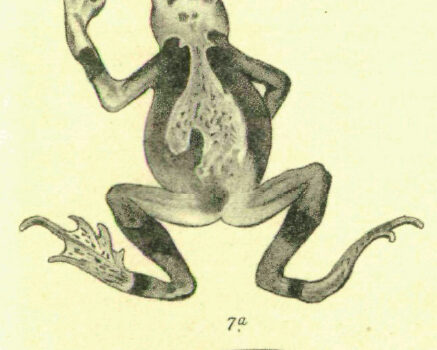
Oreophrynella dendronastes, at first glance, might look rudimentary or primitive—an animal subtle enough to escape attention amidst its rocky, moss-covered surroundings. Adult individuals rarely exceed 25 millimeters, their compact bodies easily concealed amongst the lichens and moss.
What is perhaps most striking about this frog is its coloration and skin morphology. A blending palette of earthy browns, mossy greens, and muted grays, often intersected by irregular, cryptic patterns, equips Oreophrynella dendronastes with an astonishing camouflage. Its skin texture resembles lichens and rocks so perfectly that even an attentive eye struggles to discern it from its environment.
Exceptional Adaptations for Unique Conditions#
Beneath that deceptive exterior, Oreophrynella dendronastes hosts a suite of physical traits attuned exclusively for tepui life. Its limbs and digits are comparatively elongated, terminated by specialized adhesive pads essential for climbing vertical stone surfaces and slippery vegetation. Possessing lightweight bone structures and a reduced skeletal density, the frog expertly navigates precarious cliff dwellings and lofty branches without significant effort.
Its eyes, notably large in proportion to its compact frame, reveal adept vision suited for dim, misty environments. Skin permeability and moisture management are perfectly balanced, protecting it from dehydration threats ever-present in locations where rain can rapidly transition to exposure.
Behavior and Life Cycle: Survival in an Extraordinary Realm#
Observations of Oreophrynella dendronastes have provided fascinating insights into their subtle yet complex behavioral tendencies. Opportunistically carnivorous, the species predominantly feeds on small arthropods, including ants, mites, beetles, and larvae residing in the mossy confines of its cloudy realm.
Life Amid the Mist: Reproduction Strategies#
Breeding among these tiny frogs aligns with the shifts and hints delivered by the seasonal cycles atop the tepui summits. Males utilize soft, rhythmic calls, delicate sounds lost to all but attentive ears in the pervasive mountain fog, to attract potential mates.
Once paired, a quieter episode unfolds—eggs are laid discreetly amidst water-laden moss clumps or sheltered rock crevices. Lacking permanent water bodies on these isolated platforms, Oreophrynella dendronastes employs direct development: eggs hatch directly into miniature versions of the adults, bypassing the aquatic tadpole stage entirely. This adaptation allows survival in an environment where standing water sources are virtually nonexistent.
Ecological Role: Crucial Guardians of Biodiversity#
Despite their modest size and quiet existence, Oreophrynella dendronastes plays an essential and irreplaceable role in its unique tepui ecosystem. As insect predators, they assist in controlling arthropod populations, keeping balance within these fragile ecological islands.
Conversely, as a prey species, Oreophrynella dendronastes is vital food for local predators—birds, lizards, and snakes, themselves adapted to high altitudes and restricted ecological niches. Furthermore, their sensitivity to environmental conditions makes them essential indicator species, signaling ecological changes early and clearly to scientists studying these remote ecosystems.
Threats and Conservation Status: Meeting Modern Challenges#
While Oreophrynella dendronastes has managed to persist within an evolutionary sanctuary isolated from most human impacts, modern challenges increasingly encroach. Climate change, for example, poses a particularly dire threat. Shifting rainfall patterns, temperature rises, and intensified extreme weather events may fundamentally alter the delicate microclimates of the high-altitude habitats this frog calls home.
The isolated nature of these summit ecosystems also means there’s limited opportunity for Oreophrynella dendronastes to migrate or adapt to rapid changes. This vulnerability is recognized globally, and currently, the International Union for Conservation of Nature (IUCN) lists Oreophrynella dendronastes as a Near Threatened species.
Cultural and Scientific Significance: Guardians of Ancient Mysteries#
Beyond its ecological value, Oreophrynella dendronastes symbolizes the richness, diversity, and fragility of the Guiana Highlands’ tepui ecosystems. Its unusual adaptation has captivated biologists, inspiring studies into amphibian evolution, isolation biology, and geography-driven speciation.
Culturally, indigenous communities revere tepuis deeply, seeing these formations—and the unique species they harbor—as woven intricately into their spiritual and mythological heritage. Although Oreophrynella dendronastes itself may feature less directly than tepui giants, it remains firmly part of a broader cultural ethos respecting and seeking harmony with nature.
Conclusion: A Call for Awareness and Protection#
Oreophrynella dendronastes is a living testament to the wonders of evolutionary adaptation and the vulnerability of isolated ecosystems. By learning about this incredible species, we gain valuable insights into the importance of conserving such unique habitats. Let us join conservation efforts, spread awareness, and voice our dedication to safeguarding not only Oreophrynella dendronastes but the myriad secret wonders hiding within the misty worlds atop the ancient tepuis.