- Nectophrynoides wendyae: The Hidden Jewel of Tanzania's Misty Mountains
- Taxonomy and Classification
- Natural Habitat: The Misty Realm of the Udzungwa Mountains
- Physical Characteristics: Tiny Wonders of Evolution
- Behavior and Life Cycle: A Unique Reproductive Marvel
- Ecological Role: Small Yet Significant
- Threats and Conservation Status: Guarding a Precious Future
- Cultural and Scientific Significance: Tiny Frogs with Large Lessons
- Conclusion: A Timeless Reminder of Nature's Wonders
Nectophrynoides wendyae: The Hidden Jewel of Tanzania’s Misty Mountains#
High amidst the softly swirling mists of Tanzania’s Udzungwa Mountains lies a concealed treasure—a tiny frog whose existence tells a story of adaptation, resilience, and quiet beauty. Named Nectophrynoides wendyae, this amphibian has captivated scientists and conservationists due to its unique characteristics and fragile existence. Not much larger than a fingertip, this fascinating creature bears witness to the wonders concealed in these mysterious tropical mountains, their existence a quiet call for human stewardship and wildlife wisdom.
Few would suspect that such a diminutive creature might hold answers valuable to both ecological balance and scientific understanding. Yet Nectophrynoides wendyae, modestly hidden within moss-covered boulders and moist leaf litter, has fascinated biologists since its discovery, offering new insights into amphibian biology, reproductive strategy, and evolutionary ecology.
Taxonomy and Classification#
Nectophrynoides wendyae belongs to the Bufonidae family, commonly known as “true toads,” yet its life and habits set it apart dramatically from its better-known relatives. Within this family lies the genus Nectophrynoides—a small group uniquely endemic to the mountains and highlands of Tanzania. Unlike many Bufonidae species, these toads have evolved highly specialized reproductive adaptations. Most notably, they bypass the tadpole stage and instead give birth directly to fully formed, miniature toadlets—a phenomenon known as viviparity that makes them particularly intriguing in herpetological study.
Closely related species within the genus include Nectophrynoides asperginis—commonly known as the Kihansi spray toad—which once teetered dangerously close to extinction due to habitat destruction. These connections remind us of both the fragility and adaptability within a genus that scientists continue to observe with great interest.
Natural Habitat: The Misty Realm of the Udzungwa Mountains#
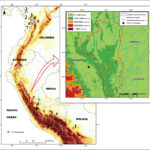
To truly understand Nectophrynoides wendyae, one must first envision its spectacular home—the richly biodiverse forests of Tanzania’s Eastern Arc Mountains, a mountainous region often referred to as Africa’s “Galápagos” due to its high percentage of endemic species. Specifically, these toads reside in and around the Udzungwa Mountains, an area characterized by dense, perpetually moist forests nestled within mountain valleys and slopes cloaked in lush, evergreen vegetation.
This majestic environment, perpetually bathed in mist and rainfall, creates the ideal milieu for amphibians that thrive in humidity. Nectophrynoides wendyae prefers damp, shaded areas with abundant leaf litter and steep rocky ravines—environments providing ample hiding places from predators and ideal settings for their live birth and juvenile stages.
A Home Defined by Moisture and Seclusion#
Deep within this verdant wonderland of moss-covered trees and fern-dominated undergrowth, these tiny amphibians weave through their microhabitat, carefully hidden beneath decaying foliage, fallen logs, and wet rocks or perched on damp vegetation. Humidity is their lifeblood, with moisture essential not only to their fragile skin but their very respiration, making their environmental niche extremely specific—and unfortunately, vulnerable.
Physical Characteristics: Tiny Wonders of Evolution#
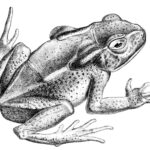
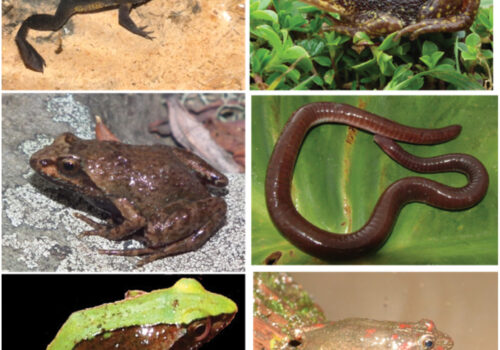
Measuring scarcely more than a couple of centimeters in length, Nectophrynoides wendyae could fit snugly onto the surface of a small coin—an irony not lost on those who marvel at their significance relative to size. Though their form is traditionally toad-like, with a rounded, stout body and relatively short limbs, subtle yet distinctive coloration and markings help them blend effortlessly into their surroundings, rendering them almost invisible among damp leaf litter and mossy stones.
Colors of Camouflage#
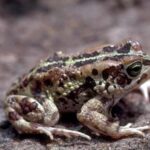
Depending upon their precise locale within the mountains, individual’s coloration varies subtly from greyish greens to dusty browns, often speckled and mottled in patterns that mimic lichen-covered stones or decaying leaves. This cryptic patterning is vital, substantially influencing their continued survival in a predator-rich habitat, where sharp-eyed snakes, birds, and even small mammals could easily turn this miniature toad into prey if spotted.
Moreover, their delicate, somewhat rough-textured skin aids water absorption, a critical adaptation that ensures hydration through direct contact with moist surfaces—a life-sustaining method given frequent fog and rainfall presence.
Behavior and Life Cycle: A Unique Reproductive Marvel#
Perhaps the most fascinating trait setting Nectophrynoides wendyae apart from other amphibians lies not in its appearance but its reproductive strategy. In stark contrast to the characteristic life cycle of eggs-tadpoles-adults exhibited by most frogs, this species exemplifies viviparity: female specimens possess specialized internal adaptations allowing embryos to develop fully within their bodies, foregoing an aquatic larval stage.
From Birth to Independence#
After a gestation period typically lasting several months, the female toad births tiny, fully developed juveniles. Immediately after birth, these miniature replicas—complete with fully functional limbs and internal organs—pursue immediate independence, capable of hunting tiny arthropods and defending themselves through evasive burrowing behaviors.
The sophisticated adaptation reduces predation vulnerability drastically during early life, bypassing altogether the dangerously precarious tadpole stage. However, it also heightens maternal parental investment, limiting each female’s reproductive output to relatively few offspring at a time and thus increasing their reliance upon consistent environmental stability. This evolutionary compromise underscores the ecological fragility reinforcing the need for ongoing conservation intervention.
Ecological Role: Small Yet Significant#
While they might appear diminutive and fragile, the ecological roles that toads like Nectophrynoides wendyae fulfill within the lush confines of Udzungwa are immense. As both predator and prey, their existence forms an essential component in maintaining ecosystem health and balance.
Predator and Prey: Linking the Food Webs#
Feeding predominantly on small invertebrates—ants, mites, beetles, and spiders—these tiny toads regulate insect populations, indirectly influencing plant pollination, seed dispersion, and forest renewal cycles. Concurrently, their livelihoods sustain higher-level predators such as snakes, lizards, and birds, becoming a critical link within complex montane food webs.
As indicator species sensitive to environmental fluctuations, their population health and reproductive success are vitally informative stakeholders in assessing overall forest ecosystem integrity.
Threats and Conservation Status: Guarding a Precious Future#
Unfortunately, this delicate ecological equilibrium faces severe pressures, with habitat loss, climate variability, and anthropogenic disturbances exacting heavy tolls on these tiny amphibian treasures. Listed currently as Critically Endangered by the International Union for Conservation of Nature (IUCN), the survival of Nectophrynoides wendyae is precarious, contingent upon committed intervention.
Habitat Loss and Human Impact#
Encroaching agriculture, logging, and human settlement expansion threaten the Udzungwa’s forest integrity. Deforestation and habitat fragmentation critically undermine moisture regulation and habitat continuity, both of which are paramount for their specialized reproductive biology and moisture-dependent survival.
Climate Change and Disease#
Changing climatic conditions further disrupt delicate montane ecosystems, posing immense challenges through altered rainfall patterns, prolonged drought events, and temperature fluctuations. Such changes place extraordinary pressures on moisture-sensitive amphibians, drastically limiting available habitat refuge.
Additionally, threats such as chytridiomycosis—a fungal disease devastating global amphibian populations—present disease threats worrying conservationists aiming to safeguard this narrowly distributed species.
Conservation Efforts: Protecting The Udzungwa’s Tiny Treasure#
Robust conservation actions underway within Tanzania have focused primarily on habitat preservation, stringent regulation of logging activity, forest regeneration initiatives, and community-driven conservation education programs. These well-coordinated, community-involved strategies underscore the recognition of frogs like Nectophrynoides wendyae as valuable symbols for local ecological importance and global biodiversity concerns.
Cultural and Scientific Significance: Tiny Frogs with Large Lessons#
As an icon of biodiversity richness and amphibian evolutionary innovation, Nectophrynoides wendyae symbolizes Tanzania’s majestic montane ecosystems, embodying nature’s capacity for extraordinary biological adaptation. Scientifically, its unique reproductive biology has provided breakthroughs for understanding amphibian evolution and species adaptation, exemplifying nature’s capacity to inspire wonder, admiration, and respect.
Conclusion: A Timeless Reminder of Nature’s Wonders#
Nectophrynoides wendyae teaches us that size does not define ecological or biological significance. Its remarkable story inspires us toward stewardship, conservation awareness, and a deeper appreciation for earth’s hidden wonders. Supporting ongoing conservation efforts and raising awareness about this tiny marvel of Tanzanian biodiversity ensures its story continues for generations.