- Nectophrynoides poyntoni: Unveiling the Enigmatic Tanzanian Forest Toad
- Taxonomy and Classification
- Natural Habitat: The Misty Forests of the Udzungwa Mountains
- Physical Characteristics: Master of Camouflage and Adaptation
- Behavior and Life Cycle: A Delicate Dance within the Forest Floor
- Ecological Role: Thread Within a Rich Biodiversity Tapestry
- Threats and Conservation Status: Safeguarding a Delicate Legacy
- Cultural and Scientific Significance: Symbolism and Scientific Insight
- Conclusion: Ensuring a Future for Poynton’s Remarkable Forest Toad
Nectophrynoides poyntoni: Unveiling the Enigmatic Tanzanian Forest Toad#
Tucked away in the lush, misty forests of Tanzania’s Udzungwa Mountains, there is a creature small enough to nestle comfortably upon your fingertip yet profoundly captivating in its ecological significance. Meet Nectophrynoides poyntoni, known affectionately as Poynton’s Forest Toad. Rather elusive and fascinatingly unusual, this amphibian species embraces adaptive traits and behaviors that distinguish it as one of the most intriguing frogs on Earth. Unlike many of its amphibian cousins who rely on water-filled ponds for reproduction, the tiny Poynton’s Forest Toad carries its young in a truly remarkable way, bypassing aquatic stages altogether. Such remarkable qualities make it not only fascinating to researchers but critical in the narrative of tropical biodiversity conservation.
Join me on a vivid exploration into the life and times of this remarkable amphibian, uncovering its habitat deep within cloud-veiled mountains, its unique lifestyle, ecological contributions, and the pressing conservation efforts needed to secure its future.
Taxonomy and Classification#
Poynton’s Forest Toad, scientifically known as Nectophrynoides poyntoni, belongs to the Bufonidae family, a diverse group encompassing the wide variety of true toads. Within this family, the genus Nectophrynoides is particularly unique; members of this genus are distinguished by their live-bearing reproduction—viviparity rather than laying eggs as most amphibians do—making them the only known frogs worldwide capable of such reproductive feats.
Named in honor of the renowned herpetologist, J.C. Poynton, this species is closely related to other small, endemic forest-adapted toads known primarily from the Eastern Arc Mountains of Tanzania. With fewer than two dozen species within its genus, the Nectophrynoides group embodies the complicated evolutionary pathways that small amphibians in isolated habitats can undergo over millions of years.
Natural Habitat: The Misty Forests of the Udzungwa Mountains#
The Poynton’s Forest Toad thrives exclusively within the highly specific ecological conditions found in Tanzania’s Udzungwa Mountains, a key component of the Eastern Arc Mountain range—recognized as one of Earth’s true biodiversity hotspots. Here, dense canopies of broad-leaved evergreen trees blanket steep, fog-shrouded slopes, where a perpetual mist nourishes intricate layers of understory vegetation. This rich tapestry of moss-covered rocks, leaf-litter, and dense undergrowth forms the unsuspecting stage upon which Nectophrynoides poyntoni delicately plays its vital ecological role.
This region’s unique microclimate—which offers consistently humid conditions, protected shelters beneath leaf litter, and abundant insect food—provides a perfect haven for small terrestrial amphibians. The toad’s preference for montane forests situated between approximately 1,200 and 2,000 meters elevation highlights how tightly their biology intertwines with specific geological and climatic conditions.
Physical Characteristics: Master of Camouflage and Adaptation#
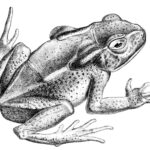
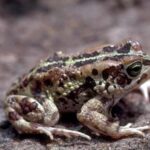
The moment your eyes rest upon a specimen of Nectophrynoides poyntoni, their diminutive yet richly intricate nature becomes apparent. Measuring typically only 20-30 mm in length, these petite amphibians exhibit impressive adaptations within their small stature. Covered in rough, granular skin textured to resemble moist bark or lichen, their coloration effortlessly blends with the forest background. Shades of mottled brown, olive, yellowish, and grey—dappled patterns that mimic sunlight filtering through foliage—canvas their bodies, cloaking their movements from predators and prey alike.
Prominent eyes protrude slightly, granting them effective vision in dimly lit forest floor habitats, while their compact limbs and feet, tipped with slightly broadened digits, facilitate efficient climbing and grasping upon slippery leaf litter surfaces. It is this extraordinary fusion of delicacy, adaptability, and earthy camouflage that captures our imagination and evokes curiosity among naturalists and amphibian enthusiasts alike.
Behavior and Life Cycle: A Delicate Dance within the Forest Floor#
Feeding Habits and Daily Activity#
Emanating from their concealed hideouts at twilight hours, these small toads partake actively in the lush insect buffet of their habitat. Scarcely larger than many insects themselves, they primarily consume tiny arthropods—ants, mites, termites, and harvestmen. Their camouflage and patient hunting strategy serve them well, allowing them to snatch prey without drawing attention from potential predators or competitors.
A Remarkable Reproduction Strategy#
Perhaps the most astonishing trait of Nectophrynoides poyntoni is its unique reproductive strategy. Unlike typical amphibians, which lay eggs in water bodies, this unusual species boasts fully terrestrial viviparity. Females give birth directly to tiny, perfect miniatures—fully formed juvenile toads that skip the tadpole stage entirely. This adaptation has profound implications: it allows them survival in habitats lacking stable standing water, thus broadening the ecological niches available. Moreover, parental care is markedly reduced, enabling females to quickly resume their secretive lives within forest leaf litter after the young emerge and disperse.
Ecological Role: Thread Within a Rich Biodiversity Tapestry#
Poynton’s Forest Toad occupies a subtle yet critical role within its ecosystem. By preying on tiny, often overlooked insects and arthropods, it contributes significantly to the biological control of forest invertebrate populations, aiding in maintaining balanced kinship within the complex web of forest life. Conversely, as prey themselves, these small amphibians provide crucial sustenance to predatory birds, reptiles, or small mammals patrolling the forest understory.
Furthermore, amphibians, including our featured species, serve as ecological barometers: their permeable skin and delicate life cycles render them remarkably sensitive to environmental changes, such as pollution, habitat disruption, or climate shift. Hence, a healthy population of Nectophrynoides poyntoni signals an equally healthy forest environment—a reassuring indication for conservationists dedicated to preserving rare and fragile ecosystems.
Threats and Conservation Status: Safeguarding a Delicate Legacy#
Unfortunately, Nectophrynoides poyntoni finds its existence increasingly threatened by habitat fragmentation, deforestation due to agricultural expansion, timber extraction, and infrastructure development. Additionally, human-induced climatic changes may gradually alter microhabitat conditions within these forests, jeopardizing suitable habitats and food availability for such sensitive species.
Recognizing its vulnerabilities, the International Union for Conservation of Nature (IUCN) identifies this species as “Critically Endangered.” Concerted conservation efforts are underway, including crucial habitat preservation within designated protected areas—such as the Udzungwa Mountains National Park—and awareness campaigns aimed at habitat conservation and sustainable land-use practices. International collaborations have further bolstered research aimed at understanding this species’ ecology, reproduction, and resilience, all essential to informed conservation actions.
Cultural and Scientific Significance: Symbolism and Scientific Insight#
While unknown to many outside immediate scientific circles, small forest-dependent amphibians like Nectophrynoides poyntoni hold cultural significance for local communities—often embodying the rich diversity and identity embedded in their ancestral lands. Indigenous communities traditionally recognize such species as indicators of overall forest health and environmental harmony, and hence their preservation often resonates broadly.
From a scientific perspective, Poynton’s Forest Toad opens unprecedented research windows into amphibian evolutionary biology, viviparity origins, and organism adaptability to isolated environments, providing insightful case studies into evolutionary pathways shaped by niche adaptation and speciation.
Conclusion: Ensuring a Future for Poynton’s Remarkable Forest Toad#
Small yet profoundly impactful, Nectophrynoides poyntoni symbolizes both vulnerability and strength in adaptation. Its specialized habits and fragile biology remind us of the interconnectedness of life—how preserving even the smallest ecologically relevant species echoes throughout entire ecosystems.
We are charged with the invaluable responsibility of protecting both the species itself and the habitats that sustain it. Let us amplify our appreciation, curiosity, and commitment to safeguarding these amphibian treasures. Only through concerted conservation efforts and heightened ecological awareness can we ensure that Poynton’s Forest Toad continues to enchant generations to come, weaving its subtle legacy deep within the ancient forests of Tanzania.