- Nectophrynoides laticeps: Journey into the World of the Wide-Headed African Tree Toad
- Taxonomy and Classification: Understanding the Lineage
- Natural Habitat: Life Amidst Tanzania’s Montane Forests
- Physical Characteristics: Tiny Wonders of Evolution
- Behavior and Life Cycle: Unique Lives beneath the Forest Canopy
- Ecological Role: Guardians of the Forest Floor
- Threats and Conservation Status: A Species at Risk
- Cultural and Scientific Significance: Emblems of Biodiversity
- Conclusion: Protecting the Hidden Treasures of Tanzania
Nectophrynoides laticeps: Journey into the World of the Wide-Headed African Tree Toad#
Among the mist-drenched foliage of Tanzania’s mountainous forests dwells a small and remarkable amphibian whose existence offers vibrant insights into the hidden elegance of biodiversity. Nectophrynoides laticeps, affectionately named the Wide-Headed African Tree Toad, represents a marvel of adaptation and resilience amidst changing climates and shifting habitats. This tiny yet captivating frog belongs to a rare group of live-bearing amphibians—a natural spectacle that ignites the curiosity of scientists and nature enthusiasts alike.
Unlike the amphibians many of us are familiar with, this species does not deposit eggs into freshwater pools or streams. Instead, it births fully-formed froglets, transitioning from tadpole to toad entirely within the mother’s body. Nectophrynoides laticeps not only fascinates those who study it closely but also personifies the untold wonders hidden deep within East Africa’s lush rainforests.
Taxonomy and Classification: Understanding the Lineage#
Nectophrynoides laticeps belongs to the Bufonidae family, an expansive lineage better known as true toads. It is part of the intriguing genus Nectophrynoides, notably unique for their viviparous reproductive strategy; their ability to bring forth live young directly sets them apart from most other amphibians. Interestingly, this rare genus comprises fewer than twenty described species, all endemic to the lush, montane habitats of East Africa, primarily Tanzania.
The species name “laticeps” translates directly to “wide-headed,” an apt descriptor that highlights one of its most noticeable physical attributes—its broadened and flattened head shape, setting it distinctly apart from close relatives like Nectophrynoides viviparus and Nectophrynoides asperginis.
Natural Habitat: Life Amidst Tanzania’s Montane Forests#
Nestled within the Eastern Arc Mountains of Tanzania, this little-known amphibian has adapted meticulously to life in humid montane forests. Specifically found in locales like the Udzungwa Mountains, its natural habitat comprises damp leaf-littered forest floors and moss-covered rock faces provided by a continually moist microclimate.
Here beneath a canopy that filters sunlight into soft slivers of green-gold, Nectophrynoides laticeps finds an ideal sanctuary. The region witnesses ample rainfall and consistent temperature conditions that perfectly complement the amphibians’ delicate biological requirements. These isolated mountainous habitats, known for their astonishingly high rates of endemism, serve as evolutionary islands, permitting species like Nectophrynoides laticeps to thrive in unique ecological niches without widespread competition.
Habitat Interactions and Adaptations#
This elusive toad capitalizes on the rich diversity of invertebrate prey that dwells amidst leaf litter, mosses, and decomposing logs, feeding mainly at night. Their nocturnal behavior and preference for microhabitats reduce competition with other vertebrates while aiding in their survival through cryptic strategies and stealthy movement. Additionally, their specialized skin, permeable yet resilient, maintains moisture and aids in respiration, effectively adapting them to live primarily terrestrial lives within the consistently humid ecosystem.
Physical Characteristics: Tiny Wonders of Evolution#
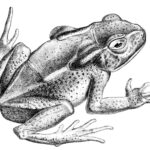
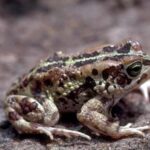
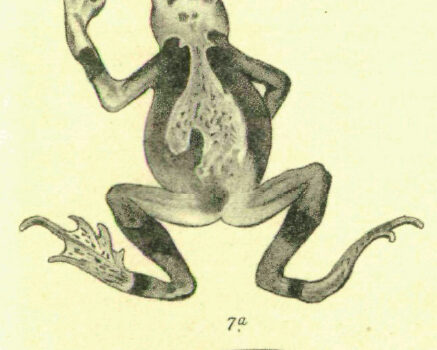
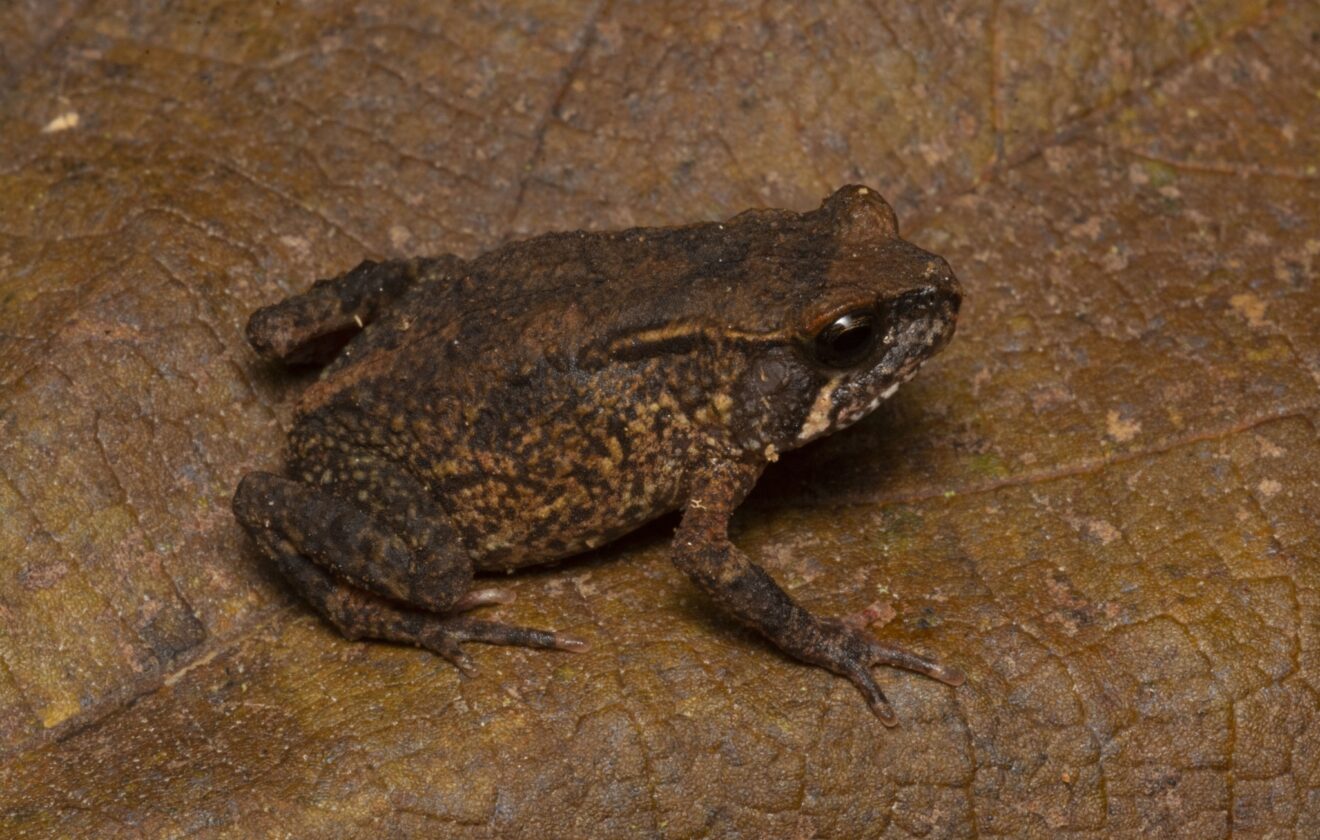
Despite rarely exceeding 2.5 centimeters in length, Nectophrynoides laticeps captivates those lucky enough to encounter it—with rich amber and earth-toned skin that serves as extraordinary camouflage among leaf litter. The coloration ranges from warm brown to muted olive-green, subtly peppered with darker markings that mimic shadows and detritus of the forest floor. This meticulous camouflage is, without question, one of its greatest survival assets.
Yet the most distinguishable characteristic lies right at the forefront—the distinctive wide head. This evolutionary trait enhances their sensory abilities, housing keen eyes and sensitive tympanic membranes, vital tools for detecting minute movements and faint sounds of prospective prey or dangerous predators. Their limbs, shorter yet robust for their size, facilitate movements among leaf litter and rocky crevices with dexterity, enabling swift escape or stealthy predation as the need arises.
Behavior and Life Cycle: Unique Lives beneath the Forest Canopy#
The Wide-Headed African Tree Toad’s nocturnal lifestyle centers around stealthy predation and cautious exploration, within a world largely invisible to human observers. During the twilight hours, these amphibians quietly stalk tiny invertebrates such as spiders, ants, termites, and occasional larvae, employing quick reflexes and precise tongues to secure their meals. Their secretive nature, combined with a preference for avoiding open spaces, has made behavioral observations particularly challenging yet enriching for the scientists dedicated enough to uncover this hidden world.
The Remarkable Birth of Live Young#
A distinguishing feature of this genus, and clearly evident in Nectophrynoides laticeps, emerges in its unusual reproductive behavior. Unlike typical frogs and toads that release eggs into water, these remarkable amphibians retain fertilized eggs within their bodies, allowing offspring to complete their metamorphosis entirely internally. Females give birth to miniature, fully developed froglets, each remarkably resembling tiny replicas of their parents.
Live birth (viviparity) significantly enhances offspring survival rates in these moisture-laden montane habitats, consequently allowing them to bypass potential threats posed by aquatic predators traditionally problematic to young amphibians. This fascinating adaptation positions Nectophrynoides laticeps as an essential subject of scientific intrigue, shedding light on how evolutionary pressures shape unique life-history strategies.
Ecological Role: Guardians of the Forest Floor#
Species like Nectophrynoides laticeps epitomize vital elements of the delicate ecological balance within Tanzania’s montane forests. By preying upon insects and arthropods, these frogs actively regulate invertebrate populations, indirectly promoting forest health and maintaining ecological balance. Furthermore, they themselves provide sustenance to various predatory birds, small mammals, and reptiles, occupying significant positions in complex forest food webs.
Serving as bioindicators, these sensitive amphibians reflect ecosystem health, with their decline often implying environmental deterioration or contamination long before impacts become broadly visible. Thus, safeguarding their populations directly contributes to the preservation of biodiversity and environmental integrity of these remote habitats.
Threats and Conservation Status: A Species at Risk#
Sadly, Nectophrynoides laticeps currently faces stark realities related to habitat loss, climate change, and human disturbances. Classified as “Endangered” by the IUCN Red List, their declining populations draw attention to vulnerabilities related to forestry practices, agricultural expansion, and climate-driven changes in precipitation patterns within their limited habitat range.
Additionally, reliance upon highly specialized ecosystems underscores their sensitivity; slight alterations to microclimate conditions or forest structure can severely impact their survival. Conservationists emphasize habitat preservation, coupled with local community education, to protect their delicate environments from irreversible change and prevent further population declines.
Cultural and Scientific Significance: Emblems of Biodiversity#
In local Tanzanian communities, while not widely known culturally beyond scientific circles, Nectophrynoides laticeps symbolizes the invaluable biodiversity of the region and serves as a potent reminder of the intertwined relationship between human well-being and natural ecosystems. Scientifically, understanding their specialized physiology and reproductive mechanisms provides key insights into evolutionary biology, enhancing global appreciation for amphibian diversity and helping direct future conservation strategies.
Conclusion: Protecting the Hidden Treasures of Tanzania#
As we journey deeper into understanding the intricate lives of species like Nectophrynoides laticeps, the urgency in protecting their habitats becomes a moral imperative, driven equally by scientific exploration and ethical stewardship. Their presence underscores the intrinsic value biodiversity offers, drawing fascination and evoking curiosity, empathy, and respect, emotions foundational to effective conservation efforts.
Let our appreciation for the Wide-Headed African Tree Toad inspire not only admiration but proactive commitment toward preserving such wonders of our natural world for generations to come. By protecting these tiny inhabitants of Tanzania’s misty forests, we actively contribute to safeguarding our planet’s magnificent, unique tapestry of life.