- Meet Nectophrynoides frontierei: Tanzania's Enigmatic Spray Toad on the Edge
- Taxonomy and Classification
- Natural Habitat: An Island in the Mist
- Physical Characteristics: Portrait of an Amphibian Marvel
- Behavior and Life Cycle: Quiet Secret of the Forest Floor
- Ecological Role: Forest Guardians in Miniature
- Threats and Conservation Status: On the Brink
- Cultural and Scientific Significance
- Conclusion
Meet Nectophrynoides frontierei: Tanzania’s Enigmatic Spray Toad on the Edge#
In the moss-wrapped highlands and dense cloud forests of eastern Tanzania awaits an enchanting yet fragile little creature, whose tiny silhouette often escapes even the sharpest of eyes. The Nectophrynoides frontierei, an amphibian both extraordinary and delicate, represents much of what makes wild ecosystems beautiful yet vulnerable. Known colloquially as Frontier’s Forest Toad, this species inhabits habitats so specialized and narrow it remains unknown to all but a handful of dedicated conservationists and herpetologists. Despite its small size and secretive nature, the species commands attention, standing as a stark symbol of Tanzania’s irreplaceable biodiversity.
What perhaps makes Nectophrynoides frontierei most intriguing—aside from its rarity—is its singular form of reproduction. Unlike most frog species that lay eggs in freshwater bodies, this peculiar toad produces fully formed miniature toadlets, bypassing the aquatic larval stages entirely. It’s a reproductive miracle that seems almost magical, an adaptation finely tuned to its mist-covered mountain home. Yet this biological marvel carries with it implications for conservation that make it especially sensitive to habitat alterations and climate stresses.
Taxonomy and Classification#
The charmingly enigmatic Nectophrynoides frontierei belongs to the family Bufonidae, better known as “true toads.” Within this family, the genus Nectophrynoides includes several distinct and rare toads native solely to the East African region, notably Tanzania. Nectophrynoides is a particularly intriguing genus because of its unique reproductive strategy—called viviparity—of giving birth directly to fully formed metamorphosed offspring.
The species was named in honor of Frontier, an international conservation research group active in Tanzania for decades. Nectophrynoides frontierei was formally described relatively recently, emphasizing how much remains unknown about this frog and highlighting the critical importance of protective measures for its limited populations.
Natural Habitat: An Island in the Mist#
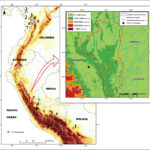
Nestled within Tanzania’s lush Eastern Arc Mountains, particularly the remote and ethereal forests of the Udzungwa Mountains, Nectophrynoides frontierei lives hidden among leaf litter, mossy surfaces, and undergrowth thick with dew. Imagine stepping into a world suspended in constant equilibrium between cloud and earth, where moisture cloaks every towering tree trunk and the cool air resonates with nature’s quiet rhythm.
The delicate cloud forests serve as a moisture-rich haven that meets the incredibly sensitive ecological requirements for survival only this unique toad can demand. This amphibian is highly specialized, adapted perfectly to the microclimate conditions offered only by these remote mountain heights. The humidity and cool temperatures keep these amphibians thriving, deep within the leaf litter and moss patches that blanket the forest floor, constantly refreshed by mist and rain.
Because of these highly specialized adaptations, these forests are, essentially, ecological islands, and consequently, the range of Nectophrynoides frontierei is critically limited—often restricted to only one or two closely adjacent ridges or valleys. These constraints magnify the conservation urgency surrounding this species.
Physical Characteristics: Portrait of an Amphibian Marvel#
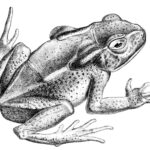
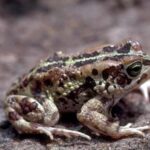
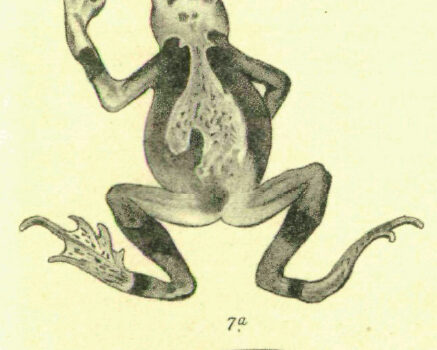
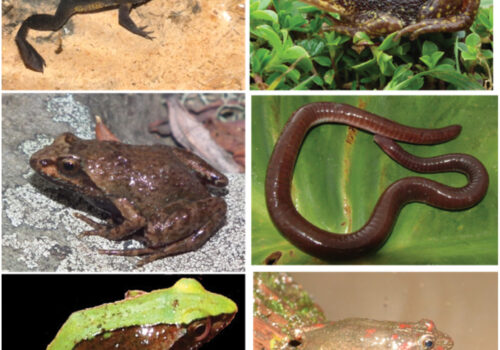
Nectophrynoides frontierei is undeniably diminutive, measuring just about 2 to 2.5 centimeters long, fitting comfortably onto a human thumbnail. Its understated appearance—muted coloration suffused with earthy hues ranging from deep olive-brown to grey-green—allows it to disappear seamlessly into its moss-covered habitat. Upon closer inspection, one may notice faint darker markings and subtle spotting, adding to the remarkable camouflage of this miniature toad.
The toad’s skin texture is worth special mention, roughened yet strangely delicate, bordered by subtle folds and wrinkles. These skin textures aid in water absorption, critical for survival in the moisture-laden but variable environments of high-altitude forests. Large, expressive eyes give the toad a deceptively alert gaze, reflecting its nocturnal lifestyle.
One particularly fascinating adaptation is its reproductive biology—its viviparity. Females nurture internally developing youngsters within their bodies, bypassing the threat-filled aquatic tadpole stages altogether. This exceptional evolutionary strategy marks the species as biologically unique and places it in the annals of amphibian evolutionary milestones.
Behavior and Life Cycle: Quiet Secret of the Forest Floor#
As night falls over the mist-drenched mountains, the soft calls of various creatures fill the air. Yet the calls of Nectophrynoides frontierei are subtle, short chirps and mild croaks barely audible amid the nighttime symphony. Communication is discreet, adapted for close-range interactions necessary in such dense and predator-rich environments.
Feeding primarily on ants, mites, and other minuscule invertebrates, Nectophrynoides frontierei hunts with impressive efficiency. With precise and lightning-fast movements, the toad flicks out its tongue with skillful precision, efficiently capturing prey. Their small size imposes limitations but also afford advantages, allowing them to exploit food resources inaccessible to larger amphibians.
The breeding biology is a notable ecological wonder. Internal fertilization occurs soon after mating interactions on the damp forest floor, and the female carries developing embryos within her, nurturing them safely from external threats. After an incubation period, strikingly absent of any aquatic intermediary stage, tiny exact replicas of adult toads emerge, already equipped to thrive independently in their demanding habitat. This viviparity grants them a vital evolutionary edge in habitats where freshwater pools suitable for tadpoles are rare or non-existent.
Ecological Role: Forest Guardians in Miniature#
The diminutive size, nocturnal habits, and secretive lifestyle of Nectophrynoides frontierei might easily lead one to ask how significant these tiny creatures are. But understanding their role reveals a vital weave in the intricate ecological fabric of the Udzungwa forests.
Firstly, as efficient predators of small invertebrates, these toads help maintain balanced populations of insects and arthropods, many of whom play fundamental roles in decomposition and nutrient cycling. Moreover, they are integral in local food webs, providing sustenance for larger nocturnal predators such as spiders and small nocturnal mammals—though their cryptic presence and subtle skin toxins deter many would-be predators.
Perhaps most significantly, amphibians like Nectophrynoides frontierei are indicator species, their health acting as a sensitive barometer of overall ecosystem stability. Their survival indicates quality of moisture conditions, atmospheric purity, and ecological integrity, highlighting the overall health status of Tanzania’s unique mountain forests.
Threats and Conservation Status: On the Brink#
Unfortunately, Nectophrynoides frontierei faces grave existential threats. The International Union for Conservation of Nature (IUCN) categorizes this toad as Critically Endangered, signaling significant risks and declining populations. Habitat loss remains the paramount threat, exacerbated by increasing human encroachment, deforestation, and agricultural expansion into previously untouched regions.
Additionally, climate change dramatically threatens to upset delicate moisture and temperature regimes. Even minor climate shifts in these montane ecosystems can trigger devastating cascades for specialized amphibians who rely on precise and stable conditions. Invasive predators, diseases (including potential risks like chytrid fungus, responsible for global amphibian declines), and pollution add further stressors, complicating conservation efforts.
Fortunately, conservation initiatives, including habitat protection programs, captive breeding research, and local community engagements in habitat stewardship, are being pursued, offering hope that this tiny ambassador of Tanzanian biodiversity might yet remain among us, continuing to inspire admiration and wonder.
Cultural and Scientific Significance#
In Tanzania, the Eastern Arc Mountains hold cultural resonance as sacred spaces. While Nectophrynoides frontierei itself might not be widely recognized culturally, its forested home symbolizes life, heritage, and deep-rooted traditions. Scientifically, the species offers invaluable insight into evolutionary biology, reproductive adaptations, and bioindicator dynamics, making it profoundly important for scientists engaged in ecological and conservation research.
Conclusion#
The fate of Nectophrynoides frontierei remains uncertain but hopeful. Understanding, empathy, awareness, and committed conservation action can preserve its enigmatic beauty. We owe future generations not only this captivating species but also the wondrous tapestry of life they symbolize. Join conservationists, researchers, and communities in safeguarding Tanzanian biodiversity, ensuring that the remarkable story of Nectophrynoides frontierei continues, resonating throughout Tanzania’s verdant cloud forests for years to come.