- Mertensophryne anotis: Unveiling the Secrets of a Hidden Forest Jewel
- Taxonomy and Classification
- Natural Habitat: A Symphony of Leaf Litter and Shade
- Physical Characteristics: Small in Size, Big on Adaptations
- Behavior and Life Cycle: Veiled Stories of the Forest Floor
- Ecological Role: The Guardians Underfoot
- Threats and Conservation Status: Guardians Under Threat
- Conclusion: Protecting the Hidden Jewel
Mertensophryne anotis: Unveiling the Secrets of a Hidden Forest Jewel#
In the lush undergrowth of East Africa’s coastal forests, a tiny, elusive creature dwells quietly beneath damp leaf litter, almost unseen but profoundly valuable to its delicate ecosystem. Known scientifically as Mertensophryne anotis, this enigmatic frog represents more than just an ordinary amphibian—it embodies a complex intertwining of ecological precision, fragile biodiversity, and conservation urgency. Existing quietly beneath the awareness of most observers, the delightful peculiarities and ecological significance of the earless dwarf toad, as it is colloquially called, warrant a deeper exploration and understanding.
With a total length scarcely reaching more than a thumb’s breadth, Mertensophryne anotis may easily elude notice. Yet, beneath its inconspicuous appearance lie fascinating behaviors, specialized adaptations, and intriguing ecological roles. Let us journey into the heart of its damp forest home, peel back layers of leaf litter, and reveal why this diminutive amphibian deserves more than passing recognition.
Taxonomy and Classification#
Classifying amphibians carefully is crucial, not merely for scientific precision, but also to inform conservation practices that preserve delicate lineages. Classified within the family Bufonidae—commonly called “true toads”—Mertensophryne anotis belongs to a genus notable for its distinctly adapted African distribution: Mertensophryne. The genus name honors the esteemed German herpetologist Robert Mertens, whose extensive studies have illuminated various aspects of amphibian biology.
The species epithet anotis, derived from Ancient Greek, meaning “earless,” offers up a significant clue to its distinctive morphology. Its common name, the earless dwarf toad, vividly reflects two characteristics: the extremely small size and the absence of visible external eardrums, a unique trait uncommon among many of its toad relatives.
While several closely related species share similar habitats within the genus—such as Mertensophryne micranotis and Mertensophryne taitana—each possesses subtle yet ecologically essential distinctions. These differences evolve over millennia and highlight the intricate evolutionary dance performed within East Africa’s richly biodiverse ecosystems.
Natural Habitat: A Symphony of Leaf Litter and Shade#
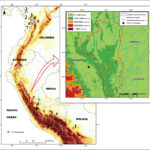
Mertensophryne anotis makes its home predominantly in the subtropical and tropical moist lowland forests along the coastal and lowland regions of southeast Kenya and northeast Tanzania. These forests whisper an ancient story; shaded beneath towering canopies, the region shelters a delicate tapestry of flora and fauna, providing the perfect niche for specialized organisms.
Unlike many amphibians who prefer expansive aquatic habitats for breeding, this species is notably terrestrial and highly adapted to life within dense leaf litter. In these moist, shadowy realms of decomposing leaves, organic debris, and a constant blanket of humidity, the earless dwarf toad finds both refuge and abundance. It blends effortlessly into the earthy hues of its environment, disappearing swiftly and silently into the detrital microcosm.
An Intimate Relationship with Forest Microhabitats#
Adapted to humid microclimates beneath trees, dead logs, and leaf piles, Mertensophryne anotis thrives where other creatures find little sustenance. Its small size and unobtrusive behavior allow it to capitalize on abundant but often overlooked resources: ants, mites, tiny beetle larvae, and various forest floor insects.
This amphibian’s presence points directly to the health and stability of these hidden microhabitats. An increase in leaf litter depth or reduction of shady forest overstory immediately impacts its delicate life cycle. Observing the shifting microenvironment thus allows researchers to understand subtle ecosystem changes, highlighting the species’ role as an indicator of ecosystem integrity.
Physical Characteristics: Small in Size, Big on Adaptations#
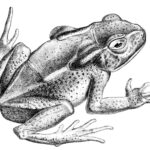
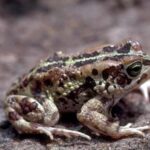
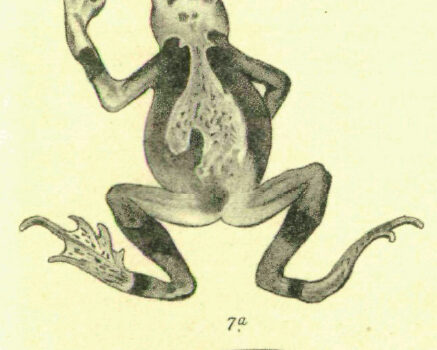
The first noticeable characteristic of the earless dwarf toad is undoubtedly its diminutive stature. Adults typically measure 2 to 3 centimeters in length, quietly traversing their territory with an unobtrusive charm. Coloration showcases earthy hues, varying from subtle grays, browns, sandy beige, and dappled olive patterns—shades mimicking the fallen leaves of their forest floor habitat.
Perhaps the most unusual physical attribute—and the namesake—is the absence of external tympana or eardrums. While most frogs and toads rely heavily on their hearing for communication, predation avoidance, and mating rituals, the earless dwarf toad developed a markedly different evolutionary path. Researchers speculate that Mertensophryne anotis perceives vibrations through its body and sensitive skin, compensating admirably for its apparent lack of traditional auditory structures.
Skin Texture and Camouflage#
This diminutive amphibian carries beautifully textured skin, slightly granular yet velvety in appearance. The knobby skin surface and speckled patterns on its back blend seamlessly with earthy substrates, significantly enhancing its cryptic camouflage. It remains still and nearly invisible in its microhabitat, effectively avoiding avian predators or larger amphibians that patrol both ground and canopy.
As the forest floor becomes an orchestra of subtle shades and granular textures, the earless dwarf gently disappears into a natural cloak gifted by evolution, unseen by all but the most vigilant eyes.
Behavior and Life Cycle: Veiled Stories of the Forest Floor#
Small yet precise, these toads labor largely unnoticed across the forest understory. Their secretive nature leaves them understudied and challenging to observe. However, careful research and patient observation have slowly revealed insights into their compelling behavior.
Feeding Habits: Masters of the Tiny Hunt#
Feeding on a diverse representation of minute arthropods, Mertensophryne anotis acts as regulator and check on various soil-dwelling invertebrate populations. Equipped with highly sensitive eyes, they detect and quickly dart their tongues to capture ants, termites, springtails, and small beetles. Their quick strikes reveal innate precision, despite their diminutive size.
Mating and Development: Silent Courtship, Secret Lives#
The reproductive strategies of this species are notably distinct. Unlike many noisy anurans, which rely on loud, vibrant calls, the earless dwarf frog’s mating behavior is considerably subtler. Males choose low-intensity, vibrational communication forms or subdued clicking noises perceptible only at close range or via skin vibrations, reducing predation risks and enhancing stealth.
Egg deposition generally occurs within moist depressions or damp leaf litter pockets instead of open-water breeding sites. Tadpoles, adapted to humid microenvironments, rely on shallow moist pools or highly saturated decomposing material, further emphasizing how exclusively terrestrial their life cycle truly is.
Ecological Role: The Guardians Underfoot#
Ecologically, Mertensophryne anotis fulfills clear niches as both predator and prey within coastal forests. The species notably contributes to controlling populations of tiny arthropods, a crucial ecological service maintaining soil health and forest floor stability.
Simultaneously, as prey, their small size makes them attractive morsels for birds, reptiles, and larger amphibians, thereby contributing significantly to the trophic dynamics within their delicate ecosystems.
Threats and Conservation Status: Guardians Under Threat#
Currently designated as “Least Concern” by the IUCN, Mertensophryne anotis remains relatively stable in certain well-protected forest patches, though habitat loss remains an ever-increasing threat. Slash-and-burn agriculture, expanding human settlements, timber extraction, climate change impacts, and reduction in forest connectivity threaten their specialized foraging and breeding habitats.
Conservation initiatives must emphasize protecting their forest habitats, establishing ecological corridors, and continuously monitoring populations through field surveys and citizen-science involvement.
Conclusion: Protecting the Hidden Jewel#
Mertensophryne anotis may be small, elusive, and largely secretive; however, its ecological narrative underscores the importance—and fragility—of subtropical forests along East Africa’s coast. We must remain vigilant custodians of their habitat, protecting the richness hidden beneath the leaf litter. As humanity navigates the delicate balance between development and nature, safeguarding this earless dwarf toad is not merely about protecting one species—but rather preserving a remarkable ecological tapestry that remains largely unseen yet profoundly essential.
Together, let’s champion the small, overlooked, yet significant lives thriving silently beneath our footsteps.