Exploring Melanophryniscus moreirae: The Hidden Jewel of Brazil’s Atlantic Rainforest#
Amidst the lush foliage, tangled vines, and mosaic patterns of Brazil’s Atlantic Rainforest hides an amphibian whose striking appearance belies its elusive nature—the Moreira’s red-bellied toad, scientifically known as Melanophryniscus moreirae. With its vivid coloration and secretive lifestyle, this diminutive creature captures the fascination of scientists and nature enthusiasts alike, representing both the incredible biodiversity and delicate fragility of the threatened forests it calls home.
While its distinctly vibrant belly characterized by intricate patterns is captivating to human observers, this tiny amphibian harbors toxic secretions as a powerful defense, cautioning would-be predators of danger through bold markings. Beyond being just an aesthetic marvel, Melanophryniscus moreirae serves as an essential indicator species, reflecting the ecological health of one of the most biodiverse yet vulnerable ecosystems in Brazil.
Taxonomy and Classification#
Delving into the scientific narrative, the taxonomic lineage places Melanophryniscus moreirae within the family Bufonidae, commonly known as true toads. Within this family, the genus Melanophryniscus includes several colorful species known for their small size, bright coloration, and secreted alkaloid toxins produced as chemical defenses from dietary sources. First described scientifically by Alípio de Miranda-Ribeiro in 1920, this species occupies a special position due to both its restricted distribution and unique coloration.
Closely related species within the genus, such as Melanophryniscus stelzneri and Melanophryniscus admirabilis, share similar traits: powerful toxins, vivid colorations, and small, often isolated populations. However, each species possesses subtle yet meaningful differences shaped by their ecological niches and evolutionary paths.
Natural Habitat#
Geographic Range and Distribution#
Melanophryniscus moreirae is endemic to the Atlantic Rainforest of southeastern Brazil, particularly within the montane environments of regions like Serra dos Órgãos and Serra da Mantiqueira. This narrow habitat range, characterized by rugged terrain, moist elevations, high humidity, and cooler microclimates, not only shapes the toad’s habitat specialization but also explains the rarity and spatially restricted occurrence of this species.
Ecosystem Preferences and Interactions#
The Moreira’s red-bellied toad is a habitat specialist, thriving predominantly in moist leaf litter, moss-covered rocky outcrops near small streams, ephemeral pools, and waterfalls within cloud forests. Its preference for these specific microhabitats underscores its vulnerability, as such ecosystems are particularly sensitive to environmental fluctuations and disturbances.
Camouflaged against the damp forest floor until disturbed —when its vivid ventral colors come alive—M. moreirae leverages its secretive nature to evade predators. Moss-covered stones, fallen logs, and dense vegetation provide refuge, protection from desiccation, and opportunities for hunting small arthropods within its meticulously balanced microhabitat.
Physical Characteristics#
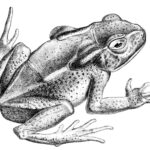
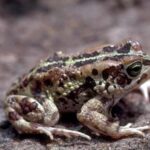
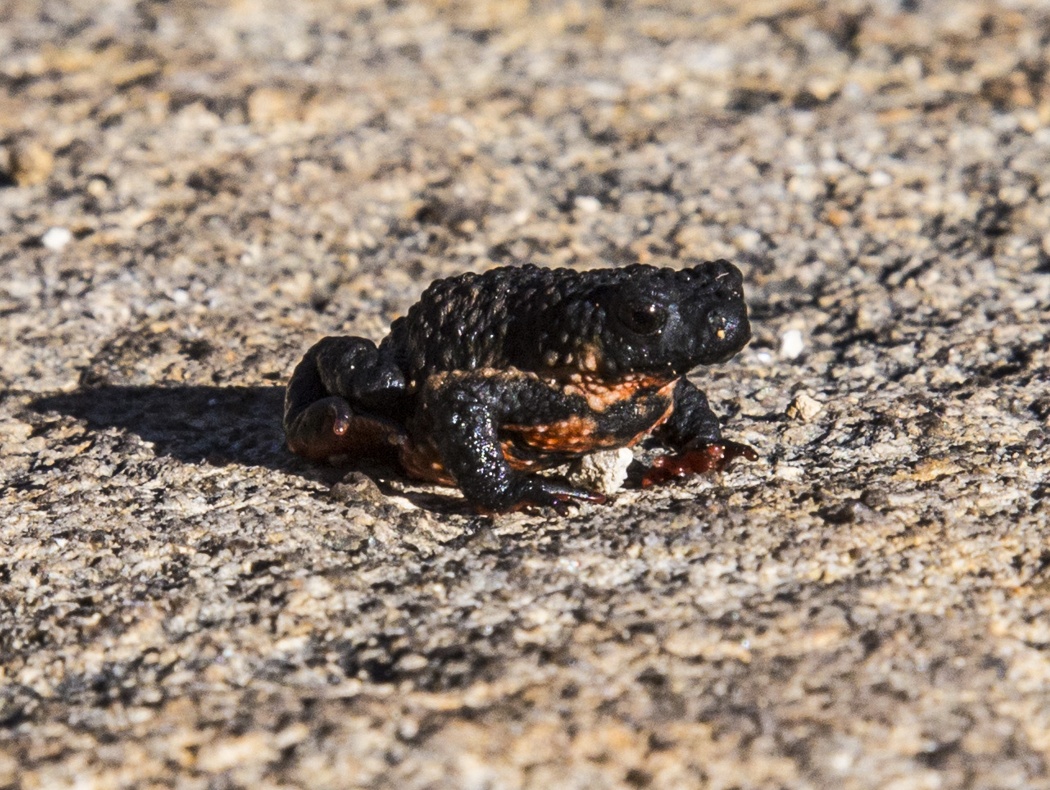
The aesthetic charm of Melanophryniscus moreirae is undeniable. Adults rarely exceed 20-25 millimeters in size, positioning them amongst the smallest yet vividly striking amphibians native to Brazil. Their skin exhibits a granular texture, lending these diminutive creatures a practical camouflage, their dark dorsum expertly mimicking damp soil, leaf litter, and moss-covered granite.
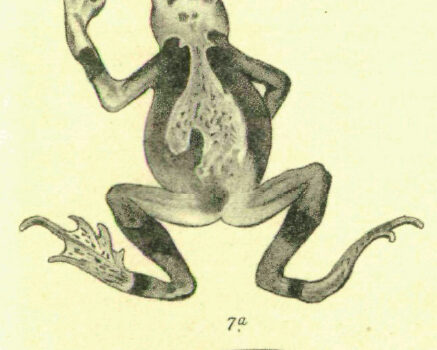
However, it is their ventral side that conveys a dramatic appeal, displaying a mosaic of deep reds, vibrant yellows, glowing oranges, and stark black. This coloration is an example of aposematic—or warning—coloration, signaling the potent toxicity produced from alkaloid compounds sequestered originally from dietary arthropods, such as ants and beetles, consumed in their leaf-litter habitats.
These bright warnings are critical to the toad’s survival strategy, sending clear-cut messages to potential predators: consume at your own peril. Such a tactic reduces predation pressure significantly, enhancing the toad’s ability to flourish within a challenging forest environment.
Behavior and Life Cycle#
Feeding and Foraging Habits#
Primarily insectivorous, the Moreira’s red-bellied toad displays an opportunistic feeding strategy within its leaf-litter habitat. Its diet predominantly comprises small arthropods, including ants, mites, spiders, and beetles, offering not only sustenance but critical chemical compounds necessary to produce defensive secretions.
Through precise and stealthy hunting behavior, M. moreirae captures prey using agile tongue strikes and quick reflexes. The dietary reliance on arthropods uniquely bridges the toad’s biology with the broader forest ecology, highlighting the interconnectedness and complexity of the Atlantic Rainforest ecosystems.
Reproduction and Developmental Stages#
During humid rainy periods characteristic of highland forests, males engage in subtle yet distinctive mating calls to attract females. Nestled within shallow pools or slow-moving streams, males vie quietly yet persistently for female attention. Unlike many larger frogs with booming choruses, these miniaturized toads produce intricate clicking and buzzing calls audible only at close range—an optimized strategy in the dense vegetation.
Following courtship, females deposit small clutches of jelly-coated eggs hidden among submerged vegetation or under moist foliage near water sources. Tadpoles emerge quickly, bearing adaptations suited to ephemeral pools and streams, developing rapidly before temporary water bodies evaporate. This accelerated development ensures survival amidst a precarious environment characterized by variable water availability.
Ecological Role#
Although diminutive in size, Melanophryniscus moreirae plays a substantial ecological role in the Atlantic Rainforest ecosystems. As predators, they act as natural regulators of small arthropod populations, maintaining balance within the invertebrate community. Conversely, as prey items—though challenging targets due to their toxins—they nonetheless support predators such as specialist snakes or birds with adapted resistance, thereby fostering ecological complexity and biological interactions.
Due to their acute sensitivity to environmental changes, the species serves as a critical indicator of habitat integrity, signaling ecosystem changes through their population fluctuations and declines, thus aiding conservationists and biologists in monitoring forest health.
Threats and Conservation Status#
Like many members of its genus, Melanophryniscus moreirae faces an uncertain future. Classified as “Critically Endangered” by the International Union for Conservation of Nature (IUCN), this species’ existence hangs precariously balanced due to habitat fragmentation, deforestation, pollution, climate change, and pathogenic diseases, such as chytridiomycosis.
The reduction and fragmentation of the Atlantic Rainforest habitat, largely due to agriculture, urban expansion, and unregulated tourism, place severe pressures on this already rare species. Climate change accentuates this vulnerability, altering rainfall patterns, stream hydrology, and humidity levels essential to amphibian survival.
Encouragingly, several Brazilian conservation organizations, biologists, and community-based initiatives have initiated protection measures to safeguard their habitats, implement monitoring programs, and raise awareness among local communities and stakeholders to ensure lasting protection for these frogs.
Cultural and Scientific Significance#
While less prominent in folklore compared to larger or more charismatic amphibians, the Moreira’s red-bellied toad demonstrates significant scientific value. Toxic alkaloids produced by the creature have sparked biochemical investigations into potential medical applications, including exploring unique compounds possessing anti-microbial and analgesic properties, highlighting how biodiversity serves human health interests.
Additionally, due to their sensitivity to environmental changes, the species serves as a vital model organism for studying climate impacts on biodiversity preservation, freshwater ecosystems, and amphibian declines worldwide.
Conclusion#
In the hidden corners of Brazil’s mountainous Atlantic Rainforest, Melanophryniscus moreirae—the illustrious Moreira’s red-bellied toad—lives as a testament to the wonders of evolutionary adaptation and vulnerability underlying biodiversity hotspots. Captivating aesthetically, ecologically indispensable, yet tragically sensitive to environmental threats, this tiny amphibian deserves global awareness, conservation advocacy, and dedicated preservation efforts.
Embracing this amphibian’s plight symbolizes a broader commitment to safeguarding habitats, biodiversity, and planetary health. By supporting conservation strategies and nurturing curiosity about creatures like M. moreirae, we collectively affirm our responsibility towards protecting the living tapestry of our Earth’s fragile ecosystems.