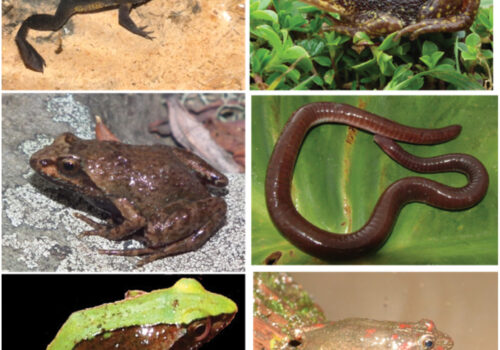
- Werneria iboundji: The Hidden Jewel of Central Africa's Rainforests
- Taxonomy and Classification
- Natural Habitat: The Montane Forest Realm of Gabon
- Physical Characteristics: Nature’s Mastery in Camouflage
- Behavior and Life Cycle: A Symphony of Survival
- Ecological Role: Sentinel of the Montane Rainforest
- Threats and Conservation Status: Guardians in Jeopardy
- Cultural and Scientific Significance
- Conclusion: Preserving Gabon’s Montane Gem
Werneria iboundji: The Hidden Jewel of Central Africa’s Rainforests#
Hidden within the verdant embrace of Central Africa’s lush, unspoiled rainforests lives a striking amphibian, humble yet captivating: Werneria iboundji. Named after the majestic Massif du Chaillu region near Mont Iboundji in Gabon, this elusive and intriguing frog remains largely unknown, even to passionate nature enthusiasts. But despite its obscurity, the Werneria iboundji holds secrets that not only enrich our understanding of biodiversity but emphasize the urgent need for rainforest preservation.
Belonging to the family Bufonidae—commonly known as true toads—this intriguing species challenges its family’s classical image with unique adaptations that fascinate biologists and inspire conservationists. Few frog species exemplify so vividly the hidden complexity and wondrous beauty of tropical amphibians as the Werneria iboundji, drawing attention far beyond the scientific community.
Taxonomy and Classification#
Werneria iboundji belongs to the Bufonidae family, a wide-ranging group known popularly as ‘true toads’. Within the genus Werneria, it shares close evolutionary ties with other species adapted to montane and rainforest ecosystems in Central and West Africa. First scientifically described in 2004 by biologists Rödel, Schmitz, Pauwels, and Böhme, this species pays homage to its primary habitat—the distinctive montane forests near Gabon’s iconic Monts de Cristal and Massif du Chaillu.
Frogs within the genus Werneria exhibit remarkable ecological specialization, often inhabiting rare climatic niches like moist mountainous regions. Investigations into the Werneria iboundji reveal significant adaptations unique to its montane rainforest home, which sets it apart from many closely related amphibian species.
Natural Habitat: The Montane Forest Realm of Gabon#
Deep within Gabon’s vibrant forest highlands—where clouds sift gently through ancient canopies and mist caresses moss-covered soils—we find the elusive Werneria iboundji. Montane rainforests provide a delicate equilibrium, combining heavy rainfall, altitudinal humidity, and cooler, shaded microhabitats—the perfect sanctuary for amphibians highly sensitive to environmental fluctuations.
Geographic Distribution and Specific Habitat Preferences#
The species’ known geographic distribution is notably restricted, primarily documented in high-altitude forests surrounding Mont Iboundji in south-central Gabon. Within these montane ecosystems, Werneria iboundji favors cool, permanently damp pockets close to swiftly flowing mountain streams and rivulets.
Its survival depends heavily on the abundant moss and leaf litter that retain moisture, providing security from predators and a perfect nursery for their fragile eggs and developing tadpoles. Dense overhead vegetation and frequent mist cover are essential to maintaining the gentle, constant humidity vital for this amphibian’s health and reproduction.
Intricate Interactions with a Sensitive Ecosystem#
Each humid nook, fallen log, mossy stone, and leaf litter patch plays a crucial role in maintaining the delicate environmental balance which Werneria iboundji relies upon. Amphibians as delicate as these serve as accurate barometers of rainforest ecosystem health, signaling subtle yet critical environmental changes. Their presence underscores the vibrant biodiversity of Gabon’s montane forests, painting an intricate picture of ecological interdependence.
Physical Characteristics: Nature’s Mastery in Camouflage#
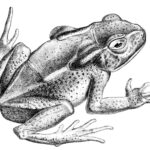
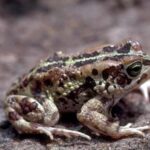
Upon closer inspection, the amphibian reveals subtle but exquisite details, carefully molded through millennia of adaptive evolution. An adult Werneria iboundji measures roughly 40-50 mm in length, typically compact and robust with short limbs, a rounded snout, and large, expressive eyes that reflect moonlight like gems peering through shadows. Yet, above all, its coloration and markings echo the very spirit of cryptic adaptation.
A Palette Shaped by Nature’s Brush#
The coloration of the Werneria iboundji perfectly mirrors its habitat—varied shades of brown, olive, deep cream, and grey resonate with the forest floor, creating strikingly effective camouflage. Darker mottling along its dorsum and subtle yellowish patches underline nature’s deliberate design, hiding it effortlessly amidst damp leaves, stones, and moss banks.
Adaptations for Rainforest Life#
Distinct granular skin texture not only provides additional camouflage but also facilitates moisture absorption and retention. As an amphibian sensitive to dehydration, their textured skin plays a central role in maintaining physiological hydration. Furthermore, the thick, glandular skin characteristic of toads offers additional protection from some smaller predators and helps reduce moisture loss, a critical adaptation in montane habitats.
Behavior and Life Cycle: A Symphony of Survival#
Beneath the veil of nighttime mist and darkness, the montane forests resound with gentle, rhythmic croaking calls—the voice of Werneria iboundji, marking territorial claims, attracting potential mates, or communicating subtle dangers. Their life cycle, deeply adapted to the moody climate and topography of rainforest highlands, offers fascinating insights into their delicate existence.
Feeding and Foraging Habits#
Primarily nocturnal, Werneria iboundji ventures out from its concealed daytime shelters into the safety of darkness. Here it hunts for invertebrates—small insects, spiders, and occasionally worms. Employing stealth and patience, these frogs use a sit-and-wait hunting strategy, relying on expert camouflage and swift reflexes to capture unsuspecting prey.
Reproduction and Parental Strategies#
Breeding coincides closely with the rainy season, when mountain streams swell and tiny ephemeral pools form. Male Werneria iboundji congregate near these waterways at night, emitting coordinated vocalizations to attract females. After attracting a mate, females deposit small clutch groups of gelatinous eggs in shallow pools or protected depressions, initiating the next generation’s lifecycle.
Tadpoles develop quickly, adapted to environments prone to instability from sudden heavy rains, rapidly-changing temperatures, or predator influx—adaptive traits ensuring successful metamorphosis despite environmental demands.
Ecological Role: Sentinel of the Montane Rainforest#
Amphibians like Werneria iboundji contribute substantially to their ecosystems as indicators of environmental health. Their sensitivity to chemical changes, climate variability, and ecosystem disruptions allows scientists to track subtle shifts in the environmental balance. Moreover, they occupy central ecological niches, controlling insect populations and serving as vital prey for higher predators, intrinsically linked to broader forest biodiversity.
Threats and Conservation Status: Guardians in Jeopardy#
As enchanting as this frog is, its future remains uncertain. The International Union for Conservation of Nature (IUCN) currently categorizes Werneria iboundji as Data Deficient due to insufficient data on localized populations. Nonetheless, concerns related to habitat decline through deforestation, illicit logging, mining, and climate change cast a worrying shadow over its survival prospects.
Emerging threats, such as chytrid fungus (Batrachochytrium dendrobatidis) infections, also worry conservationists—a global plight impacting countless amphibians. Although little evidence exists specifically linking the fungus to local populations of Werneria iboundji, its devastating reach prompts readiness among biologists and herpetologists.
Cultural and Scientific Significance#
While not widely renowned in folklore or traditional medicinal practices like other frogs from tropical regions, Werneria iboundji promises significant scientific potential. Studying its adaptations, behaviors, and ecological role deepens our understanding of biodiversity resilience, offering guideposts for conservation strategies.
Conclusion: Preserving Gabon’s Montane Gem#
The story of Werneria iboundji serves as a compelling reminder of nature’s hidden wonders and humanity’s stewardship responsibility. Preserving its delicate rainforest habitat equates to safeguarding countless interconnected species, preserving climate stability, and protecting invaluable genetic diversity.
We, as global citizens and nature stewards, must ensure attention and action for conserving species like Werneria iboundji. By fostering education, supporting conservation initiatives gathering scientific data, and advocating sustainable forest practices in Gabon and beyond, we not only protect the amphibians themselves but ensure healthier, richer, and more resilient ecosystems—a necessary legacy for future generations.