Nymphargus Phenax: Exploring the Enchanting Life of a Glass Frog#
High within the lush, dripping cloud forests of South America, amidst emerald leaves adorned with beads of moisture, dwells an extraordinary inhabitant: Nymphargus phenax. Glistening in shades of jade, lime, and translucent emerald, this captivating glass frog enchants scientific minds and nature enthusiasts alike. Aptly named for its delicate, transparent underbelly—revealing its internal organs in a mesmerizing act of natural transparency—Nymphargus phenax stands as a symbol of both the biodiversity and fragility of its rainforest habitat. Yet, despite its captivating appearance and intriguing ecology, this species remains largely shrouded in mystery, quietly navigating the challenges of survival in an ever-changing environment.
Join us as we journey deep into the biological nuances, remarkable behaviors, ecological roles, and conservation concerns of Nymphargus phenax, an elusive yet intriguingly beautiful creature deserving of deeper appreciation and understanding.
Taxonomy and Classification#
Nymphargus phenax belongs to the family Centrolenidae, commonly known as glass frogs. This captivating family gets its popular name from their semi-transparent skin, particularly on the abdominal underside that reveals vivid views of their internal anatomy. Within this family, the genus Nymphargus comprises many similarly delicate species, each precisely adapted to specific ecological niches in Central and South America.
The precise classification of Nymphargus phenax positions it within the class Amphibia and the order Anura—characterized by distinctive jumping ability and lack of a tail at maturity. Discovered and first scientifically described in 1982, this species maintains a relatively recent presence within herpetological taxonomy.
Nymphargus phenax stands closely related to other species within its genus, such as Nymphargus grandisonae and Nymphargus griffithsi, sharing ecological preferences and subtle morphological characteristics while maintaining distinct genetic lineages and ecological roles.
Natural Habitat#
A Cloud-Shrouded Realm#
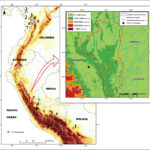
Nymphargus phenax is found primarily within the Andean foothills of Colombia and Ecuador. Its natural range includes lush montane cloud forests whose altitudes typically span from approximately 900 to 1,800 meters, locales frequently draped in layers of opaque mist and nourished by a steady influx of perpetual moisture. This humidity-rich environment provides the ideal refuge for an amphibian so intimately affiliated with water’s life-sustaining qualities.
The habitat preferred by Nymphargus phenax consists of thick foliage near clear, flowing streams. Here, within the layered canopies of broad-leaved plants and ferns, the species finds protection, food, and proper breeding conditions. Compelled to coexist harmoniously within its ecological niche, the frog navigates a delicate balance of humidity, temperature, and vegetation suitable for its continued survival. Each leafy perch and dew-laden frond represents both shelter and hunting ground, a place where camouflage and stealth become integral tools for life.
Physical Characteristics#
Anatomy Crafted for Survival#
At first glance, Nymphargus phenax captivates observers with its diminutive size—often measuring no more than approximately 2 to 3 centimeters in length—and striking translucency. Its ventral skin, remarkably clear, reveals the intricate patterns of its delicate organs, including the heart and liver. This transparency may seem like a vulnerability, yet it serves as effective camouflage against predators, blending seamlessly with its verdant backdrop by significantly reducing shadows cast upon illuminated leaves.
The dorsal skin of Nymphargus phenax typically sports vivid greens and delicate cream-colored flecks or reticulations, perfectly harmonizing with the foliage upon which it rests. Its large, golden-hued eyes peer from atop the head, surveying the environment with precision—even under dim moonlight or dense mist. Long, slender limbs and contrasting adhesive discs located on each fingertip provide the frog with impressive agility, enabling it to effortlessly leap and climb within its arboreal territory.
Behavior and Life Cycle#
Nocturnal Monarch of the Foliage#
The life of Nymphargus phenax unfolds primarily under the comforting veil of darkness, its activity peaking as night falls over the rainforest. Perched securely on leaves positioned near gurgling streams, it patiently scans for insects—its primary prey—to venture within striking distance. Small moths, flies, ants, and beetles all compose the staple diet of these agile hunters. Their feeding method demands precision: a rapid, skillful lunge that ends in a remarkably accurate tongue extension, capturing meals with graceful effectiveness scarcely perceptible to the human eye.
Captivating Courtship and Breeding Rituals#
The reproductive strategy of Nymphargus phenax rivals its feeding behavior in elegance and intrigue. With the onset of the rainy season, male frogs initiate resonant and melodious calls, echoing gently through the nocturnal canopy. These melodic croaks, designed to attract potential mates, form nature’s delicate symphony and signal the beginning of an elaborate reproductive dance. Responding females evaluate males based on calling frequency, intensity, and strategic positioning—usually a perch conveniently placed above a clear stream, ensuring optimal conditions for the coming offspring.
Once successful pairing occurs, the female positions herself carefully beneath chosen leaves, where she lays her delicate cluster of jellylike eggs, secured tightly to the underside. These eggs—transparent, reflective, and gently oscillating in the humid breeze—are carefully guarded by the male. Male parental responsibility for egg protection and moisture regulation provides a much-needed advantage, dramatically increasing egg survival rates under natural conditions.
From Tadpole to Adult: A Journey of Metamorphosis#
Upon hatching, tiny tadpoles drop gently into the stream’s waters below, adapting swiftly to an aquatic environment teeming with both nourishment and potential threats. Their streamlined biology facilitates survival in rapid currents, where they grow and undergo the dynamic process of metamorphosis. Gradually, limbs emerge, tails recede, and lungs develop—eventually signaling readiness for a terrestrial escape along stream banks and vegetation once adult proportions are reached.
Ecological Role#
Nymphargus phenax plays a vital role within its rainforest ecosystem. As an insectivore, it helps regulate insect populations, contributing to the balanced functioning within its tropical food web. This little amphibian simultaneously serves as prey, providing sustenance to predatory birds, reptiles, and even larger frogs, thereby connecting a web of ecosystem interactions fundamental to forest health. Furthermore, due to its permeability to environmental changes—especially water and air quality—Nymphargus phenax serves as a valuable bioindicator species, capable of visibly alerting scientists and conservationists to subtle ecosystem disruptions.
Threats and Conservation Status#
Like many creatures residing in cloud and montane forests, Nymphargus phenax faces noteworthy threats. Habitat destruction due to deforestation, agriculture expansion, and resource extraction poses significant risks. Additionally, climate change—manifesting as altered rainfall patterns, shifted temperature ranges, and rising extremes of drought or flooding—brings serious concerns. Amphibian populations globally are further threatened by invasive pathogens such as the chytrid fungus, which contributes markedly to amphibian declines worldwide.
The International Union for Conservation of Nature (IUCN) currently classifies this species as “Vulnerable,” painting an urgent picture of the need to preserve their critical habitats. Ongoing conservation initiatives include habitat restoration efforts, establishment of protective areas, and controlled captive breeding programs to bolster vulnerable populations.
Cultural and Scientific Significance#
Beyond ecological importance, glass frogs—Nymphargus phenax included—hold notable cultural and scientific prominence. Traditional indigenous knowledge often elevates amphibians as environmental guardians, symbolic of pristine water quality and flourishing biodiversity. Scientifically, their transparent anatomy provides unique contributions to biomedical research, including studies into cardiovascular function, cell biology, and respiratory adaptation. Each discovery associated with glass frogs enriches humanity’s collective understanding of both biology and conservation.
Conclusion#
The story of Nymphargus phenax exemplifies nature’s exquisite complexity, interweaving tales of adaptation, survival, and ecological interconnectedness. Their existence remains inherently tied to pristine ecosystems, acting as gentle reminders of our responsibility to protect the natural world that nurtures them. By staying informed, becoming active advocates, and supporting conservation programs, we can help ensure these delicate amphibians persist, glistening like translucent gems among the misty foliage, heard singing softly amidst the cascading streams, captivating us for generations to come.