- The Amatola Toad (Vandijkophrynus amatolicus): A Silent Guardian of South Africa’s Hidden Forest Realms
- Taxonomy and Classification: Placing the Amatola Toad on the Amphibian Tree
- Natural Habitat: In the Shadows of the Amatola Mountains
- Physical Characteristics: A Lesson in Subtlety and Survival
- Behavior and Life Cycle: Quiet Inhabitants of Forest Floor Shadows
- Ecological Role: Key Indicators of Biodiversity and Forest Health
- Threats and Conservation Status: Navigating an Uncertain Future
- Cultural and Scientific Significance: Hidden Treasures of Knowledge
- Conclusion: Saving the Quiet Guardian of Amatola
The Amatola Toad (Vandijkophrynus amatolicus): A Silent Guardian of South Africa’s Hidden Forest Realms#
Hidden within South Africa’s mist-shrouded forests dwells an amphibian often overlooked yet profoundly significant—a creature whose very name evokes mystery: The Amatola toad (Vandijkophrynus amatolicus). While some may quickly pass by without noticing its subtle presence, this amphibian plays a crucial role in the ecosystems it inhabits, serving as an indicator of forest health and stability. Named thoughtfully after the enchanting Amatola Mountains, its scientific identity echoes both its geography and intrinsic connection to its environment.
Yet, despite its significance, the Amatola toad remains relatively unknown outside dedicated circles of wildlife enthusiasts and herpetologists. With cryptic camouflage, secretive habits, and a life cloaked in quiet shadows under damp foliage, understanding this amphibian requires patience, reverence, and careful observation. Let us peer into the secretive world of the Amatola toad, exploring its exceptional adaptations, ecological roles, and the pressing concerns posed by the rapidly changing environment surrounding it.
Taxonomy and Classification: Placing the Amatola Toad on the Amphibian Tree#
Understanding an organism’s identity begins with taxonomy—the backbone of biological classification. The Amatola toad (Vandijkophrynus amatolicus) belongs within the amphibia class, nestled neatly within the Bufonidae family—commonly known as “true toads.” The genus, Vandijkophrynus, previously grouped under the broader Bufo, comprises a collection of specifically African toads exhibiting distinctive traits.
The Amatola toad, first described scientifically by Hewitt in 1925, was named for its striking connection to the Amatola Mountains of South Africa. Alongside species such as Vandijkophrynus angusticeps and Vandijkophrynus gariepensis, this toad forms part of a fascinating lineage of endemic African amphibians whose evolutionary paths reflect the geography and unique climatic conditions of southern Africa’s varied landscapes.
Natural Habitat: In the Shadows of the Amatola Mountains#
The habitat of the Amatola toad whispers a tale of ancient forests and secluded streams hidden within the verdant folds of mountainous terrain. Endemic exclusively to South Africa’s Eastern Cape Province, this remarkable amphibian primarily inhabits moist montane grasslands and temperate forest regions nestled in and around the Amatola Mountain range. This region harbors dense patches of indigenous afrotemperate forest, cool perennial streams, and lush, moss-covered undergrowth—perfect conditions for amphibians reliant on humid microenvironments.
Humidity, moisture, and cool temperatures shape habitats that are gentle, sheltered, and rich in invertebrate prey, supporting the amphibian throughout its lifecycle. Secluded beneath leaf litter, rotting logs, or rocky crevices, the Amatola toad demonstrates an affinity for microhabitats inherently rich in organic matter and moisture—an adaptation that facilitates successful thermoregulation, hydration, and protection from predators and harsh weather conditions.
Physical Characteristics: A Lesson in Subtlety and Survival#
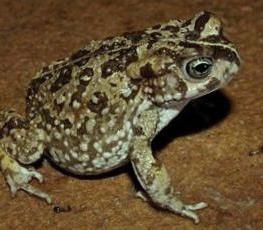
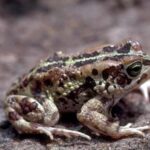
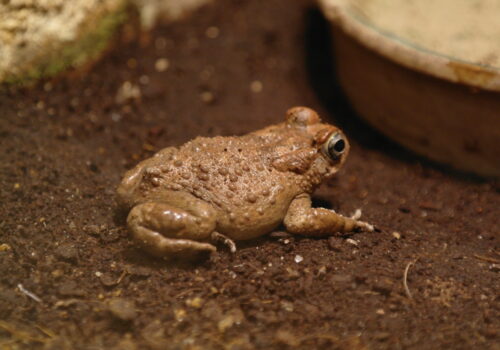
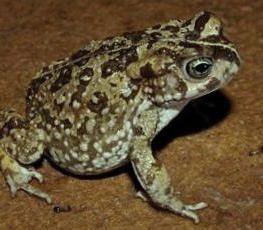
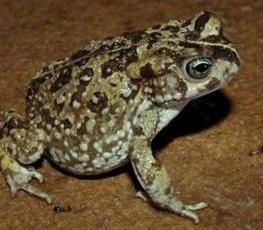
When first encountering an Amatola toad, one might initially mistake it for a mere leaf or piece of debris nestled quietly against damp earth. Reaching a modest size of about 2.5 to 4 cm, these toads are masters of camouflage, their morphology a masterclass in blending perfectly into their surroundings. From its rounded snout down to its understated limbs, everything about the Amatola toad seems made for discretion.
The skin is typically warty yet not prominently so, colored in subdued earth tones ranging from olive-brown to greyish-brown with subtle mottling. Their dorsal surface often presents a darker median line or subtle mottling patterns, further enhancing effective concealment within their chosen habitats. These features serve critical roles—not just in avoiding predation, but in increasing efficiency when stalking their prey. Even their eyes, bronze or golden with dark horizontal pupils, adapt precisely to dim, under-canopy conditions, allowing these amphibians to navigate their ecosystem adeptly during twilight and nocturnal hours.
Behavior and Life Cycle: Quiet Inhabitants of Forest Floor Shadows#
Diet and Feeding Habits: Small but Mighty Hunters#
Underneath its quiet demeanor resides an efficient predator. The Amatola toad mainly subsists on ground-dwelling invertebrates such as ants, beetles, small spiders, and other arthropods that populate the forest leaf litter and grassland fringes. Employing ambush techniques, these amphibians sit motionless—sometimes hours at a time—waiting for prey to unwittingly move within striking distance. A quick flick of its sticky tongue, and its unsuspecting prey becomes an easy meal.
Reproduction and Breeding: A Seasonal Symphony#
The breeding behavior of the Amatola toad vividly illustrates the interconnectedness of its existence with seasonal rhythms. Typically occurring during the rainy season between October and January, males emit soft calls—infrequent but distinctive—attracting females toward shallow forest ponds or slow-moving streams. Female Amatola toads deposit strings of gelatinous egg masses in calm waters, attaching them to submerged vegetation to guard against currents and predation.
The tadpoles, which hatch soon afterward, begin their underwater journey by feeding on algae and other microscopic aquatic organisms before metamorphosing into miniature versions of adults several months later. Their metamorphosis presents a window into evolutionary marvels—transforming larvae into terrestrial animals uniquely adapted to forest floor life.
Ecological Role: Key Indicators of Biodiversity and Forest Health#
The seemingly modest Amatola toad holds an essential ecological role as both predator and prey. By keeping insect and arthropod populations in balance, they contribute directly to the forest food web. More significantly, as amphibians sensitive to subtle environmental changes, they provide critical indicators of ecosystem health. Their presence—or absence—can signal environmental stress factors, including pollution, habitat destruction, or climatic changes before more observed impacts become apparent.
Additionally, by serving as prey for birds of prey, snakes, and small carnivorous mammals, Amatola toads ensure a broader ecological balance by linking different trophic levels together and promoting robust biological diversity across their ecosystem.
Threats and Conservation Status: Navigating an Uncertain Future#
Unfortunately, despite the species’ ecological importance, the Amatola toad presently confronts considerable conservation challenges. According to the International Union for Conservation of Nature (IUCN), Vandijkophrynus amatolicus is currently classified as Critically Endangered, a grave status highlighting deep concerns over declining population numbers and restricted distribution.
Primary threats include habitat loss driven by human encroachment, forestry plantations, agriculture, and urbanization. Furthermore, invasive plant species shift forest structures, challenging the fragile habitat demands required by these toads. Climate change exacerbates these threats, altering precipitation patterns vital for breeding success.
Researchers and conservationists respond by closely monitoring remaining populations and actively campaigning for habitat preservation, restoration, and public education initiatives. Amphibian conservation programs aim to raise awareness about this small yet significant species, striving to inspire local and global communities into action.
Cultural and Scientific Significance: Hidden Treasures of Knowledge#
While relatively unknown culturally compared to more prominent wildlife species, the Amatola toad nonetheless holds immense scientific value as a sentinel species, reflecting the delicate balance within its natural forest ecosystems—knowledge that directly informs conservation biology and ecological resilience studies. Further research into this elusive species can yield valuable insights into amphibian adaptations, response mechanisms to environmental stressors, and effective conservation strategies benefiting broader ecosystems.
Conclusion: Saving the Quiet Guardian of Amatola#
The Amatola toad, this cryptic yet critical amphibian guardian of South Africa’s forest undergrowth, calls quietly for attention. Serving as an ecological sentinel, hidden predator, and key indicator of environmental well-being, Vandijkophrynus amatolicus beckons us toward deeper understanding and proactive stewardship.
Humans and nature advocates alike possess the ability—and obligation—to protect this secretive inhabitant by preserving its habitat, mitigating threats, and championing its gentle presence through informed actions and policies. Together, we can ensure that the quiet beauty and ecological significance of the Amatola toad continue to thrive for generations yet unborn.