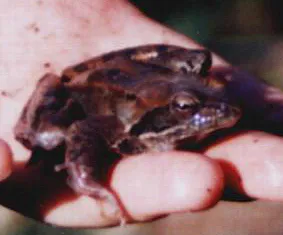
Rana macrocnemis, the long-legged wood frog, is a species of true frog in the family Ranidae, described by George Albert Boulenger in 1885. It is also known by several other English names, including the Caucasus frog, Caucasian brown frog and Transcaucasian frog, and it is found in Armenia, Azerbaijan, Georgia, Iran, Russia, Turkey and Turkmenistan.
Identification
No open-access source describes the adult frog’s size, colouring or markings in detail. The one recorded trait is behavioural: the species is active at night.
Habitat and range
Rana macrocnemis occupies an unusually broad span of habitat types across its Caucasus and Middle Eastern range. It lives in boreal and temperate forests and temperate shrubland, as well as rivers, intermittent rivers, swamps, lakes and marshes, and freshwater springs, and it also turns up away from natural wetlands, in rocky areas, farmland, pastureland, plantations, rural gardens and urban areas. That tolerance for farmed and built-up land, alongside forest and open water, suggests a species that can persist wherever some damp cover and a breeding pond remain within reach, rather than one tied to a single habitat type.
Behaviour and breeding
Detailed accounts of this species’ calls, egg-laying or larval development were not found on an open-access source during research for this page. The one behavioural trait on record is that the frog is nocturnal, hunting and moving about after dark rather than by day.
Conservation
The species’ facts box above carries its current IUCN Red List category, Least Concern. Wikipedia’s summary of the assessment notes that it is not considered threatened by the IUCN, consistent with a wide range and tolerance of disturbed, human-altered land alongside natural wetland and forest habitat.
Similar species
Rana macrocnemis belongs to the same genus as other Eurasian brown frogs, such as the common frog, Rana temporaria, and the Greek stream frog, Rana graeca, which occupy overlapping habitat types further west. The sources used for this page do not give field marks that separate Rana macrocnemis from its relatives in the field; across much of its Caucasus and Middle Eastern range, confirming an identification depends on locality records and a current regional field guide rather than colouring alone.