- Discovering Rhinella gnustae: The Enchanting Amphibian of the Forest Floor
Discovering Rhinella gnustae: The Enchanting Amphibian of the Forest Floor#
Beneath the shadowy, humid embrace of South America’s tropical forests lives a creature often overlooked yet utterly fascinating—the Rhinella gnustae. A toad species that quietly inhabits the leaf-littered forest floors, this modest amphibian, scientifically known as Rhinella gnustae, captivates those who take the time to discover its unique beauty and intriguing behaviors. As subtle as it is charismatic, Rhinella gnustae plays an integral role in its ecosystem, silently maintaining balance amid lush vegetation and vibrant biodiversity. Did you know this elusive amphibian has distinct vocalizations that differ significantly from its closest relatives, making it a compelling subject of auditory study? Let’s journey deeper into the lush habitat of Rhinella gnustae and uncover the hidden secrets of this remarkable forest dweller.
Taxonomy and Classification#
The Rhinella gnustae belongs to the family Bufonidae, a large and widely distributed group of true toads renowned for their adaptations to diverse habitats. Within the genus Rhinella—often characterized by robust body forms, warty skins, and glandular toxins—this species is relatively understudied. Identified distinctly as Rhinella gnustae in recent taxonomic studies, this species shares a broader lineage with well-known relatives such as Rhinella marina, famously recognized as the cane toad, though it remains ecologically and behaviorally distinct. The careful delineation of Rhinella gnustae from related species sheds crucial insight into amphibian biogeography and evolutionary history throughout South America’s richly forested ecosystems.
Natural Habitat#
Found predominantly in regions within the tropical forests of Bolivia, Rhinella gnustae is strictly regulated by its habitat preferences. It thrives in dense, undisturbed forests, primarily in humid lowland areas speckled generously with small streams and occasional marsh-like clearings sheltered beneath expansive canopy cover.
An Intimate Relationship with Leaf Litter#
This toad is rarely seen atop higher vegetation, instead preferring the moist security of decomposing leaf litter. Within this cryptically colored world, Rhinella gnustae finds not only protection from predators but also ample opportunity to hunt its favorite prey—small arthropods, insects, and worms that thrive in the moisture-rich layers.
During evening rains, when the humidity swells and the air cools slightly, Rhinella gnustae emerges from hiding, revealing an intimate affinity with its forest environment. The moisture-laden underbrush not only facilitates their skin respiration but also provides a refreshed landscape for courtship behaviors and feeding opportunities.
Physical Characteristics#
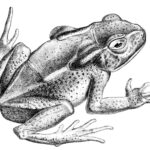
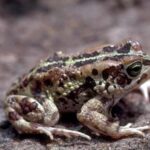
A close encounter with Rhinella gnustae reveals a distinctively marked amphibian subtly adapted to forest-floor living. Adults typically reach modest lengths between 4–7 centimeters, ideal for navigating beneath fallen leaves and tangled roots. Their rugged skin, peppered with characteristic warts and subtle glands containing defensive toxins, serves as a secondary protection against would-be predators.
Colors Harmonized for Camouflage#
One of the most impressive aspects of Rhinella gnustae is undoubtedly its coloration. Its hues range from deep olive greens to rusty browns, often with intricate marbling patterns of black or deep grey adornments spreading across its dorsal surface—a flawless camouflage blending seamlessly into the dark, damp litter of the forest floor. This cryptic coloring is a superb evolutionary advantage that permits Rhinella gnustae to remain virtually invisible to predators and unsuspecting prey alike.
Eyes and Sensory Apparatus#
Their eyes, large relative to their compact faces, are a telling reflection of evolutionary refinement. Possessing sensitive vision that excels in low-light conditions, this adaptation allows them to hunt effectively at twilight and night, their peak activity periods. They also exhibit keen tactile reception—a sensitivity in their flattened hind limbs that helps them interpret vibrations transmitted through moist soil and leaves, alerting them to potential prey or threats nearby.
Behavior and Life Cycle#
Feeding and Foraging Habits#
Operating under nocturnal secrecy, Rhinella gnustae exhibits patient yet voracious predation habits. Small invertebrates that wander into its vicinity stand little chance of escape. Displaying a hunting tactic typical of ground-dwelling amphibians, it positions itself with patience among leaf litter, waiting until prey comes within striking distance. With surprising speed, its protrusible tongue swiftly captures the prey—an astonishing sight for observers lucky enough to witness this nimble execution.
Mating Rituals and Calls in the Forest Twilight#
In breeding seasons, Rhinella gnustae showcases behaviors emblematic of many anurans. Males announce their presence and fitness with a soft yet persistent call, lower pitched and distinctly resonating lower than many sympatric frogs’ choruses. This vocalization gently echoes through evening rains and humid darkness, intended primarily to attract females and delineate territories from competing males.
Following successful courtship and mating, females meticulously deposit gelatinous egg strings in shallow, slow-moving streams or forest floor puddles. Here, protected from rushing currents and aerial predators, the eggs undergo transformation—the rapid transition from buoyant spheres of life to free-swimming, herbivorous tadpoles begins a remarkable journey of metamorphosis. Within several weeks, these tadpoles sprout legs, absorb their tails, and finally carry their first adventure onto terrestrial surfaces, completing their cyclical immersion into the rich tapestry of forest-lineage existence.
Unique Defense and Survival Strategies#
When confronted by predators such as snakes, birds, and small mammals, Rhinella gnustae employs sophisticated survival strategies. Its skin secretes mild but notably irritating toxins when threatened, deterring most carnivorous attempts. Furthermore, the amphibian’s emphatic display behavior—puffing up its body and elevating on sturdy legs—can bluff smaller predators effectively, capitalizing upon surprise and intimidation tactics drawn deep from evolutionary instinct.
Ecological Role in the Forest Ecosystem#
Despite its unobtrusiveness, the Rhinella gnustae serves a crucial role within forest floor ecology. Acting both as predator and prey, it maintains critical checks and balances in insect and arthropod populations. This natural pest control aids considerably in preserving the integrity and health of plant communities by controlling herbivore insects that would otherwise become prolific.
Additionally, Rhinella gnustae provides important nourishment for higher-tier predators. Its presence within the food web supports overall biodiversity by fostering ecological equilibrium. Remarkably sensitive to environmental shifts, Rhinella gnustae is considered an excellent bioindicator species—its decline often signals ecological stressors impacting the wider health of local habitats.
Threats and Conservation Status#
Though official population assessments remain ongoing, Rhinella gnustae experiences threats typical of forest-dwelling amphibians in South America. Habitat destruction due to logging, agricultural encroachment, and urbanization increasingly compromises their habitats, fragmenting delicate ecosystems upon which they depend.
Climate change poses additional threats by altering rainfall patterns and humidity levels, significantly impacting breeding success and larval survival rates. Amphibians, with their permeable skins and life stages dependent upon water and temperature consistency, represent frontline species vulnerable to rapid ecosystem change.
Currently, comprehensive IUCN Red List assessments remain pending, highlighting the urgent necessity for further scientific investigation and explicit conservation measures. Local initiatives and ecological preserves continue to provide critical refuge, underscoring the importance of community engagement in safeguarding key amphibian habitats.
Cultural and Scientific Significance#
Though less renowned culturally than more colorful amphibians, Rhinella gnustae occupies a meaningful niche within indigenous communities. To local peoples, it symbolizes environmental health and is occasionally regarded mystically as a shy guardian spirit of the forest.
Scientifically, its study is vital, offering unique insights into sensitive ecosystem health assessments and the evolutionary adaptability of amphibians. Its distinctive call and behavioral ecology continue to intrigue scientists, serving as biological indicators that substantially guide conservation priorities.
Protecting Rhinella gnustae: A Forest Guardian Worth Preserving#
Every species, no matter how humble, contributes irreplaceable threads into our planet’s biodiverse tapestry. Rhinella gnustae, with its quiet charm, remarkable adaptations, and ecological value, warrants attention and safeguards for future generations of wildlife enthusiasts and conservationists. As we deepen our understanding, let us collectively foster active appreciation and careful stewardship of its habitat. Explore more about this fascinating forest toad, support local conservation initiatives, and ensure this silent guardian remains an integral part of our rich, shared planet.