- Discovering Rhinella dorbignyi: The Fascinating World of Dorbigny's Toad
- Taxonomy and Classification of Rhinella dorbignyi
- Natural Habitat: Life Behind the Grasses
- Physical Characteristics: Masterfully Adapted to Their Surroundings
- Behavior and Life Cycle: From Tadpole to Toad
- The Ecological Role of Rhinella dorbignyi
- Threats and Conservation Status: Preserving an Amphibian Gem
- Cultural and Scientific Significance of Dorbigny's Toad
- Conclusion: Cherishing the Unseen Wonders of Dorbigny's Toad
Discovering Rhinella dorbignyi: The Fascinating World of Dorbigny’s Toad#
In the quiet of a humid South American night, a chorus resonates from the marshy grasses and wetland fringes. Among these singers is an often-overlooked jewel of amphibian biodiversity—Rhinella dorbignyi, commonly known as Dorbigny’s Toad. Named after the renowned French naturalist Alcide d’Orbigny, this compelling creature thrives in ecosystems teeming with life and biodiversity across regions of Argentina, Uruguay, Brazil, and Paraguay. Its presence is subtle yet significant, its story a testament to evolutionary adaptation, ecological balance, and the still-mysterious rhythms of amphibian life in the wild.
A member of the family Bufonidae—true toads recognizable worldwide—Rhinella dorbignyi carries with it many of the traditional characteristics one might associate with toads, yet it harbors distinct biological traits that help it master its particular corners of nature. From habitats woven dense with grasses to secretive nighttime behaviors, Dorbigny’s Toad is a marvel well worth exploring for the curious wildlife enthusiast, conservation advocate, and aspiring naturalist alike.
Taxonomy and Classification of Rhinella dorbignyi#
Dorbigny’s Toad occupies a comfortable position within Bufonidae, a family comprising hundreds of amphibian species recognized as “true toads.” Within this expansive family, the genus Rhinella shines particularly bright, hosting more than 90 species across Central and South America. Rhinella dorbignyi stands out for its unique blend of distinctive morphology and behavioral characteristics that set it apart from closely related relatives like Rhinella granulosa or Rhinella schneideri.
Originally described scientifically as Bufo dorbignyi, taxonomic revisions based on modern genetic analyses have led to its reclassification to the current nomenclature. The genus name Rhinella, derived from Greek “rhinē” meaning nose or snout, hints at the notably shaped head and facial features present in many within this genus.
Natural Habitat: Life Behind the Grasses#
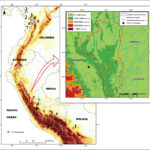
Dorbigny’s Toad lives primarily in the temperate grasslands, marshlands, temporary ponds, and flooded plains of southeastern South America. The rainy expanses of Argentina’s pampas, Brazil’s southern grasslands, and Uruguay’s coastal wetlands provide ideal environments where the species flourishes. Hidden within these ecosystems’ seasonal rhythms, the toad’s daily life unfolds quietly but powerfully.
During wetter periods, often coinciding with heavy rainfall, these amphibians congregate in shallow pools and flooded depressions created by seasonal overflow. Dense vegetation and moist soil provide the cover and resources this amphibian needs throughout its life, ensuring moisture retention and abundant prey opportunities. Within these microhabitats, each toad stakes out a small personal territory, often situated amid protective grasses and low shrubs.
A close look reveals why these surroundings are ideal. Damp leaf litter and soft mud provide optimum substrates for shelter, breeding, and camouflage. At night, Rhinella dorbignyi emerges to feed and reproduce, perfectly adapted to these flooded grasslands and marsh edges where insects thrive in abundance.
Physical Characteristics: Masterfully Adapted to Their Surroundings#
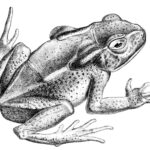
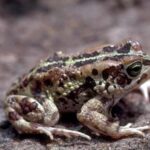
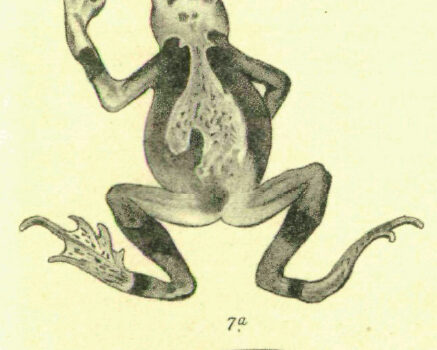
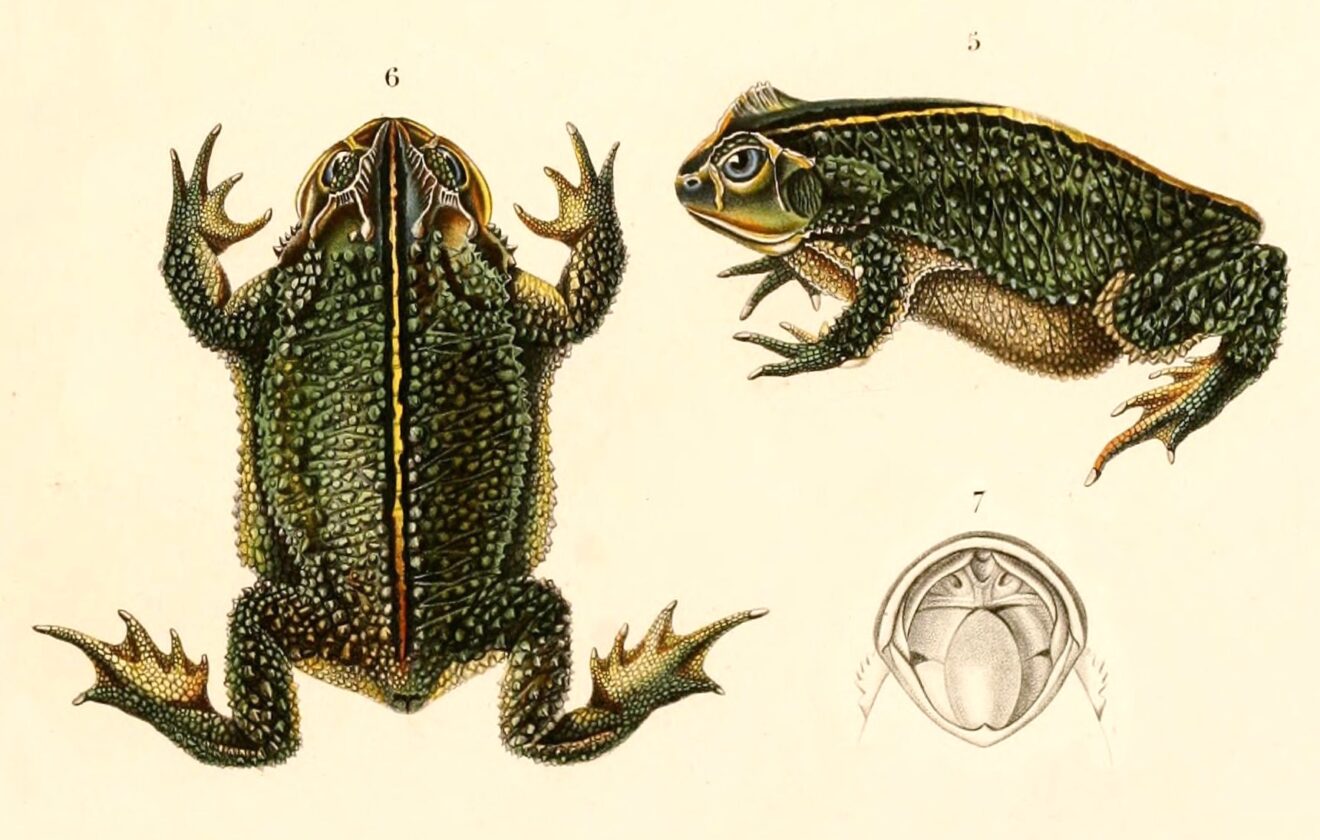
Dorbigny’s Toad does not flaunt the vivid coloration or remarkable size that attract popular attention in some amphibians. Instead, its beauty lies in subtle adaptation, perfectly matched to its surroundings. Adults typically measure between 4 and 9 centimeters in length, males being slightly smaller and leaner than females. They possess a robust, somewhat squat body; their skin, rough and dry to the touch, features a granular pattern punctuated with minute warts.
The coloration of Rhinella dorbignyi varies subtly, ranging from dull brown to olive-green shades, decorated modestly with darker blotches. This unassuming palette provides an essential evolutionary advantage—exquisite camouflage. When motionless amidst shadowy vegetation and earth tones, their presence becomes nearly imperceptible to potential predators.
Deep-set eyes with horizontal pupils help these toads scan their surroundings in low-light conditions. The small, rounded parotoid glands located behind the head secrete mild toxins as a means of defense; though not medically threatening to humans, this secretion causes irritation for predators bold enough to attempt feeding on this species.
Behavior and Life Cycle: From Tadpole to Toad#
Nighttime Ambush Hunters#
Primarily nocturnal, Dorbigny’s Toad spends daylight hours hidden beneath leaf litter, under fallen branches, or within shallow burrows. At sunset, these secretive amphibians become active, relying heavily on keen eyesight and acute sensitivity to vibrations for successful prey capture. Their diet mainly comprises insects, including beetles, ants, crickets, and caterpillars, all easily captured prey thriving alongside them in riparian habitats.
Mating Rituals and Reproduction#
The rains mark the beginning of the reproductive frenzy for Rhinella dorbignyi. During peak rainfall events, males gather in shallow pools, filling the night air with their resonant choruses. These vocalizations, distinctive yet subtle, summon females to their territories. Successful males mate by clasping the female tightly during amplexus, externally fertilizing strings of eggs as they are deposited into the water.
A single female can release hundreds, if not thousands, of blackish eggs wrapped protectively in jelly-like strands that cling to submerged vegetation. Rapidly developing tadpoles hatch and metamorphose within weeks, driven by the ephemeral nature of their breeding pools. Hastened growth allows young toadlets to disperse before evaporation marks the disappearance of these temporary breeding grounds, showcasing a remarkable adaptation to transient wetland habitats.
The Ecological Role of Rhinella dorbignyi#
Despite their modest size, Dorbigny’s Toads form a crucial link in their ecological web. Serving primarily as active insect predators, they significantly influence insect populations throughout their habitat. Through their nocturnal hunting, Dorbigny’s Toad helps maintain balance, controlling potentially invasive or problematic insect species that can affect human settlements or agriculture.
This species also fulfills an essential role within the food chain. Juvenile and adult toads become valuable prey for snakes, larger amphibians, birds, and mammals, contributing to the broader tapestry of biodiversity across the grasslands. In addition, Rhinella dorbignyi acts as a bioindicator, often highlighting environmental degradation or pollution through its sensitivity to habitat alterations such as pesticide use or water contamination.
Threats and Conservation Status: Preserving an Amphibian Gem#
The International Union for Conservation of Nature (IUCN) has currently assessed Rhinella dorbignyi as Least Concern due to its wide distribution and presumed stable populations. However, subtle threats across its habitat remain cause for vigilance. Advanced agriculture practices, pesticide runoff, urban expansion, and drainage of seasonal wetlands all present persistent pressures on local populations.
Additionally, climate change phenomena increasingly alter rainfall patterns, threatening the delicate timing mechanism by which these toads reproduce. Early drought or erratic rains can drastically affect breeding success, potentially destabilizing local populations. Conservationists remain attentive to these signals, continuously advocating for habitat preservation, sustainable farming practices, and the protection of critical wetland habitats that support the species.
Cultural and Scientific Significance of Dorbigny’s Toad#
Though not perhaps the most famous amphibian, Dorbigny’s Toad holds significance both culturally and scientifically. Among local rural communities in southern Brazil and Uruguay, these humble amphibians are viewed positively for their role in natural insect control. Folkloric traditions sometimes affectionately portray them as gentle garden helpers, quiet guardians of harmony within agricultural landscapes.
Scientifically, Rhinella dorbignyi is studied in understanding ecological interactions, pesticide effects, and climate sensitivity—a testament to its status as a keystone for conservation research in South American ecosystems.
Conclusion: Cherishing the Unseen Wonders of Dorbigny’s Toad#
In a bustling world preoccupied by grander spectacles of nature and wildlife, humble species like Rhinella dorbignyi may be easily overlooked. Yet their quiet presence within vibrant ecosystems signifies a biodiversity richness and environmental health deserving our deepest respect and preservation.
As nature enthusiasts and conservation advocates, we hold a precious responsibility: to appreciate, understand, and protect these subtle masters of adaptation. Dorbigny’s Toad teaches profound lessons about balance, interconnectedness, and resilience—and calls upon us to become more aware of our place within nature. After all, the voices emanating from a quiet marshland night remind us that life’s harmony depends on its quieter notes just as much as its loudest symphonies.