- Golden-Crowned Toad (Rhinella chrysophora): The Hidden Jewel of Tropical South America
- Taxonomy and Classification of Rhinella chrysophora
- The Natural Habitat of Rhinella chrysophora
- Physical Characteristics: A Jewel Among Leaves
- Behavior and Life Cycle: From Tadpole to Golden Adult
- Ecological Role: Guardians of Forest Health
- Threats and Conservation: A Species at Crossroads
- A Call to Action: Protecting Rhinella chrysophora for Future Generations
Golden-Crowned Toad (Rhinella chrysophora): The Hidden Jewel of Tropical South America#
Amid whispered rustlings of leaves, softly pulsing streams, and the emerald tapestry of tropical forests, there thrives a subtle marvel—the Golden-Crowned Toad, known scientifically as Rhinella chrysophora. Quietly poised among the rich biodiversity of South America’s rainforests, this unassuming amphibian has risen to prominence within conservation circles, celebrated not only for its unusual beauty but also for the key ecological roles it plays. Shrouded in enigmatic behavior and habited amid lush landscapes often hidden from the casual observer, Rhinella chrysophora stands as a testament to nature’s remarkable ability to adapt, flourish, and surprise.
Before diving deeper into our exploration, consider a curious fact about this amphibian marvel: Its common name, “Golden-Crowned Toad,” stems from striking golden-yellow patches adorning the upper regions of its head during breeding seasons, making these seemingly ordinary creatures sparkle like concealed treasure within the darker forest floor. Welcome to an immersive journey, discovering the intriguing world of the Golden-Crowned Toad, from its taxonomy to its ecological impacts, and its ongoing journey to survival amid modern threats.
Taxonomy and Classification of Rhinella chrysophora#
Understanding the story of the Golden-Crowned Toad starts with acknowledging its place in nature’s extensive family tree. Rhinella chrysophora belongs to the Bufonidae family, a diverse and widely distributed amphibian family commonly known as “true toads.” Within this highly adaptable group, the genus Rhinella consists of numerous species found throughout Central and South America, each evolving unique adaptations and behaviors suited to their specific habitats.
Living alongside related species like Rhinella marina (the Cane Toad) and Rhinella granulosa (the Granular Toad), our Golden-Crowned protagonist distinguishes itself not with conspicuous displays, but rather through subtler adaptations and intriguing behaviors. The name Rhinella derives from its original Latin roots, highlighting their robust body shape and distinctive snouts, adapted for their particular niches within dense, tropical environments.
The Natural Habitat of Rhinella chrysophora#
Venturing into the rich and vibrant rainforests and cloud forests of tropical South America—particularly within Brazil, Bolivia, and surrounding regions—younger forests carpeted with leaf litter provide ideal homes for Rhinella chrysophora. These locales, often shaded and moisture-laden, create microhabitats perfect for these amphibians, combining shelter, moisture, and ample nutrition.
Unlike their more visible relatives, Rhinella chrysophora’s habitat preferences position them subtly within forests. They most frequently inhabit the leaf-strewn floors of humid lowland forests and foothills, where the thick canopy above provides shade to maintain a stable microclimate. Occasionally, they venture toward small freshwater streams and seasonal pools for reproduction, critical points of congregation throughout their life cycles.
These hidden, humid spaces suit the Golden-Crowned Toad’s need for moist skin respiration, hydration, and camouflage. Beyond simple shelter, these habitats constitute vibrant micro-ecosystems, medleys of decomposing organic matter, fungi, invertebrates, and predators forming complex webs of interactions. Within this hidden realm, Rhinella chrysophora moves quietly, often unnoticed, contributing steadily to broader forest health.
Physical Characteristics: A Jewel Among Leaves#
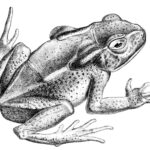
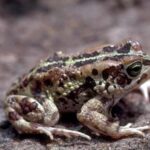
At first glance, Rhinella chrysophora may appear simple in form—rounded bodies, stout legs, rough, warty skin typical to the Bufonidae family. However, closer examination reveals subtle intricacies and remarkable adaptations suited for evasion, survival, and dominance within its niche.
The adult Golden-Crowned Toad typically measures between 5 and 8 centimeters, a modest size granting it precise agility among leaf litter and vegetation. Its coloration varies subtly, dominated by shades of brown, olive-green, or earth-colored hues that enable near-perfect camouflage within their forest floor habitats. Certain individuals exhibit darker spots or irregular patches, further aiding their concealment against the diverse patterns of the rainforest floor.
However, as its common name hints, the most striking trait emerges during breeding seasons. Males develop vivid golden-yellow patches on their cephalic region—crown-like marks inspiring fascination among herpetologists and conservationists alike. This seasonal brilliance, driven hormonally, attracts mates and communicates vital health and vigor indications to would-be partners.
Beyond cosmetics, adaptations in skin texture and composition afford Rhinella chrysophora chemical defenses, secreting mild toxins through parotoid glands. While not dangerously potent to humans, these toxins provide crucial defense, deterring many potential predators and ensuring survival in ecosystems teeming with danger.
Behavior and Life Cycle: From Tadpole to Golden Adult#
The life story of Rhinella chrysophora is defined by subtle rhythms, precise timing, and adaptive behaviors developed over generations. Like most amphibians, their lives begin submerged in temporary freshwater pools or slow-moving streams. Once heavy rains saturate the forest floor, males initiate chorus-like calls—melodious, rhythmic croaks intensifying as night cloaks the rainforest—announcing breeding opportunities to potential mates.
Females, attracted to vocal prowess and vibrant coloration, converge at breeding sites where amplexus—a firm yet delicate embrace—precedes egg-laying. Females deposit strings of gelatinous eggs attached securely to submerged vegetation or debris. Soon, the ponds brim with tiny tadpoles vigorously feeding on algae, detritus, and smaller microorganisms, fueling their rapid growth.
Transformation from tadpole to fully terrestrial toad is nothing short of magical. After weeks of aquatic growth, limbs appear, tails resorb, lungs strengthen, and tiny toads—the size of fingernails—emerge onto land, ready for terrestrial existence. This dramatic metamorphosis signifies one of nature’s grandest transitions, mirroring dramatically shifting survival strategies and ecological roles.
Adults, now fully terrestrial, commit nights to foraging. Rhinella chrysophora is primarily nocturnal, actively hunting insects like beetles, ants, mites, and spiders. During daylight hours, they seek refuge among secluded logs, leaf piles, or shaded vegetation, conserving moisture and evading diurnal predators.
Ecological Role: Guardians of Forest Health#
Though small and humble, the significance of Rhinella chrysophora to the broader ecosystems is immense. Serving primarily as insectivorous predators, these toads contribute to controlling pest populations, thereby indirectly influencing plant health and the broader biological balance. Their diet curtails overpopulation of herbivorous insects, protecting numerous plant species within their habitats.
Simultaneously, Rhinella chrysophora plays a role as prey within complex food webs, supporting higher trophic levels—birds, snakes, small mammals, and larger amphibians. Positioned between predator and prey populations, their numbers and health directly reflect environmental equilibrium, signifying stable and quality habitats.
Additionally, their skin secretions, subtle yet chemically potent, harbor unique biochemical compounds increasingly studied by scientists for medicinal or biotechnological purposes. Thus, in countless nuanced ways, Rhinella chrysophora signifies environmental richness, complexity, and resilience—a true barometer of forest vitality.
Threats and Conservation: A Species at Crossroads#
Today, however, Rhinella chrysophora’s story also articulates vulnerability, a reflection of mounting pressures imposed by modern-day threats to rainforest habitats. Habitat loss—driven by deforestation, agriculture expansion, logging, and urban encroachment—erodes the undisturbed habitats essential for this species’ survival. Fragmented forests diminish breeding grounds, confuse migration corridors, and disrupt vital life cycles.
Climate instability further exacerbates Rhinella chrysophora’s vulnerabilities, as altered rainfall patterns disrupt breeding events reliant on seasonal moisture. The introduction of diseases like chytrid fungus and contamination from pollutants amplifies their precarious status.
While currently classified as Least Concern on the IUCN Red List (due primarily to still-substantial habitat availability), ongoing habitat degradation and unsustainable practices raise urgent conservation alarm. Dedicated research, community engagement, habitat protection measures, and targeted management strategies will define whether these unobtrusive amphibians continue their quiet song.
A Call to Action: Protecting Rhinella chrysophora for Future Generations#
Every species, great or small, echoes a unique ecological voice. Rhinella chrysophora reminds us eloquently that biodiversity not only enhances nature’s beauty—it safeguards resilience and stability of habitats sustaining myriad life forms. We hold responsibility to preserve these delicate treasures, ensuring future generations witness ecosystems brimming with their gentle choruses.
Explore further, advocate thoughtfully, and tread softly—where forests breathe, amphibians thrive, and life continues its remarkable dance.