- Introduction: Unveiling an Amphibian Rarity
- Taxonomy and Classification: Defining Osornophryne guacamayo
- Natural Habitat: Ecuador's Cloud Forest Jewel
- Physical Characteristics: Portrait of Adaptation
- Behavior and Life Cycle: Navigating Forest Seasons
- Ecological Role: Guardians of Balance
- Threats and Conservation Status: A Fragile Existence
- Cultural and Scientific Significance: Inspired by Amphibious Wonders
- In Conclusion: Preserving Ecuador’s Amphibian Treasure
Introduction: Unveiling an Amphibian Rarity#
High amidst the dense, mist-draped cloud forests of Ecuador, tucked beneath the lush canopies and carpeting mosses, thrives one of nature’s most fascinating and elusive amphibians—the Guacamayo Plump Toad or Osornophryne guacamayo. Named after the Guacamayo Ridge, a region renowned for its remarkable biodiversity, this intriguing species captivates researchers and nature enthusiasts alike with its striking appearance, unique behavior, and vital ecological role. Despite their understated size and secretive habits, these frogs serve as powerful indicators of environmental health, their well-being tightly intertwined with the fragile habitats they call home.
Few amphibians are as perfectly adapted to a challenging mountainous world as the Osornophryne guacamayo. Standing distinctively apart—both in its evolutionary lineage and its ecological niche—this tiny frog embodies resilience, specialized adaptation, and the wondrous charm that makes studying amphibians endlessly fulfilling.
Taxonomy and Classification: Defining Osornophryne guacamayo#
The Guacamayo Plump Toad (Osornophryne guacamayo) belongs to the Bufonidae family, a diverse and fascinating group commonly known as true toads. Within this family, the genus Osornophryne harbors species uniquely adapted to the high elevations and damp conditions characteristic of Andean cloud forests. First described scientifically in 2001, Osornophryne guacamayo’s discovery was celebrated as an important addition to the genus, highlighting the intricate biodiversity of Ecuador’s mountainous terrains.
Closely related species within the genus, including Osornophryne antisana and Osornophryne occidentalis, share similar ecological niches but vary subtly in their distribution and physical characteristics. Yet, it is the Guacamayo Plump Toad’s limited and isolated distribution that makes it uniquely significant for conservation and scientific inquiry.
Natural Habitat: Ecuador’s Cloud Forest Jewel#
Geographic Distribution and Range#
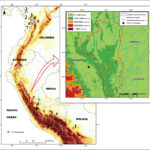
Osornophryne guacamayo is endemic to Ecuador, specifically occupying the pristine, verdant slopes of the Cordillera Oriental Andes at elevations ranging from approximately 2,200 to 3,000 meters above sea level. The Guacamayo Ridge, after which the species is named, forms part of the sweeping arc of cloud forests stretching across Ecuador, renowned for a staggering diversity of flora and fauna found nowhere else on Earth.
A Habitat Shrouded in Mist and Mystery#
The habitat of the Guacamayo Plump Toad is defined by perpetual mist, cool temperatures, and high humidity. Thick mats of moss cover fallen logs, tree trunks, and rocks, creating a richly textured landscape where moisture is a constant companion. Amidst bromeliad-covered trees and lush ferns, conditions remain eternally damp, ideal for amphibian survival. These amphibians have evolved to precisely suit the conditions presented by this challenging environment, their livelihoods intricately entwined with habitat stability.
Hidden within the forest layers and frequently found upon moss-covered banks and fallen logs near slow-moving streams, they rely on microhabitats that retain constant humidity and offer shelter beneath vegetation. The precise ecological niche they occupy underscores their vulnerability, as even slight disruptions in climate or vegetation could significantly impact their survival.
Physical Characteristics: Portrait of Adaptation#
Understated Elegance in Appearance#
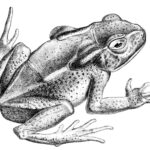
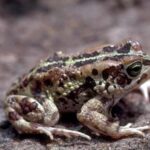
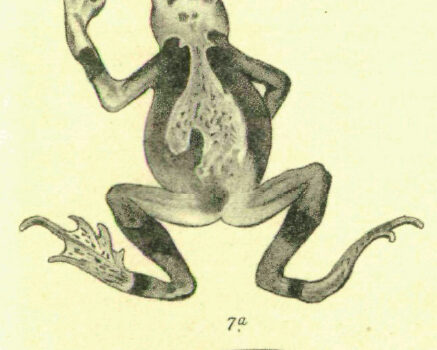
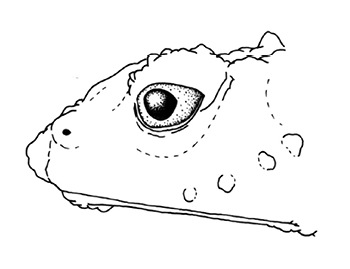
To the undiscerning eye, Osornophryne guacamayo may initially seem modest, measuring merely 2 to 3 centimeters, yet its beauty lies in subtle, striking details. Its diminutive body is compact and robust, with distinctly granular, textured skin that provides exceptional camouflage against mossy surroundings. The frog’s coloration ranges from muted olive and greenish-brown tones to shades of grey or black, seamlessly blending with the cloud forest floor—a perfect camouflage from potential predators.
Unlike some brighter-colored amphibians in tropical regions, this species trades vividness for subtlety, becoming masterfully cryptic in its environment. Their skin often bears tiny wart-like projections, further enhancing their mimicry amid leafy debris and mossy substrates. Their short limbs and stocky build allow precise navigation across slippery barks and leaf litter, an adaptation refined by the meticulous handiwork of evolutionary pressures.
Large, expressive eyes appeared poised for vigilance, reflecting the perpetual watchfulness needed in predator-rich habitats. Despite their size, they exhibit remarkable agility in their specialized habitat, deftly climbing moss-slicked trails and navigating tangled forest floors.
Behavior and Life Cycle: Navigating Forest Seasons#
Feeding and Foraging Habits#
Adapted to a diet abundant in small insects, spiders, mites, and various invertebrates inhabiting the lush forest floor, Osornophryne guacamayo forages primarily at night, preferring to shelter during daylight hours beneath logs, leaf litter, or moss clumps. Possessing keen eyesight, these tiny predators patiently ambush or search actively for prey within their immediate surroundings, effectively regulating insect populations within their niche ecosystems.
Breeding & Reproductive Strategies#
Breeding for Osornophryne guacamayo typically aligns with rainy seasons when environmental moisture is abundant. Unique among many amphibians, the reproductive habits of Osornophryne genus species are fascinatingly specialized: females lay small clutches of eggs directly into moist terrestrial habitats, bypassing the aquatic tadpole stage entirely. Eggs are deposited carefully within moss-covered niches or saturated leaf litter, providing the developing embryos natural protection and moisture.
The embryos develop directly into miniature versions of adult frogs—a remarkable adaptation known as direct development. This evolutionary strategy frees parents from reliance on standing water, critical at high altitudes where pools or ponds may be sparse or unreliable. By eliminating aquatic larval stages, the species remains resilient despite ecological challenges, a testament to nature’s adaptive creativity.
Ecological Role: Guardians of Balance#
Despite their small stature, Osornophryne guacamayo plays a significant role in the cloud forest ecosystem as regulators of insect populations and key prey items for larger vertebrates, including reptiles, birds, and mammals. Additionally, amphibians such as this species function as critical ecological indicators: their sensitive, porous skin reacts immediately and noticeably to ecological contaminants or climatic shifts, instantly signaling environmental disturbances.
Through their presence or absence, these humble creatures offer invaluable insights into ecosystem health. For conservationists and ecologists alike, monitoring Osornophryne populations provides critical data, vital in assessing local ecosystem integrity and formulating conservation strategies to protect cloud forest biodiversity.
Threats and Conservation Status: A Fragile Existence#
The International Union for Conservation of Nature (IUCN) currently classifies Osornophryne guacamayo as “Endangered”—a sobering reflection of their vulnerability to habitat fragmentation, climate change, and environmental contaminants. Deforestation driven by logging, agriculture, and human expansion poses an immediate threat, fragmenting territories and isolating populations across the species’ narrow geographic range.
Climate shifts particularly endanger amphibians uniquely adapted to high elevations. Subtle variations in rainfall, temperature patterns, or humidity can profoundly affect their carefully evolved lifecycle. Conservation efforts, therefore, center around habitat preservation, ecological restoration, and regular population monitoring to track ecological health.
Cultural and Scientific Significance: Inspired by Amphibious Wonders#
While Osornophryne guacamayo may not feature prominently in ancient folklore, their discovery and ensuing research have profoundly impacted scientific understanding of adaptation, evolution, and ecology within specialized habitats. For scientists invested in unraveling ecological mysteries, these quietly remarkable frogs demonstrate evolution’s ingenuity and highlight urgent conservation priorities inherent in preserving delicate ecosystems.
In Conclusion: Preserving Ecuador’s Amphibian Treasure#
The story of Osornophryne guacamayo embodies the delicate balance of cloud forest ecosystems, magnificently adapted yet genuinely vulnerable. For all who feel admiration for nature’s intricacies, the preservation of this unassuming yet exceptional amphibian represents a call to action. Support conservation, empower local stewardship, and treasure the biodiversity that enriches our world—for future generations and the delicate species that quietly sustain our planet’s ecological tapestry.