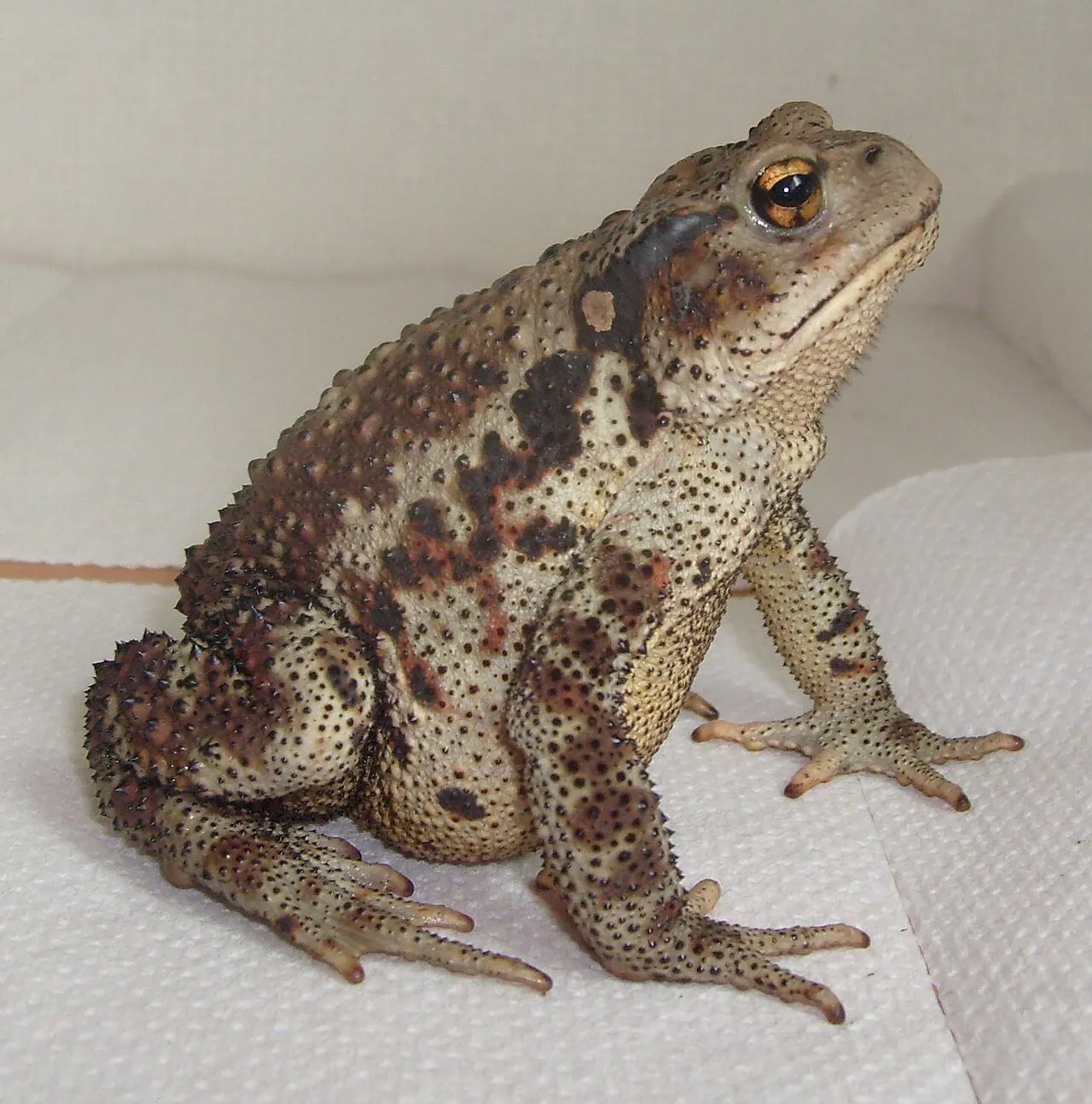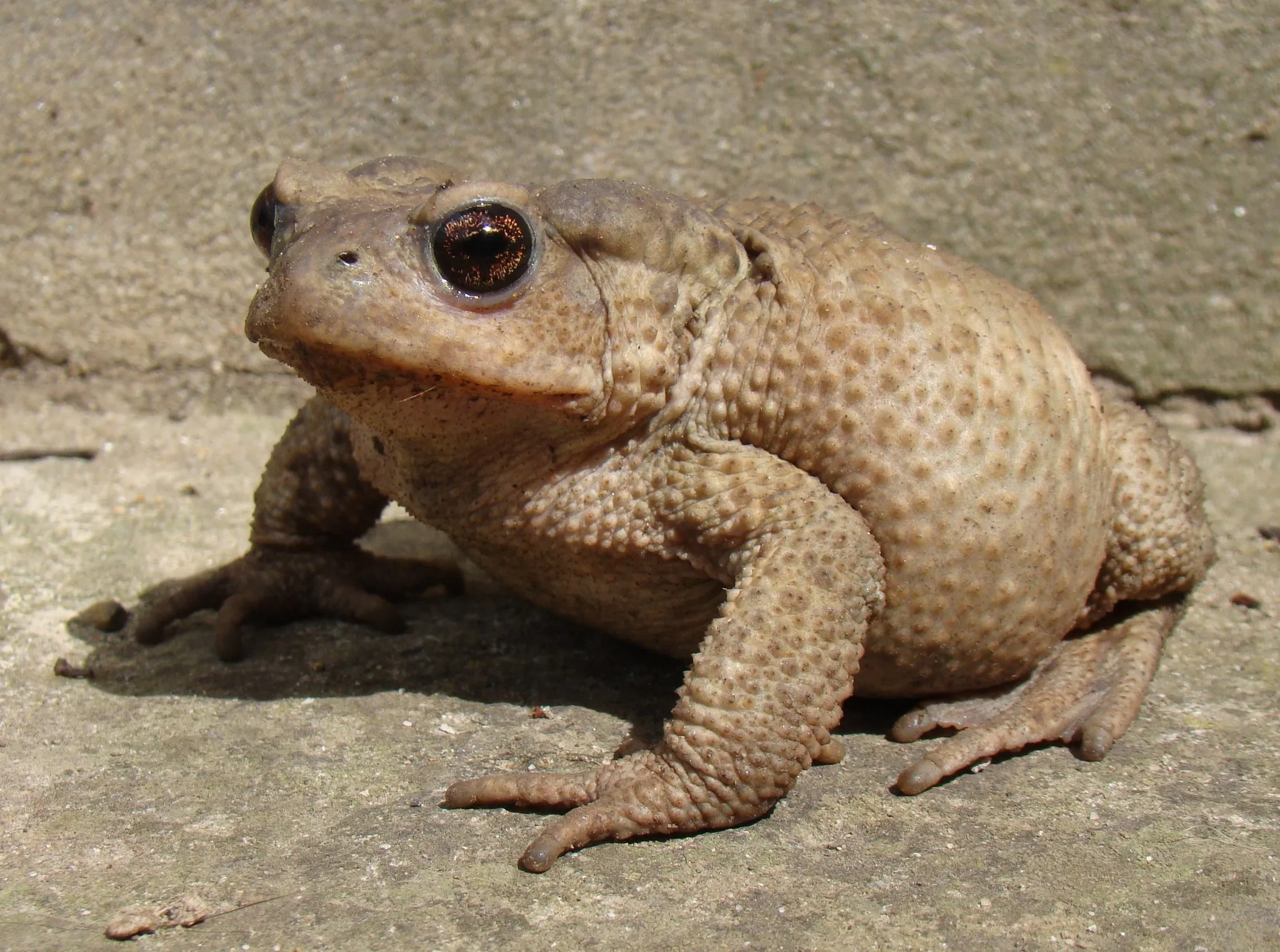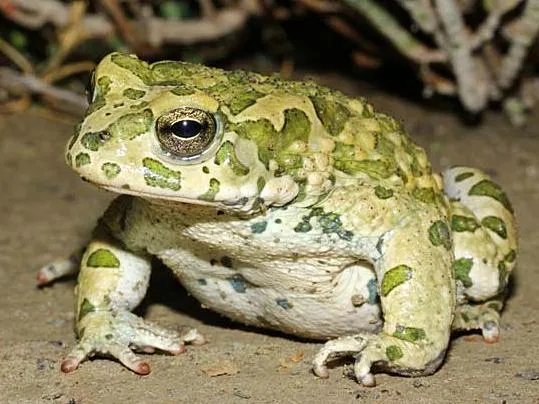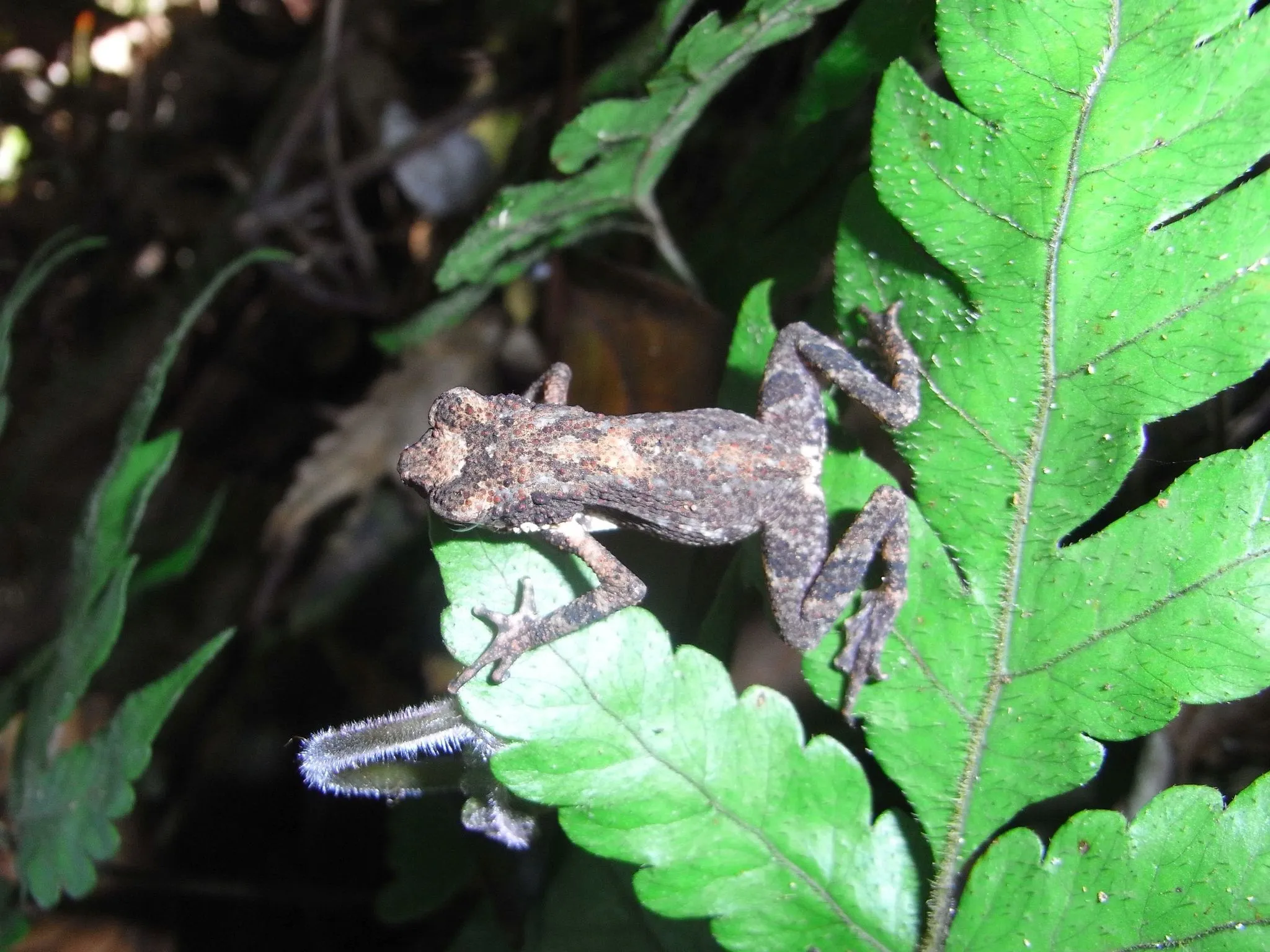
Adenomus kelaartii, Kelaart’s dwarf toad, is endemic to south-western Sri Lanka, living in tropical humid forest at elevations between 30 and 1,230 m. Its range is fragmented into separate locations covering less than 500 square kilometres in total. The toad is named for Edward Frederick Kelaart, a Ceylon-born physician and zoologist, and was first described by Günther in 1858 as Bufo kelaartii1.
Identification
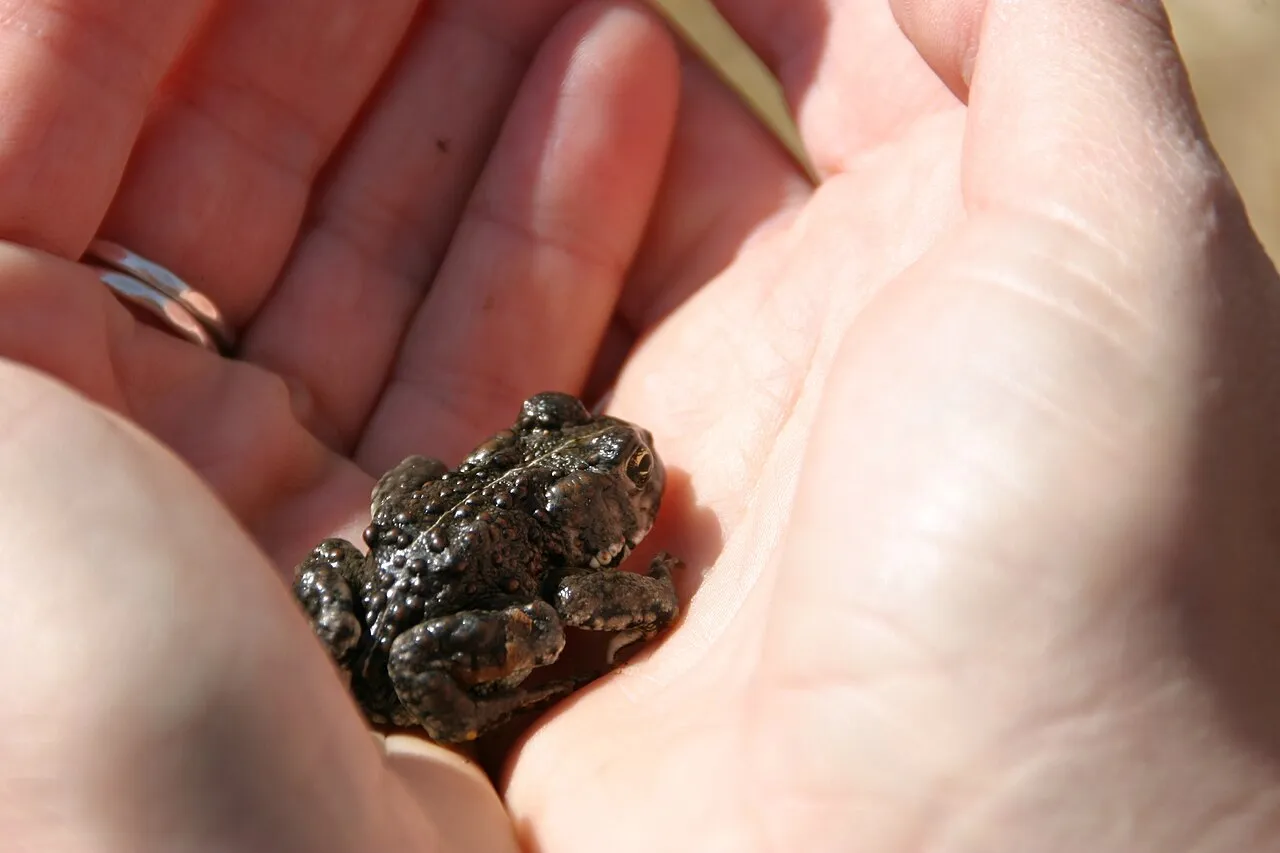
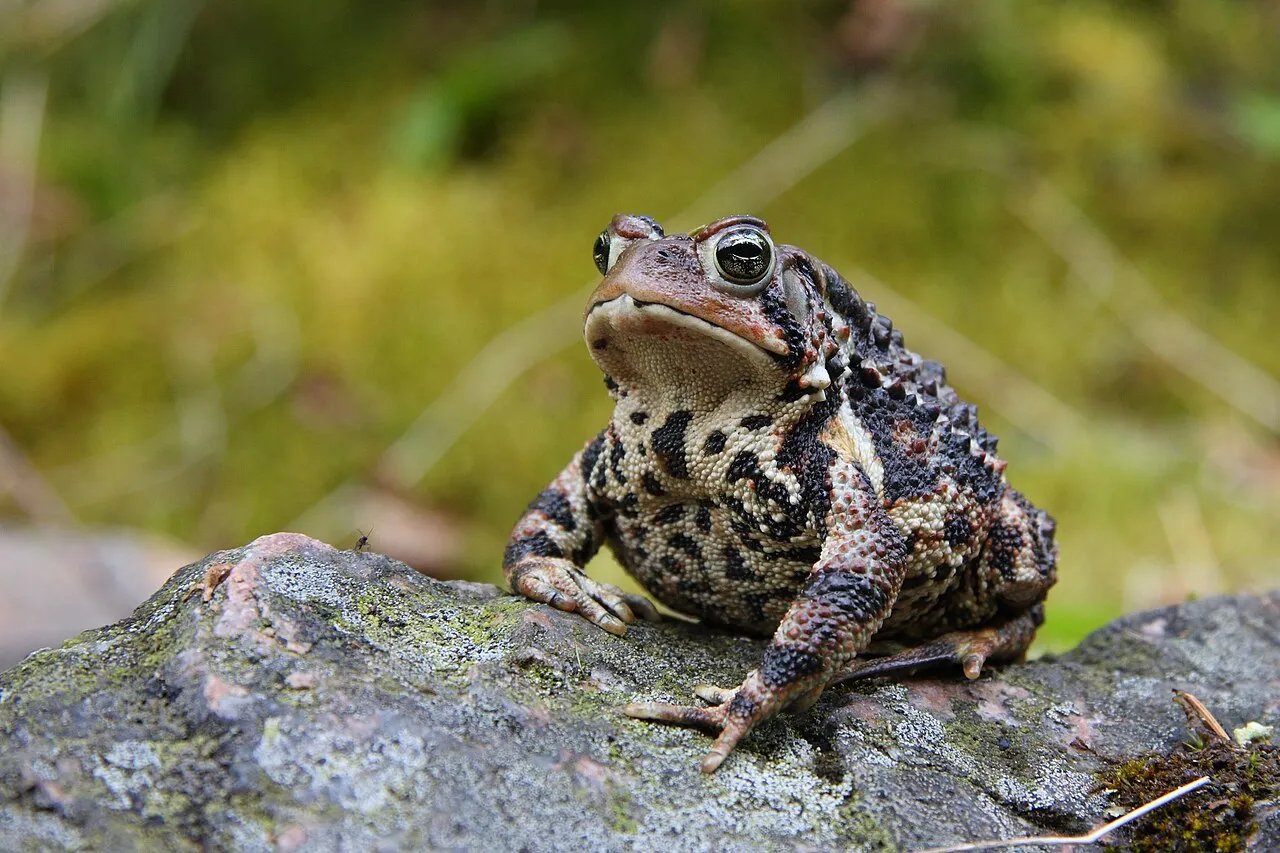
Kelaart’s dwarf toad is small: females measure 36–50 mm and males 25–33 mm snout-vent length. The skin is smooth in some individuals but bears spiny warts in others. The upper parts are brown with darker blotching, over a cream or white underside marked with brown blotches; some individuals also show red and blue flecks on the underside. The toad is active by both day and night1.
Habitat and range
The species lives in tropical humid forest leaf litter near upland streams, and also turns up in rock crevices, rotting logs, tree holes and sandbanks beside rivers. Its known range sits entirely within south-western Sri Lanka, at elevations from about 30 up to 1,230 m1.
Behaviour and breeding
During the breeding season, males call from beside bodies of water, including mid-stream boulders. A female lays up to about 1,000 colourless eggs as a single strand, usually in a permanent pool. The tadpoles start out colourless, turning grey and then dark brown as they develop. Metamorphosis follows after roughly seven weeks, with juveniles emerging at about 8–9 mm long1.
Conservation
The species was assessed as Vulnerable by the IUCN in 2020. The main threat is the destruction of its forest habitat for agriculture, though the toad occurs in several protected areas, where improved habitat management is called for1.
Similar species
A molecular and morphological study in Zootaxa found the genus Adenomus to be monophyletic and to comprise only two valid species, A. kelaartii and the Kandyan dwarf toad, Adenomus kandianus (a third name, A. dasi, turned out to be a junior synonym of A. kandianus rather than a separate species). The study tells the two valid species apart using molecular, morphological, bioacoustic and ecological data2. Adenomus kandianus had no record since 1872, listed extinct by the IUCN in 2004, before being rediscovered in the Peak Wilderness Sanctuary in October 2009; it now lives in montane streams between about 1,100 and 1,879 m3, a higher-elevation range than A. kelaartii’s and a very different rediscovery history.
_1OnsrI.webp)