- Introduction: A Hidden Jewel Among Leaves
- Taxonomy and Classification
- Natural Habitat: The Cloud Forest Canopy
- Physical Characteristics: Living Transparency
- Behavior and Life Cycle
- Ecological Role: Delicate Links in the Ecosystem
- Threats and Conservation Status
- Cultural and Scientific Significance
- Conclusion: Illuminating Pathways to Conservation
Introduction: A Hidden Jewel Among Leaves#
Deep within the misty slopes and emerald canopies of the Andean rainforests of South America, nature reveals one of its most tantalizing secrets: a creature so delicate and transparent that its existence seems almost fantastical. This captivating amphibian, known as the Nymphargus griffithsi, belongs to a remarkable lineage of frogs called “glass frogs,” creatures that charm naturalists and enthrall biologists with their intriguing anatomy and enigmatic behaviors.
Formally designated Nymphargus griffithsi, this small frog represents more than just a biological curiosity—it serves as an ecological sentinel, telling researchers critical stories about habitat health and biodiversity. Glass frogs like Nymphargus griffithsi have transparent undersides, allowing observers to peer directly at their internal organs—a phenomenon that sparks wonder and scientific interest worldwide.
Taxonomy and Classification#
Scientifically classified within the family Centrolenidae, Nymphargus griffithsi is one of several species under the genus Nymphargus. Centrolenidae frogs are distinguished primarily by their translucent skin and arboreal habits. When placed within its broader biological family tree, Nymphargus griffithsi shares its lineage with other fascinating glass frog species such as Nymphargus anomalus and Nymphargus ignotus, each a variant of nature’s incredible ability to showcase internal anatomy through crystal-clear skin.
The species carries a profound tribute in its name—it commemorates Edward Griffith, a dedicated herpetologist whose lifetime of work advancing amphibian conservation has greatly enriched our understanding of frog biodiversity.
Natural Habitat: The Cloud Forest Canopy#
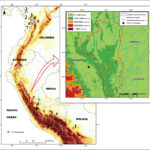
Nymphargus griffithsi calls the cloud forests and humid montane forests of the Andes home. Its slender form moves fluidly among lush foliage, lush undergrowth, and moss-covered branches, thriving within regions spanning Ecuador and Colombia, mainly in higher elevations between approximately 1,200 meters to 2,500 meters.
A World of Mist and Moisture#
These habitats are abundant with life and moisture—perpetually humid areas clouded in mist that bloom with orchids, bromeliads, mosses, ferns, and other tropical flora. Within these flourishing ecosystems, streams cascading down forested hillsides provide continuous moisture essential for amphibian skin health and reproductive cycles, creating intricate ecosystems perfectly tailored to delicate creatures like the glass frog.
For Nymphargus griffithsi, these dense, moisture-rich canopies form vital shelters, feeding grounds, and breeding arenas, allowing them to prosper safely above ground-level predators and potential threats. Their nocturnal habitats shelter them during daylight hours beneath large leaves, offering protection from environmental stressors as they await nightfall.
Physical Characteristics: Living Transparency#
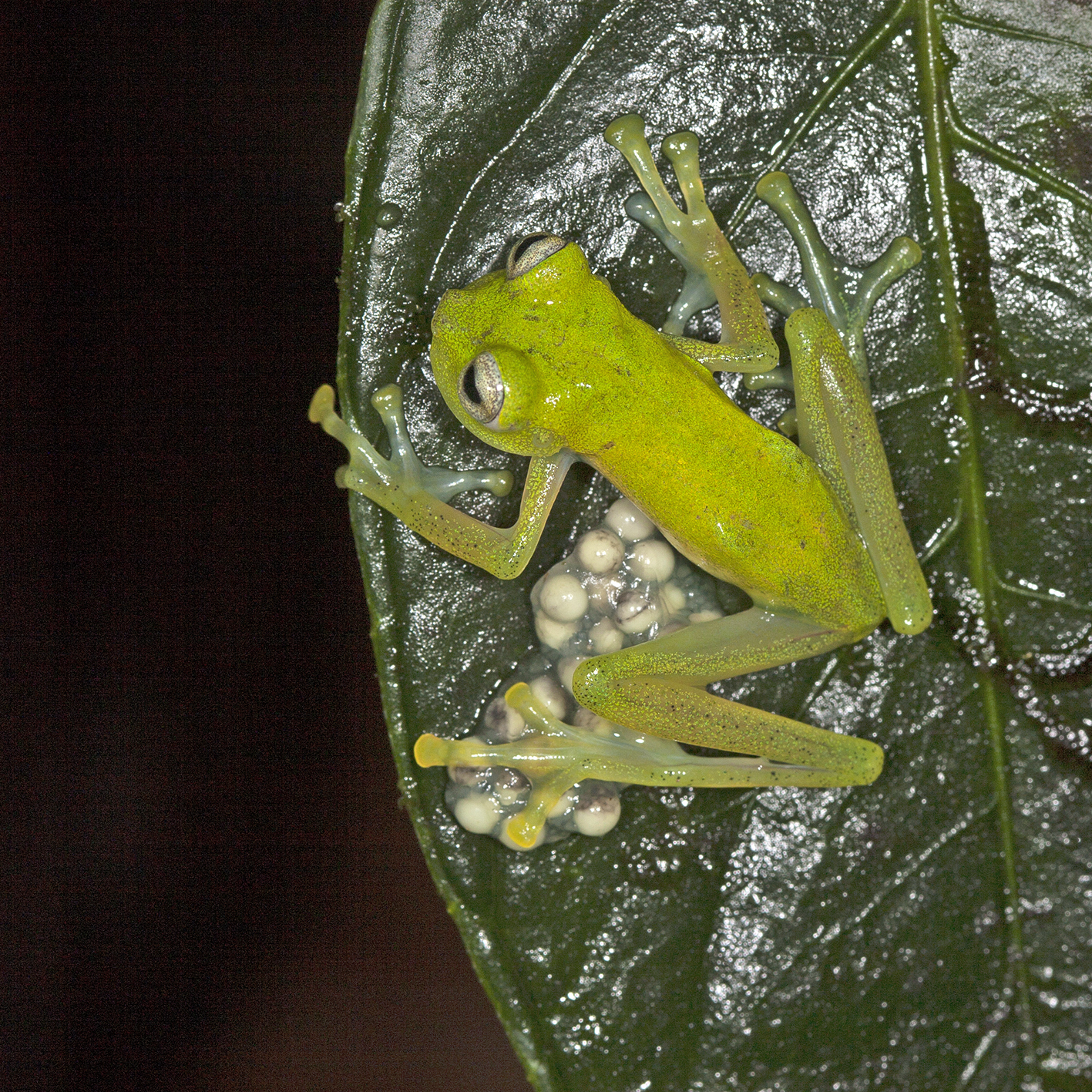
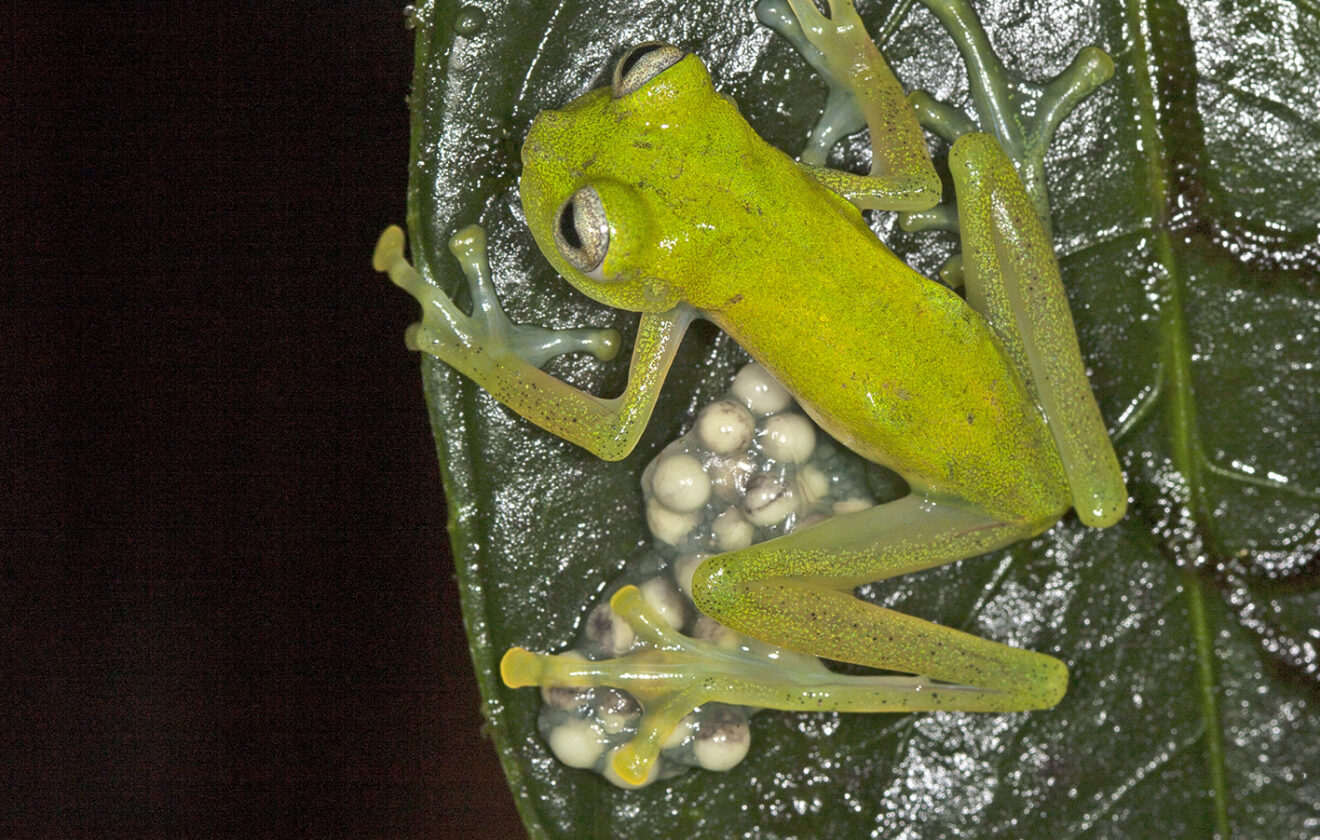
One cannot speak about Nymphargus griffithsi without highlighting its defining trait—its vibrant yet delicately translucent body. Typically between 22 to 28 millimeters in length, this small frog exhibits a dazzling interplay of greens and yellows. Their dorsal surfaces blend seamlessly with the leafy surroundings, offering vital camouflage against predators. Remarkably, it is their ventral skin that captivates observers most powerfully, allowing a clear view directly into their internal anatomy—beating heart, liver, intestines—all distinctly visible through their remarkable translucence.
Their enlarged, bulbous eyes, often golden or silvery when illuminated, grant them an endearing appearance and enhanced vision, critical for nocturnal hunting expeditions. Toe pads are large and adhesive, perfect aids in navigating slippery surfaces and leaves dampened by constant mist, supporting their arboreal lifestyle with exceptional efficacy.
Adaptations for Life Among the Leaves#
The transparent nature of Nymphargus griffithsi skin not only enchants naturalists—it serves as a significant survival mechanism. Transparency provides camouflage against predators, as it breaks up the frog’s outline among leaf veins and shadows. Furthermore, this extraordinary adaptation may have evolved as an avoidance strategy against visually guided avian predators, enhancing survival chances amidst an ecosystem buzzing with threats.
Behavior and Life Cycle#
Nighttime Serenades & Arboreal Hunts#
With the descending veil of darkness each evening, male Nymphargus griffithsi frogs emerge from their leaf hides, performing soft, melodic calls to attract mates. These tiny croaks and chirps, though subtle, carry well in the thick forest air, resonating gently through the branches. Once female interest is garnered, the ritual of courtship ensues, typically culminating in the laying of delicate egg clusters on the undersides of leaves dangling precariously above freshwater streams.
Meticulous Parental Guardians#
Beyond simple reproduction, Nymphargus griffithsi displays remarkable parental diligence. Unlike most amphibians, parents—particularly males—closely guard developing embryos against predators and dehydration. They remain watchful beneath the egg clusters until the tadpoles hatch, at which point tiny larvae plunge into the freshwater below to continue their developmental journey.
A Tadpole’s Riveting Journey#
Tadpoles enter life navigating turbulent streams and forest pools, feeding actively on algae, detritus, and microscopic organisms. During these critical early weeks, they evade aquatic predators, sculpting their abilities and instincts essential to survival. After several weeks to months—depending on ambient conditions—they morph, sprouting legs, absorbing their tails, and moving upward to embrace arboreal life once more. Thus, the cycle continues in a seamless, wondrous rhythm shaped by evolution and circumstance.
Ecological Role: Delicate Links in the Ecosystem#
Small yet profoundly impactful, Nymphargus griffithsi plays pivotal ecological roles within its rainforest habitat. Acting as both predator and prey, these frogs help manage populations of insects and other small invertebrates, thus contributing significantly to ecological equilibrium. Furthermore, the presence and population density of glass frogs provide scientists with vital ecological health indicators, signifying nuanced shifts within rainforest ecosystems that might otherwise go unnoticed.
Threats and Conservation Status#
Sadly, the story of Nymphargus griffithsi mirrors countless other amphibian narratives globally, marred by habitat loss, pollution, climate change, and disease. Habitat fragmentation from deforestation, agricultural encroachment, and mining pose grave threats. Climate shifts also impact moisture-dependent ecosystems, reducing suitable habitat range for sensitive amphibians. Furthermore, infectious diseases such as chytridiomycosis present devastating consequences for delicate populations.
Currently classified as “Near Threatened” by the International Union for Conservation of Nature (IUCN), Nymphargus griffithsi serves urgently as a conservation priority, its fate intrinsically tied to the preservation of its rainforest realm.
Cultural and Scientific Significance#
Beyond biodiversity importance, amphibians like Nymphargus griffithsi enrich local traditions and hold valued positions within indigenous communities, symbolizing health and ecosystem vitality. Scientifically, their extraordinary biology provides opportunities for medical breakthroughs, ecological understandings, and conservation insights, becoming cornerstone icons representing rainforest conservation worldwide.
Conclusion: Illuminating Pathways to Conservation#
In the verdant rainforests of the Andean highlands, the mesmerizing glass frog Nymphargus griffithsi offers us a glimpse into nature’s astonishing creativity. Transparency invites deeper contemplation—each visible heartbeat, a poignant reminder of life’s fragility and interconnectedness.
As nature enthusiasts, educators, and conservation advocates, we must prioritize the preservation of fragile ecosystems housing such incredible biodiversity. Advancing habitat conservation, supporting sustainable forestry initiatives, promoting research, and sharing their captivating stories allow these beautiful, secretive amphibians to persist and flourish, continuing to enrich our lives with wonder.
Together, we can protect places where glass frogs—nature’s transparent treasures—thrill and inspire generations yet unborn.