Hidden Wonder: Exploring Rhinella inopina, the Mysterious Toad of South America#
Deep within the lush, verdant forests of South America, where vines drape gracefully from towering trees and sunlight dances playfully across moss-covered stones, a small yet fascinating creature thrives quietly. This creature, often overlooked even by seasoned naturalists, is Rhinella inopina, commonly known as the Unexpected Toad. With a subtle charm hidden beneath its humble appearance, this elusive amphibian holds secrets of ecological importance and evolutionary mystery—secrets worth discovering, understanding, and conserving.
First described scientifically only recently, its Latin name, Rhinella inopina, fittingly translates to “unexpected,” reflecting its surprising discovery and equally fascinating biology. Despite its modest size and unassuming appearance, this unique amphibian has already captured the imagination of biologists, conservationists, and nature enthusiasts alike.
Taxonomy and Classification#
Rhinella inopina belongs to the fascinating Bufonidae family, a diverse group commonly known as true toads. Within this wide-ranging family, the genus Rhinella comprises numerous South American species, which are robust, terrestrial amphibians suited to varied habitats. While closely related species, such as Rhinella marina (the infamous Cane Toad), have become globally known, Rhinella inopina remains enigmatic, recently delineated through meticulous research in remote rainforests and genetic analysis.
This late addition to the scientific register highlights how much there still is to explore in the biodiversity hotspots of the Andes and Amazon Basin, regions famed not only for their unparalleled diversity but also for their continuous yielding of new scientific wonders.
Natural Habitat#
Geographic Range and Habitat Preferences#
Currently, Rhinella inopina is found exclusively in the humid montane forests along the eastern Andean slopes of Central Bolivia, an area marked by mist-laden cloud forests and astonishing biodiversity. These forests, often cloaked in perpetual fog and rich with lush plant life, provide an ideal microclimate and abundant shelter crucial for the survival of this delicate amphibian.
This species favors moist, leaf-strewn forest floors, particularly along small streams and creeks. Here, beneath thick layers of fallen leaves and among moss-covered rocks, it finds both ample cover from predators and opportunistically available prey. The combination of high humidity, relatively stable temperatures, and ample vegetation has rendered these cloud forests prime real estate for rich amphibian diversity.
Interaction with Environment#
Rhinella inopina is intimately connected to its habitat. Seasonal fluctuations, rainfall patterns, and temperature shifts dictate active periods, breeding seasons, and daily behaviors. This sensitivity means that this species serves as an excellent indicator of environmental health, providing early warning signs for ecosystem disturbances or climatic shifts—powerful testimony to the fragile interconnectedness of life in these cloud forests.
Physical Characteristics#
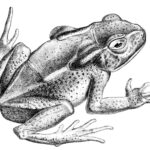
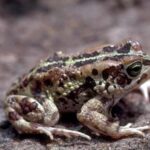
At first glance, Rhinella inopina might seem ordinary. Typically reaching lengths of just 4 to 6 centimeters, it boasts an understated coloration predominantly consisting of earthy browns, muted greens, and grey hues. However, upon closer inspection, its muted coloring reveals an intricate pattern of darker, irregular markings, an effective camouflage within dense litter layers of its cloud forest home.
The skin texture is rough but finely granular, allowing moisture absorption crucial for respiration and hydration through its delicate skin. Large parotoid glands located prominently behind its eyes secrete a mild toxin, offering protection against predation. While not lethal to humans, these chemical compounds can cause discomfort to predators, effectively deterring most would-be attackers.
Eyes prominently set high on its head give this nocturnal creature superior vision in the dimly lit forest undergrowth. Simultaneously, powerful hind legs enable swift hops and adept maneuvers among leaves, roots, and debris, aiding in both predation avoidance and efficient hunting.
Behavior and Life Cycle#
Feeding Habits and Hunting Strategies#
Primarily nocturnal, Rhinella inopina emerges at dusk to hunt for small insects, arachnids, and arthropods, becoming an essential regulator of invertebrate populations that, uncontrolled, could impact leaf-litter decomposition and nutrient cycling. Its feeding style is dramatically opportunistic: waiting patiently, concealed within leaf litter, the toad remains perfectly still, senses alert, until prey moves within striking distance. It then deploys its sticky tongue in a lightning-fast motion, drawing lucky captures swiftly into its waiting mouth.
Breeding Seasons and Courtship#
Breeding coincides with the rainy season, an opportune period when temporary pools and forest streams swell, becoming ideal nurseries for their aquatic offspring. Male toads gather along water margins, their resonant mating calls filling night air with a rhythmic soundtrack—each call competing fiercely for female attention. Following courtship, females lay strings of gelatinous egg masses in shallow, protected waters. The subsequent emergence of tadpoles initiates a delicate journey through aquatic stages before metamorphosing into terrestrial juveniles.
Interestingly, these breeding bouts prompt large gatherings along select forest streams, transforming quiet hidden sites into vibrant hubs of amphibian life—a compelling seasonal spectacle unique to this cloud forest environment.
Ecological Role#
Despite its diminutive size, Rhinella inopina holds substantial influence over the intricate web of interactions within its eco-region. Serving simultaneously as predator and prey, its survival influences populations of forest-floor arthropods and various predator species. By controlling insect populations, it aids forest nutrient cycles, indirectly supporting plant health and overall biodiversity.
Likewise, tadpoles filtering algae and microorganisms contribute to maintaining balanced aquatic ecosystems, demonstrating the incredible reciprocal relationships underpinning pristine forest health. Such qualities underscore the importance of this small toad species, emphasizing its integral role in cloud-forest ecosystems.
Threats and Conservation Status#
Although newly described, subtle yet persistent threats loom. Habitat fragmentation, growing deforestation driven by agriculture expansion and logging, climate-driven weather pattern shifts, and fungal diseases such as chytridiomycosis pose ongoing dangers. Though not yet formally evaluated by the International Union for Conservation of Nature (IUCN), the fragile and limited range of Rhinella inopina already concerns scientists eager to ensure its continued survival.
In response, conservation initiatives advocating habitat protection, environmental education, and scientific research are crucial. Recent emphasis on cloud forest preserves in Bolivia is seen as pivotal to this species’ long-term conservation.
Cultural and Scientific Significance#
Beyond ecological roles, frogs and toads have long inspired human cultures, symbolizing fertility, rain, and rebirth. Though specific traditional lore surrounding Rhinella inopina has yet to surface due to its recent recognition, it contributes to the broader biocultural narrative of frogs representing indicators of environmental stability and change.
Scientifically, its relatively recent discovery underscores greater hidden biodiversity and exemplifies the immense potential of understudied regions. Such discoveries become vital data points for studying evolutionary biology, ecological adaptations, and climate impacts, prompting renewed appreciation and attention toward conservation priorities.
Conclusion#
Immersed within the infinite complexity of South American cloud forests, Rhinella inopina embodies the mystery, beauty, and importance of amphibian biodiversity. While humble in appearance, it profoundly demonstrates how interwoven and interdependent life’s tapestry remains. Preserving this extraordinary species and the habitats it represents means safeguarding a natural treasure critical not just for enthusiasts and scientists, but for the health of our planet’s ecological future.
Let our discovery not end here—learn more, actively participate in conservation efforts, or simply pause to reflect the rich, untamed wonders awaiting exploration. Among them, the Unexpected Toad patiently endures, inspiring us to protect Earth’s marvelous tapestry.