- The Mysterious Rhinella exostosica: Uncovering the Secrets of a Remarkable Amazonian Toad
- Taxonomy and Classification
- The Natural Habitat: Exploring Amazonia’s Hidden World
- Physical Characteristics: Masters of Camouflage
- Behavior and Life Cycle: Quiet Lives, Remarkable Adaptations
- Ecological Role: Guardians of the Forest Floor
- Conservation Status and Current Threats
- Cultural and Scientific Significance
- The Path Forward: Protecting the Secrets of Rhinella exostosica
The Mysterious Rhinella exostosica: Uncovering the Secrets of a Remarkable Amazonian Toad#
Hidden deep within the verdant tapestry of South America’s sprawling Amazon rainforest, an extraordinary amphibian silently navigates the shadowy undergrowth. Its name is Rhinella exostosica, a remarkable toad whose intriguing appearance and curious biology captivate both scientists and nature enthusiasts alike. While less famous than the colorful poison dart frogs or tree-dwelling glass frogs, Rhinella exostosica holds within its secretive lifestyle a fascinating story of survival, adaptation, and ecological importance.
Its unique scientific epithet, “exostosica,” hints toward a peculiar physical trait—distinctive bony protrusions extending outward under the skin, setting it apart from many of its closest relatives. Yet, these toads remain largely mysterious; preferring the damp darkness beneath leaf litter or moss-covered roots, their discreet presence offers a window into the delicate balance and intricacies of rainforest ecosystems. This article invites you on a journey into their hidden world, unraveling the remarkable biology, behavior, and conservation significance of Rhinella exostosica.
Taxonomy and Classification#
Rhinella exostosica belongs to the family Bufonidae, the true toad family encompassing hundreds of amphibian species distributed globally across diverse habitats. Within this vast family, it is grouped specifically in the genus Rhinella, characterized by distinct morphological features such as rough, warty skin, prominent parotoid glands, and a defensive strategy involving potent toxins.
First described formally by scientists in recent decades, Rhinella exostosica was initially distinguished from related species based on its unusual skeletal morphology and certain behavioral patterns. Close relatives, including the more widespread Cane Toad (Rhinella marina), share some traits, yet Rhinella exostosica stands apart due to its uniquely adapted anatomical structure that aids survival in a highly competitive rainforest habitat.
The Natural Habitat: Exploring Amazonia’s Hidden World#
Rhinella exostosica primarily inhabits regions within the northwestern Amazon basin, notably in the remote forests of northern Peru and Ecuador. These areas are distinguished by their remarkable biodiversity, lush vegetation, humidity, and stable temperatures essential to amphibian life. Within these intricate ecosystems, our toad favors dense forest interiors, most often residing near slow-moving streams, small clearings carpeted in moist leaf litter, and clusters of rotting logs—perfect shelters for avoiding predatory eyes and the sweltering heat of midday.
Immersed in this mossy realm, Rhinella exostosica weaves itself subtly into its surroundings, creating little to no indication of its existence to passing observers. Here, every fallen leaf, twisted root, or decaying log can conceal an individual, perfectly camouflaged thanks to the toad’s cryptic coloration. These habitats not only offer safety but also a plentiful supply of insects and small invertebrates that comprise the toad’s diet. Each humid night provides new opportunities for these secretive beings to carry out their life cycles, hidden away from human eyes yet playing crucial roles within their microhabitats.
Physical Characteristics: Masters of Camouflage#
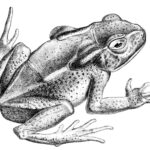
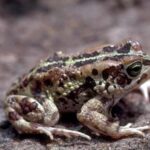
The first glimpse of a Rhinella exostosica inevitably leaves a lasting impression. Measuring roughly between 4 to 8 centimeters at adult size, these compact amphibians may seem modestly sized, but their appearance is notably striking. Their bodies, broad and plump, are adorned with a thick, rough skin texture covered in small granular bumps and ridges. This textured skin, mostly varying shades of brown, gray, or even deep earthy greens, creates an ideal visual mimicry of rainforest floor debris—vital for concealment among leaves and bark.
Perhaps most distinctive are the remarkable bony protrusions beneath the skin that inspired their curious scientific name. These “exostoses,” hard calcified structures extending from underlying bones toward the skin surface, create unique patterns evident even at a cursory glance. Scientists believe these skeletal adaptations provide structural reinforcement, offering enhanced protection—or perhaps serving in intra-species interactions during territorial disputes or mating rituals. Their physiology, finely tuned over millennia amidst relentless evolutionary pressures, positions Rhinella exostosica perfectly within its intricate ecological niche.
Behavior and Life Cycle: Quiet Lives, Remarkable Adaptations#
The nocturnal habits of Rhinella exostosica see them set into motion under the cover of darkness. Equipped with acute senses, these toads expertly detect vibrations and subtle movements of prey, allowing efficient hunting of insects, arachnids, and worms. Ambush predators by nature, they remain motionless—sometimes for hours—before springing forth with astounding accuracy.
Fascinating Breeding and Reproduction Strategies#
During breeding seasons coinciding typically with periods of rainfall, males venture closer to waterways and small pools, producing a distinctive trill—an enchanting symphony echoing subtly through the humid night air. Females, responding to these vocal cues, arrive and subsequently deposit hundreds, sometimes thousands, of eggs in long gelatinous strands directly into shallow waters or carefully submerged vegetation.
In about a week’s time, tiny tadpoles hatch, carving a determined course within their aquatic nurseries. These wriggling juveniles typically develop swiftly, feeding voraciously on algae and microscopic organisms. Their rapid growth and metamorphic transformations reflect perfectly evolved survival strategies honed by rainforest conditions marked by resource fluctuations and intense predatory pressure.
Ecological Role: Guardians of the Forest Floor#
Amphibians often represent essential players in ecological balance, and Rhinella exostosica proves no exception. These toads act as invaluable regulators of insect populations, naturally curbing pests that might otherwise explode unchecked in numbers. Meanwhile, their vulnerability and sensitivity to environmental shifts position them as important bioindicators—a litmus test for overall ecosystem health.
Conversely, these animals play the equally critical role of prey. Many rainforest predators—from snakes to birds—depend on amphibians for survival. Thus, understanding and conserving the habitats that these toads call home carries enormous ripple effects throughout the food web, highlighting their indispensable ecological significance.
Conservation Status and Current Threats#
Despite the richness of their rainforest home, Rhinella exostosica face considerable threats. Chief among these is ongoing habitat destruction caused by logging, mining, agriculture encroachment, and infrastructure expansion. Habitat fragmentation gradually isolates populations, restricting gene flow, reducing available resources, and increasing their susceptibility to disease and predation.
Climate change further complicates matters by shifting rainfall patterns, altering crucial breeding periods, potentially disrupting reproductive cycles irreparably. Although Rhinella exostosica currently lacks an official IUCN assessment—a status many cryptic amphibians share due to limited data—conservationists highlight the urgency of protecting their habitats to prevent future declines and potential extinction.
Cultural and Scientific Significance#
Like many species within the diverse Amazon, this unique amphibian holds cultural value for indigenous peoples. Traditionally respected as symbols of renewal, luck, and transformation due to their dramatic metamorphosis, amphibians such as Rhinella exostosica are woven deeply within regional folklore.
On the scientific front, the study of their unique bony protrusions and physiological adaptations could inspire biomimetic innovations. Each discovery about their biology and ecology promises further insight into broader evolutionary processes, highlighting their vital scientific importance.
The Path Forward: Protecting the Secrets of Rhinella exostosica#
The rainforest holds thousands of secrets, whispered quietly amidst dense canopy shadows or concealed beneath lush forest understories. Rhinella exostosica stands as one of these intriguing puzzles, waiting patiently for our full understanding and appreciation. Recognizing their ecological importance—coupled with concerted efforts to preserve their rapidly diminishing habitat—represents humanity’s opportunity to safeguard a future not only for Rhinella exostosica but for countless other species intertwined deeply in the Amazonian web of life.
The quiet chorus of these toads is a subtle reminder of the beauty and fragility of Earth’s biodiversity. Let their voice inspire conservation and ignite curiosity to explore, understand, and ultimately protect the mysteries they embody.