- Secrets of the Cerrado: Exploring the Life of the Rhinella cerradensis Frog
- Taxonomy and Classification
- Natural Habitat: Living Among Cerrado Grasslands
- Distinctive Physical Characteristics: Nature's Masterpiece of Adaptation
- Life Under the Stars: Frogs in Action—Behavior and Life Cycle
- The Vital Ecological Role of Rhinella cerradensis
- Threats and the Conservation Urgency
- Cultural and Scientific Significance
- Conclusion: Championing the Cerrado Toad
Secrets of the Cerrado: Exploring the Life of the Rhinella cerradensis Frog#
Beneath the star-studded skies of Brazil’s vast cerrado savanna, a remarkable amphibian emerges after rainfall, its voice blending harmoniously into nature’s nocturnal symphony. This reclusive yet intriguing creature is Rhinella cerradensis, often known simply as the Cerrado Toad—a unique species whose ecology, behavior, and conservation tell a captivating story about life in these vibrant ecosystems.
At first glance, the Cerrado Toad appears modestly unassuming, often overshadowed by the charismatic mammals and exotic birds of the Brazilian cerrado. Yet beneath its humble exterior lies a fascinating creature adapted expertly to one of the world’s most critically endangered ecosystems. From its elusive lifestyle to the prominent role it plays within its habitat, Rhinella cerradensis provides a profound glimpse into the delicate balance of nature, revealing secrets essential to understanding and preserving our precious biodiversity.
Come along on this immersive exploration into the natural history, behavior, and pressing conservation story of the compelling Cerrado Toad.
Taxonomy and Classification#
Known by scientists as Rhinella cerradensis, the Cerrado Toad belongs to the family Bufonidae, a widespread group renowned for their warty skin and robust adaptations to diverse environments. First described scientifically in 1967 as Bufo cerradensis, this species has since been re-classified into the genus Rhinella, reflecting evolutionary relationships more accurately understood through advanced genetic analyses.
This particular genus, Rhinella, encapsulates numerous South American toads, recognized primarily by their heavily built frames and glandular, toxin-producing skin. Within their taxonomic grouping, Cerrado Toads share close evolutionary ties to related Brazilian species like Rhinella marina and Rhinella schneideri. Their genetic connections highlight the deep evolutionary history engraved within Brazil’s diverse landscapes.
Natural Habitat: Living Among Cerrado Grasslands#
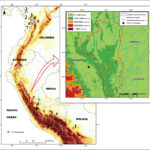
Rhinella cerradensis makes its home exclusively within the ecosystems of Brazil’s Cerrado region. Covering extensive portions of central Brazil, this expansive biome is characterized by mosaic-like patterns of grasslands, sparse savannas, gallery forests, seasonal streams, and rocky outcrops called campo rupestre. For this particular amphibian, these unique habitat traits spell home.
The Cerrado experiences a pronounced climate rhythm, alternating sharply between long dry seasons and fleetingly intense rains. It is precisely following these refreshing rains—when pools fill, vegetation bursts into bloom, and insects swarm—that Cerrado Toads emerge to carry out their most critical life functions: feeding, mating, and reproduction.
The landscape itself dictates their lifestyle, guiding these toads into a rhythm perfectly tailored for survival. Between rains, they retreat beneath logs or into burrows, regulated carefully to prevent moisture loss. When twilight brings precipitation and cooler temperatures, the toads venture from refuge, embarking upon their essential nocturnal journeys.
Distinctive Physical Characteristics: Nature’s Masterpiece of Adaptation#
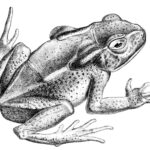
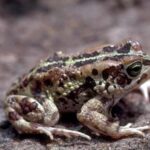
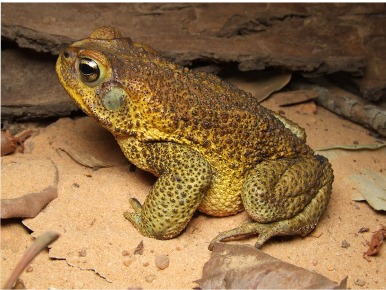
Visually, the Cerrado Toad is a marvel of evolutionary adaptation. Adults typically range between 5 to 9 centimeters in length, substantial enough to discourage small predators yet agile enough to navigate effortlessly through Cerrado’s varied terrain. The species’ skin, dotted by small bumpy glands, exudes subtle earth tones—tan, olive, or sandy brown—perfectly camouflaging them among leaf litter and soil.
Most famously, like many toads, Rhinella cerradensis sports a pair of prominent parotoid glands behind the eyes, capable of secreting defensive toxins when threatened. While its toxins are mildly irritating to potential predators, they provide enough defense to afford the toad relative freedom of movement at night, allowing it to forage confidently among open spaces under the starry Cerrado sky.
In addition, their large copper-tinged eyes grant excellent night vision—a crucial adaptation enabling successful nocturnal hunting of insects and arthropods. The sturdy limbs, adapted to hopping and compact digging motions, complete an anatomy finely tuned to the Cerrado environment’s dynamic conditions.
Life Under the Stars: Frogs in Action—Behavior and Life Cycle#
The rhythmic march of life in the Cerrado carefully synchronizes with seasonal rains. Emerging primarily after showers have replenished the landscape, Cerrado Toads employ nocturnal activities to avoid harsh temperatures and predatory threats. Nightfall in the Cerrado becomes an amphibian stage, alive with calls, courtship, and competition.
A Symphony of Sound: Calls and Courtship Rituals#
Male Cerrado Toads initiate courtship by singing melodic yet resonant calls to attract females. These lyrical declarations echo softly through the moist night air, creating an unmistakably rich auditory experience. Each individual’s call serves not only to attract potential mates but also to establish territorial dominance among competing males, creating a dynamic social exchange within the twilight arena.
The Dance of Life: Reproduction and Development#
Upon successful courtship, females deposit clusters of gelatinous frog eggs in temporary pools formed by seasonal rains. Unlike some frogs, Cerrado Toads rarely demonstrate elaborate parenting behavior after laying eggs, entrusting survival entirely to the ecosystem itself—a gamble nature balances through sheer reproductive abundance.
Tadpoles are swift in their developmental tasks, compelled by quick-drying Cerrado pools to mature rapidly from aquatic larval stages into terrestrial juveniles. Over mere weeks, tadpoles transition from aquatic grazers into fully formed, miniature terrestrial toads, ready to blend with the concealed rural landscape.
The Vital Ecological Role of Rhinella cerradensis#
Amphibians such as the Cerrado Toad are crucial ecological cogs, playing indispensable roles in maintaining and regulating insect populations. Higher trophic levels—from snakes and birds to mammals like foxes—rely on these toads as vital food sources, thus underscoring their significance as prey within Cerrado’s tightly interconnected ecological network.
Because amphibians possess permeable skin, highly sensitive to environmental pollutants and habitat changes, Cerrado Toads also play an essential role as bioindicators. They reflect the overall health of their habitat, signaling early warnings of environmental degradation or pollution long before other organism groups exhibit impacts.
Threats and the Conservation Urgency#
Despite seemingly humble existences, Cerrado Toads confront a growing array of threats to their survival. Expanding agriculture and cattle ranching have converted vast areas of native Cerrado habitat into fields and pasturelands. These transformations alter water availability, fragment natural landscapes, and introduce chemical pollutants, considerably reducing suitable breeding environments required for amphibian reproduction.
Climate change, too, drives uncertain impacts, potentially influencing seasonal rainfall patterns that these toads heavily rely upon. Coupled with pesticide exposure, invasive species competition, and regional soil erosion, each emerging threat compounds through interactions, placing tremendous pressure upon surviving populations.
Sadly, due to data gaps regarding population dynamics and distribution, the Cerrado Toad currently remains underrepresented on international conservation frameworks like the International Union for Conservation of Nature (IUCN) Red List. However, local conservation organizations highlight urgent needs to protect not only the species directly but critically, the fragile Cerrado ecosystem itself.
Cultural and Scientific Significance#
Beyond ecology, Rhinella cerradensis and its relatives hold significance within traditional Brazilian folklore, representing wisdom, fertility, and the cycles of wet and dry seasons. Scientific researchers also regard the Cerrado Toad as a vital subject for studying ecological adaptations, environmental change impacts, and amphibian resilience.
Conclusion: Championing the Cerrado Toad#
The Cerrado Toad, magnificent yet understated, guides us towards deeper appreciation of one of Brazil’s most threatened biomes. Their lives underline an essential, universal truth—that biodiversity exists in careful balance, forever reliant upon our awareness, compassion, and dedicated action.
By acknowledging the fascinating life, ecological role, and emerging conservation urgency of Rhinella cerradensis, we embrace a precious opportunity: to protect not merely an isolated species—but the Cerrado as a whole, the countless species it shelters, and ultimately, ourselves. Will you join us in safeguarding nature’s expansive borderland, letting the Cerrado Toad’s song forever resonate along its timeless corridors?