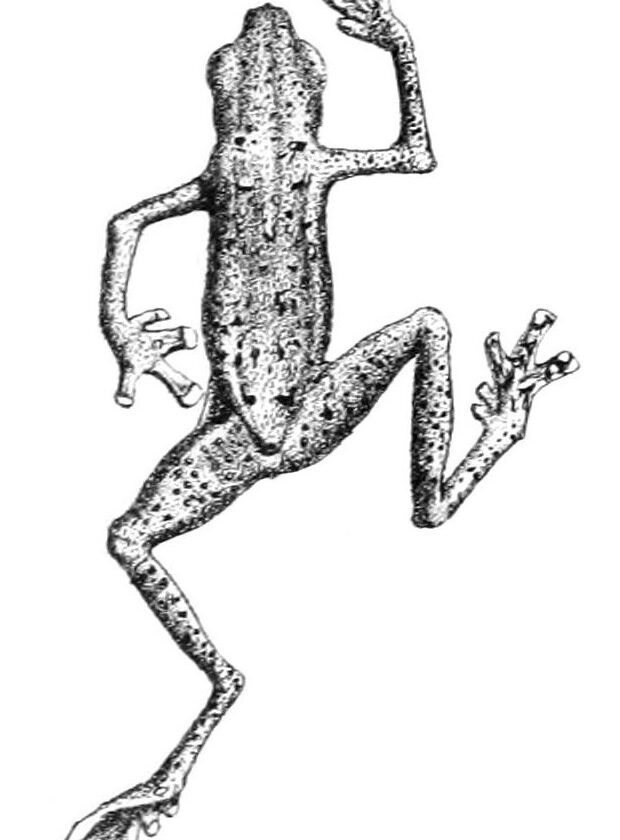
- Pelophryne macrotis: The Enigmatic Big-Eared Toad of Southeast Asia
- Taxonomy and Classification
- Natural Habitat: A Life in the Southeast Asian Rainforests
- Physical Characteristics: A Master of Camouflage and Auditory Precision
- Behavior and Life Cycle: Subtle Lives Filled with Unique Adaptations
- Ecological Role: Tiny Toad, Immense Impact
- Threats and Conservation Status: Protecting Precious Amphibian Diversity
- Cultural and Scientific Significance: Small Frog, Big Insights
- Conclusion: Advocating for Pelophryne macrotis & Tropical Rainforests
Pelophryne macrotis: The Enigmatic Big-Eared Toad of Southeast Asia#
In the intricate, emerald-green expanses of Southeast Asia’s lowland forests, hidden beneath lush foliage and lingering moisture, a diminutive amphibian lives a life of quiet intrigue. Pelophryne macrotis, known commonly as the Big-Eared Toad, remains one of nature’s discreet wonders. Its subtle presence belies its essential ecological role within these richly biodiverse habitats. Though small in stature and often overlooked by casual observers, this fascinating species carries within its fragile form profound insights about the interconnectedness of life beneath the rainforest canopy.
Scientifically catalogued as Pelophryne macrotis, this tiny amphibian introduces itself aptly through its Latin epithet macrotis, meaning “large-eared.” While its “ears” may not exactly resemble those of mammals, its prominently visible tympana—external eardrums—make it distinctive among its fellow amphibians, hinting at its remarkable acoustic sensitivity and the complexities of its quiet existence. Pelophryne macrotis invites us into a microcosmic world, delicate yet resilient, calling attention not only to the intricacies of amphibian biology but also to the pressing importance of conserving fragile tropical ecosystems.
Taxonomy and Classification#
Pelophryne macrotis belongs to the diverse amphibian family Bufonidae, more familiar to many as “true toads.” This extensive amphibian family is renowned for its remarkable ecological adaptability and a plethora of survival strategies. Within Bufonidae, Pelophryne forms an intriguing genus characterized by specialized adaptations suited to warm, humid, forested environments. First scientifically described by George Albert Boulenger, an esteemed Belgian-British zoologist, in 1895, the Big-Eared Toad was immediately recognized as unique among its genus due to distinct morphological traits, notably its conspicuous tympanum and specialized habits.
The genus Pelophryne includes numerous species characterized by their petite size, cryptic coloration, and adaptations to arboreal or semi-arboreal lifestyles. However, Pelophryne macrotis stands apart for its peculiar auditory anatomy, an adaptation whose function continues to intrigue herpetologists and ecologists alike. Understanding the taxonomic place of Pelophryne macrotis not only enriches our knowledge of biodiversity but also underscores the crucial importance of detailed taxonomic research in designing effective conservation strategies.
Natural Habitat: A Life in the Southeast Asian Rainforests#
The lush, moisture-laden forests of Southeast Asia—spanning parts of Indonesia, Malaysia, Brunei, and Singapore—offer Pelophryne macrotis an ideal and intricate habitat. This petite amphibian typically occupies pristine, undisturbed lowland rainforests, thriving in environments characterized by dense undergrowth, abundant humidity, and sheltered microclimates.
Preferred Microhabitats: Secretive Lives Amongst Leaves#
Careful observation reveals that these secretive amphibians spend much of their lives close to the forest floor, concealed beneath leaf litter or occupying low, shrub-like vegetation. Pelophryne macrotis often remains motionless, blending harmoniously with mottled leaf debris, tree bark, and the myriad shades of brown, beige, and olive that cloak the rainforest. Occasionally retreating to slightly elevated spots, such as shrubs or logs, it engages in behaviors designed to evade detection from both predators and unsuspecting prey.
During the rainy season, these habitats become thick with moisture, humidity hanging in heavy veils through which sounds carry with ease. It is during these periods that Pelophryne macrotis becomes more active, thriving in abundant dampness and using its pronounced auditory capabilities to navigate, locate conspecifics, and communicate amidst the symphony of rainforest sounds.
Physical Characteristics: A Master of Camouflage and Auditory Precision#
At first glance, Pelophryne macrotis appears unassuming. Individuals of this species rarely exceed 30 millimeters in length, their diminutive size rendering them easily overlooked. Yet, detailed examination reveals a surprising and delightful complexity.
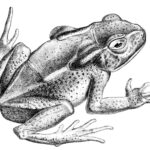
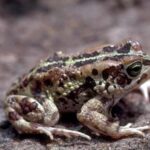
The skin of Pelophryne macrotis features cryptic coloration that varies subtly between individuals, generally displaying hues of brown, tan, olive, and faintly patterned markings allowing it to blend perfectly with its forest surroundings. Such camouflage enables this tiny amphibian to remain inconspicuous as predators, like birds or snakes, scan for prey.
The species is named explicitly for its notably large tympanum—the external circular structure behind the eye representing the frog’s auditory organ. Scientists hypothesize this enlarged sensory structure enhances communication, allowing the Big-Eared Toad to detect mates’ subtle calls amongst the cacophony of rainforest insects, birds, and fellow amphibians. The delicate, globular eyes are often golden, rimmed narrowly in black, lending this creature a tranquil yet alert visage.
Behavior and Life Cycle: Subtle Lives Filled with Unique Adaptations#
Much of the natural history of Pelophryne macrotis remains carefully veiled by the complexity and inaccessibility of its forest home. Nonetheless, field studies and observations have yielded intriguing glimpses into its secretive daily routine.
Feeding Strategies: Quiet Hunters in the Understory#
As nocturnal ambush predators, Big-Eared Toads capitalize upon their effective camouflage, silently lying in wait while monitoring movements using sharp eyesight and a sensitive auditory system. Their diet consists primarily of small invertebrates such as ants, beetles, flies, and other diminutive arthropods plentiful in leaf litter ecosystems. A lightning-fast strike propelled by sticky tongues easily captures unsuspecting prey.
Breeding Behaviors: Harmonizing Calls in the Rainy Season#
Breeding season usually coincides with the onset of heavy rains, an ancient synchronized cue signaling ideal nursery conditions. Males utilize their enlarged tympana to detect distant conspecific calls and produce their own subtle vocalizations—soft, intermittent clicks or chirps rather than the loud, persistent calls known in many bigger amphibians. Females, on the other hand, listen carefully, locating their mates amidst the rich symphony of rainforest nights.
Females lay small batches of eggs, positioning them strategically in sheltered microhabitats, such as small crevices, damp leaf litter, or shallow forest pools formed by seasonal rainfall. Little is known about parental investment, though minimal parental care is presumed, as in many tropical toad species. Tadpoles develop rapidly in ephemeral pools and small pockets of standing water, swiftly metamorphosing before temporary pools vanish in prolonged dry periods.
Ecological Role: Tiny Toad, Immense Impact#
Despite its diminutive size, Pelophryne macrotis plays an outsized role within its ecosystem. As insectivores, these toads significantly impact insect populations, maintaining ecosystem balance and preventing outbreaks of harmful insect species. concurrently providing sustenance to a diverse array of predators, including snakes, birds, and larger amphibians, thus forming a critical node in the food web.
Moreover, sensitive amphibians such as Pelophryne macrotis act as indicator species. Their health and population status reflect environmental health more broadly. Changes in the Big-Eared Toad population can signal deterioration or restoration of broader environmental quality, making them essential—and humble—sentinels of ecosystem wellness.
Threats and Conservation Status: Protecting Precious Amphibian Diversity#
Pelophryne macrotis presently finds itself classified as “Least Concern” by the IUCN, indicative of stable populations within its known range. Nonetheless, this status offers no permanent guarantee. Rapid deforestation, rampant habitat fragmentation, escalating urban development, and potential climate-driven changes threaten its moist tropical haven.
Conservationists recognize the need for proactive habitat protection, sustainable forestry practices, and long-term environmental monitoring to safeguard this species and sustain biodiversity. Environmental awareness campaigns, community engagement, and ecological research form essential cornerstones of protective initiatives for all subtle rainforest species like the Big-Eared Toad.
Cultural and Scientific Significance: Small Frog, Big Insights#
While perhaps not prominently featured in folklore or cultural symbolism, the Big-Eared Toad enriches science significantly. Scientists investigate species such as Pelophryne macrotis to better understand bioacoustics, evolutionary biology, ecosystem health, and climate sciences. Their delicate existence illuminates broader ecological truths and underscores the necessity for protecting intricate tropical ecosystems.
Conclusion: Advocating for Pelophryne macrotis & Tropical Rainforests#
Pelophryne macrotis teaches us humility, patience, and the critical urgency of preserving biodiversity. Through careful appreciation, research, and active conservation efforts, we can help ensure this remarkable species continues its subtle harmonies, adding its quiet but critical voice to the world’s symphony of life. Let us remain attentive and proactive, protecting Pelophryne macrotis and countless other elusive wonders for future generations to discover and cherish.