Pelophryne albotaeniata: A Hidden Jewel of Southeast Asia’s Amphibian World#
In the dense, moisture-laden forests of Southeast Asia, hidden beneath vivid layers of emerald leaves and moss-covered roots, dwells a small yet captivatingly unique amphibian—the Pelophryne albotaeniata. Known by few outside scientific circles, this remarkable frog is part of the poetic tapestry of biodiversity that enriches our planet. Its subtle beauty and ecological significance make it a species deserving far greater recognition than it currently enjoys.
Scientifically named Pelophryne albotaeniata, this diminutive creature occupies specific ecosystems in Borneo and surrounding islands, playing a vital role within complex forest webs. Though small in size and retiring in nature, the species possesses peculiar traits and behaviors that highlight the incredible adaptiveness of amphibians and underscore why their survival is essential. Join us as we delve into the hidden realms of this fascinating frog, unearthing secrets about its habitat, behaviors, ecological importance, and the conservation challenges it faces.
Taxonomy and Classification#
The Pelophryne albotaeniata is a member of the family Bufonidae, commonly known as true toads, but it embodies characteristics that often blur the distinction between what most might traditionally define as ‘frog’ or ‘toad’. Within this broad and diverse family, it belongs precisely to the genus Pelophryne, a group generally known for its small, rather inconspicuous members often overshadowed by their more celebrated relatives.
Closely related species within the same genus include Pelophryne brevipes and Pelophryne guentheri, each possessing their own distinct patterns and ecological roles within similar habitats. Although little known to the general public, specialized herpetologists, ecologists, and conservation biologists recognize Pelophryne albotaeniata as significant due to its unique adaptation and subtle ecological influence on its specific habitats.
Natural Habitat#
The Pelophryne albotaeniata is predominantly found within the lush and humid rainforests of Borneo, particularly in regions of Sarawak, Brunei, and Sabah. These ancient, moisture-rich environs, teeming with myriad other species, offer the frog exactly the microhabitats it requires to survive and thrive.
Microhabitat Preferences#
While some frogs reveal themselves openly in bright, vivid displays or loud chorus calls, Pelophryne albotaeniata prefers life’s quiet anonymity hidden within leaf litter, densely packed moss, and low vegetation. Its preferred microhabitat, often almost perpetually damp from rainforest canopy drip-lines, provides safety from predators, ample food sources in the form of tiny invertebrates, and unbeatable humidity necessary for its physiological wellbeing.
The abundance of mossy surfaces, decaying logs, and layers of leaf litter in these forests not only conceals the frog but provides ideal hunting and breeding grounds. Such specificity means that this species becomes particularly vulnerable if its environment faces alterations or disturbances, making habitat preservation crucial.
Physical Characteristics#
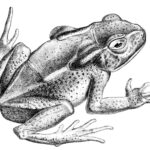
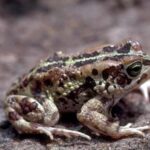
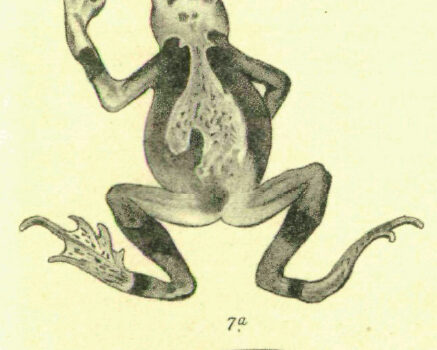
A diminutive creature, Pelophryne albotaeniata rarely exceeds three centimeters in length, its small size making it easy to overlook amidst its forested environment. But those who gaze closer will discover one of nature’s understated masterpieces—its skin painted delicately with a series of subtly contrasting colors that give it both camouflage and unique beauty.
The species features an exquisite marking pattern of pale stripes running lengthwise down its back, contributing to its scientific name “albotaeniata,” translating from Latin as “white-striped.” These markings blend seamlessly with the scattered flecks of browns, creams, and greens characteristic of their moist habitats, functioning as an impressive camouflage against predators hunting within forest litter and foliage.
Each frog’s skin exhibits an interesting rough texture, dotted with small, wart-like protrusions. These evolved as an adaptive strategy to blend seamlessly into its surrounding environment, mimicking textures of mosses, lichens, and damp vegetation. Their large eyes, metallic gold or copper-brown, provide keen nocturnal vision suited to their twilight activities.
Behavior and Life Cycle#
Unlike more conspicuous frog counterparts, Pelophryne albotaeniata is cryptically nocturnal, spending daylight hours concealed within damp vegetation and emerging under cover of darkness. Once evening descends and moisture saturates the air, the tiny amphibian becomes active, embarking on nightly journeys to feed and reproduce.
Feeding Habits and Diet#
As opportunistic feeders, Pelophryne albotaeniata consumes a variety of small prey items such as ants, mites, beetle larvae, and other tiny invertebrates. Its specialized visual acuity aids in the detection and capture of these minuscule prey items, each providing crucial nutrition while helping regulate insect populations within its habitat.
Reproductive Behavior#
The breeding patterns of Pelophryne albotaeniata are as distinctive as the species itself. Typically aligning reproductive activity with climatic conditions favorable to moisture, this frog will gather in small, quiet aggregations near breeding sites—usually shallow pools of water or temporary ponding caused by heavy rains. Males emit subtle yet distinct calls, a quiet chirping effort virtually drowned out by the nighttime symphony of crickets and cicadas but still clearly discernible to females.
Females lay eggs in clusters attached carefully to submerged or partially submerged vegetation. The resulting tadpoles undergo a rapid transformation guided by the warmth and inconsistent longevity of their water source. With labyrinthine waterways often evaporating as quickly as they form, tadpoles adapt rapidly, lending urgency and efficiency to their remarkable journey from aquatic larvae to miniature land-dwelling adult froglets.
Ecological Role#
Every organism plays a unique role in sustaining the health of its ecosystem, and Pelophryne albotaeniata is no different. Primarily, the species fulfills an invaluable niche function as both predator and prey within forest food webs. As a predator, its dietary preferences contribute significantly to invertebrate pest population control, ensuring balance within the forest’s biodiversity.
Conversely, as prey, their abundance helps sustain larger predators, including reptiles, mammals, and birds, each dependent on the frog and countless other small amphibians for their survival. Beyond direct trophic interactions, their skin permeability and sensitivity serve as vital indicators of environmental health, alerting scientists to early signals of ecological distress—whether those are habitat degradation, declining water quality, or changing patterns due to climate effects.
Threats and Conservation Status#
A Fragile Existence#
Because Pelophryne albotaeniata’s habitat is highly specific—linked to primary rainforest ecosystems—it is disproportionately vulnerable to habitat loss and environmental disturbance. Unfortunately, these primary forests are under increasing threat from logging operations, palm oil plantations, infrastructure development, and the ripple effects of climate change. Each felled tree or altered stream impacts the delicate balance essential to their daily lives, straining the species’ chance of survival.
Current Conservation Measures and IUCN Status#
While specific studies and detailed population assessments are scarce, the International Union for Conservation of Nature (IUCN) categorizes Pelophryne albotaeniata as Data Deficient, underscoring the need to better monitor and understand this elusive creature. Local conservation practices such as establishing protected areas, sustainable land-use policies, and habitat restoration are critical methods that could secure the future of species like these.
Cultural and Scientific Significance#
Although this tiny amphibian may not prominently appear in local folklore or traditions, the indigenous communities of Borneo and surrounding islands perpetually harbor respect and fascination toward the vast biodiversity that anchors the region’s cultural identity and heritage.
Scientifically, Pelophryne albotaeniata’s sensitivity to environmental changes helps researchers in understanding broader ecological complexities, particularly regarding climate and habitat health amidst global changes. It stands, therefore, not only as a marvel of evolutionary adaptation but also as a potential sentinel for environmental sustainability in its home ranges.
Conclusion#
Though modestly sized and quietly camouflaged amidst rainforest shadows, Pelophryne albotaeniata is incontrovertibly a jewel in Southeast Asia’s wildlife crown. From its beautifully adapted physical traits to its delicate roles within forest biodiversity, this frog reminds us all of nature’s countless hidden wonders awaiting our discovery, respect, and protection.
It is incumbent upon everyone, from avid wildlife enthusiasts and educators to conservation advocates, to champion the places and species that symbolize nature’s ingenious beauty. By learning, appreciating, and supporting conservation, we contribute positively to safeguarding small yet critical participants like Pelophryne albotaeniata in nature’s wondrous orchestra.