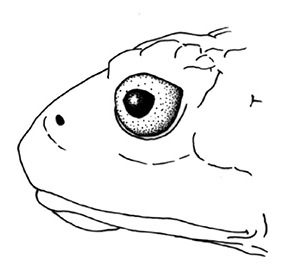
- Exploring the Enigmatic Beauty of Osornophryne antisana: Ecuador's Hidden Jewel of Amphibians
- Introduction: A Frog Like No Other
- Taxonomy and Classification
- Natural Habitat: Life Amid the Clouds
- Physical Characteristics: Tiny Wonders of Camouflage and Adaptation
- Behavior and Life Cycle: Secretive Lives High Above
- Ecological Role: Quiet Custodians of Montane Biodiversity
- Threats and Conservation Status: Preserving an Ecosystem Treasure
- Cultural and Scientific Significance: Understanding and Appreciating Unidos
- Conclusion: A Call to Protect Our Hidden Marvels
Exploring the Enigmatic Beauty of Osornophryne antisana: Ecuador’s Hidden Jewel of Amphibians#
Introduction: A Frog Like No Other#
Hidden among the misty slopes and emerald valleys of Ecuador’s majestic Andes thrives a peculiar frog known as Osornophryne antisana. As part of the Osornophryne genus, a fascinating lineage of tiny frogs adapted to mountain ecosystems, Osornophryne antisana is a creature enshrouded in mystery, ecological importance, and delicate beauty. Inhabitants of remote montane cloud forests, these frogs rarely catch the casual observer’s eye, yet they play an integral role as indicators of environmental health and biodiversity.
Meet Osornophryne antisana, the captivating amphibian whose very presence underscores the delicate balance within one of our planet’s most unique ecosystems. Curious, charismatic, and cloaked in camouflage, this diminutive frog carries within it secrets scientists are still unraveling—secrets crucial to understanding how life flourishes at high altitudes, entwined with clouds, rain, and intrigue.
Taxonomy and Classification#
Osornophryne antisana belongs to the family Bufonidae, commonly known as true toads—although it diverges notably from the classic “toad” image most people carry in their minds. Within this family lies the genus Osornophryne, named for Osorno, a reference to mountainous regions in South America. All members of Osornophryne demonstrate unique evolutionary adaptations suited particularly to cold, humid montane environments.
Described scientifically for the first time in 1987, O. antisana was discovered among moisture-laden moss and creepers blanketing volcanic slopes. Its closest relatives, including Osornophryne bufoniformis and Osornophryne guacamayo, share similar habitat niches, each boasting specialized adaptations for survival in harsh highland terrains.
Natural Habitat: Life Amid the Clouds#
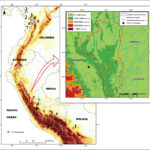
Osornophryne antisana calls the eastern slopes of Ecuador’s Andes home, its range centered around the Antisana volcano—a striking peak crowned by glaciers and perpetually blanketed by clouds. Ranging typically between elevations of 3,000 and 4,000 meters, this amphibian lives among cloud forests and humid páramo ecosystems, habitats famous for their moisture-rich environments, chilly temperatures, and astonishing biodiversity.
Cloud Forest Magic#
Enter a cloud forest habitat—a place of whispering mist, dangling moss-covered branches, ferns like elegant laceworks, and rare orchids dripping with moisture. It is here, within these mist-shrouded microcosms, that O. antisana spends its life. Each leaf is a universe, each droplet of moisture essential for its survival. Humidity and stable temperatures provided by persistent fog are lifelines to these delicate amphibians. It’s a damp, lush paradise crafted perfectly by nature for amphibians reliant on a constant moisture envelope.
These isolated, rugged environments have shaped tremendous evolutionary adaptations. With limited area and specific microhabitat conditions, this frog is intricately interwoven with precise natural elements—certain mosses, specific moisture gradients, and particular temperatures.
Physical Characteristics: Tiny Wonders of Camouflage and Adaptation#
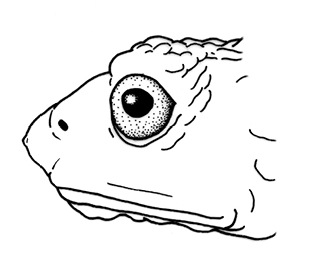
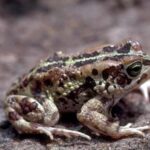
Adults of O. antisana are small in stature; females typically reach lengths of around 20–30mm, slightly larger than their male counterparts. Their appearance immediately suggests cryptic adaptations to montane life, as their small, granular bodies mimic precisely the textures and colors of damp leaf litter, damp stones, mosses, and lichens.
A Master of Disguise#
Their coloration is a remarkable example of evolutionary camouflage, usually comprised of hues ranging from moss-green, grayish-brown to mottled olive tones. Such subtle shades perfectly blend these frogs within their environment, rendering them virtually invisible against a backdrop of moss-covered logs, soil, rocks, or decaying leaf matter. Upon close examination, their skin reveals textured granules, bumps, and tiny irregular patches that enhance their cryptic camouflage even further.
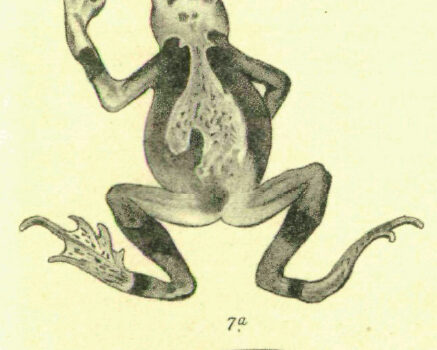
In addition, these frogs have evolved shortened limbs and reduced webbing, features ideal for walking and climbing rather than long-distance swimming. Such adaptations highlight their terrestrial nature—traits tailor-made by natural selection for navigating the vertical and rugged terrain of their mountainous home.
Behavior and Life Cycle: Secretive Lives High Above#
Living in close association with their humid environment, Osornophryne antisana exhibits behaviors specifically fine-tuned for thriving in a demanding ecosystem. These frogs lead exceptionally secretive lives, mostly nocturnal and hard to detect, quietly navigating dense carpets of leaves, ferns, and mosses.
Silent Hunters of the Forest Floor#
Unlike typical pond-dwelling or tree frogs, individuals of O. antisana rarely vocalize extensively. Instead, they rely heavily on chemical communication and subtle physical interactions for mating and territory establishment. They feed predominantly on tiny invertebrates—ants, mites, springtails, and other arachnids—that populate their damp habitat abundantly. With precision and patience, these frogs silently stalk prey among the detritus, moss, and vegetation, making rapid, accurate pounces when prey is within reach.
Breeding and Parental Care#
Perhaps one of the most fascinating aspects of their ecology is their reproductive behavior. Unlike amphibians breeding in isolated water bodies, O. antisana lays terrestrial eggs carefully hidden beneath moist leaves, in mossy carpets or among wet humus-filled crevices. Remarkably, these eggs skip a free-swimming tadpole stage—they develop directly, undergoing metamorphosis inside the eggs, emerging as miniature replicas of their parents.
This direct developmental strategy allows them to thrive even in habitats scarce of suitable standing water sources, reducing vulnerability to aquatic predators while demanding stable moisture conditions. For these frogs, successful breeding depends heavily on the microclimate stability provided by mossy territories where temperatures and moisture are finely balanced.
Ecological Role: Quiet Custodians of Montane Biodiversity#
Every species holds its own thread within the ecological tapestry, and frogs like Osornophryne antisana play vital roles in their ecosystems. Feeding on invertebrates, this species naturally controls pest populations, thereby regulating local food web structures and influencing plant health through indirect mechanisms.
More subtly, as prey for numerous reptiles, mammals, birds, and even larger amphibians, they form an essential link joining higher and lower trophic levels within the delicate montane ecosystems. Additionally, being incredibly sensitive to subtle fluctuations in temperature, humidity, precipitation patterns, contaminants, and other environmental variables, these frogs serve as critical environmental indicator species, their population providing invaluable insights to researchers regarding overall ecosystem health.
Threats and Conservation Status: Preserving an Ecosystem Treasure#
The IUCN Red List currently classifies Osornophryne antisana as “Endangered,” with populations declining due to mounting pressures of habitat destruction, agricultural encroachment, pollution, and climate change. The vulnerability of their specialized habitat to temperature shifts and altered precipitation poses significant risks, further intensified by diseases such as chytridiomycosis, a lethal fungal infection devastating amphibian populations globally.
Conservation efforts focusing on habitat protection, ecosystem restoration, public awareness, pollution control, and thorough ecological monitoring are critically important in safeguarding this fragile species. Institutes in Ecuador, along with international conservation bodies, actively research and strive to protect their natural ecosystems, ensuring this enigmatic frog’s voice isn’t lost amidst shifting mountain mists.
Cultural and Scientific Significance: Understanding and Appreciating Unidos#
While O. antisana may be unfamiliar to most, amphibians hold cultural significance across many Andean communities. Considered biological wealth indicators, their presence symbolizes nature’s balance and resilience. Science, too, finds incredible value in understanding how such organisms adapt physiologically and behaviorally to harsh climatic conditions—knowledge valuable for biodiversity conservation amidst global climate concerns.
Conclusion: A Call to Protect Our Hidden Marvels#
In the delicate embrace of Ecuador’s Andean cloud forests, Osornophryne antisana lives out an essential ecological role, quietly reminding us of nature’s vast interconnectedness. Let us champion conservation, education, and ecosystem stewardship, preserving this hidden marvel for generations to value, understand, and cherish.