- Werneria Preussi: The Enigmatic Amphibian of Africa’s Misty Mountains
- Taxonomy and Classification
- Natural Habitat: A Mountain Realm
- Physical Characteristics: Exquisite Adaptations
- Behavior and Life Cycle: Living Rhythm of the Streams
- Ecological Role: Guardians of Mountain Ecosystems
- Threats and Conservation Status: Protecting Preuss’s Legacy
- Cultural and Scientific Significance
- Conclusion: Advocating for a Hidden Gem
Werneria Preussi: The Enigmatic Amphibian of Africa’s Misty Mountains#
Nestled within the dense mist of Africa’s montane forests and cloud-crowned peaks, an elusive and mysterious amphibian quietly inhabits the realm between shadow and dew-laden leaf. Werneria preussi—a species rarely spotlighted in the pages of popular magazines or wildlife documentaries—is a captivating creature, deserving of far greater attention. Known affectionately among naturalists as Preuss’s Torrential Frog, Werneria preussi embodies the very essence of evolutionary adaptation, ecological resilience, and unique existence in some of Africa’s most specialized mountain habitats.
Werneria preussi (belonging to the Bufonidae family) was named in honor of Paul Preuss, a German botanist and explorer who traversed the uncharted landscapes of West-Central Africa in the late nineteenth century. Though diminutive and unassuming at first glance, this amphibian species reveals itself to be uniquely adapted to life amidst fast-flowing streams, tangled vegetation, and rugged mountain terrains.
Remarkably adapted to endure the altitude and humidity of montane forests, Werneria preussi offers a fascinating perspective into the evolutionary perfection of amphibian existence. Sadly, despite its extraordinary persistence, the species remains vulnerable, facing threats from human activities and environmental changes alike. This article delves deep into the domain of Werneria preussi, exploring its biology, habitat, behaviors, ecological roles, conservation concerns, and evocative place within human culture and scientific understanding.
Taxonomy and Classification#
Werneria preussi occupies an important position within amphibian taxonomy, located within the family Bufonidae—widely known as true toads. This family comprises robust and often terrestrial species; however, Werneria genus members, including our protagonist, deviate significantly from many typical toad characteristics, rendering them uniquely specialized.
The scientific classification of Werneria preussi is as follows:
- Kingdom: Animalia
- Phylum: Chordata
- Class: Amphibia
- Order: Anura
- Family: Bufonidae
- Genus: Werneria
- Species: Werneria preussi
This particular species shares its genus with other closely related “Torrent Frogs,” adapted specifically to excellent aquatic and terrestrial mobility in highland ecosystems. The unique identity of Werneria preussi sets it apart from typical bufonids, whose representatives are often characterized by flattened bodies and warty textures, common in the subfamily Bufoninae. Instead, Werneria preussi uniquely bridges the line between terrestrial agility and aquatic competency.
Natural Habitat: A Mountain Realm#
The mist-covered mountains of Central and Western Africa form the limited yet resilient sanctuary of Werneria preussi. Its geographic range predominantly spans regions in eastern Nigeria, Cameroon, and certain parts of Equatorial Guinea. The species mostly resides on the slopes and foothills of Mount Cameroon, stretching into volcanic highlands and steep forest-clad ridges. Within these landscapes, Werneria preussi carves out existence in regions from approximately 800 to over 2,000 meters above sea level.
These regions—cool, humid, and shrouded in near-perpetual mist—exhibit lush forest cover, fern-covered streambanks, and cascading waterfalls. The environment, seemingly plucked from an illustration of primeval wilderness, provides critical habitat elements necessary for Werneria preussi. It prefers habitats alongside rapid, crystal-clear streams—environmental niches that require specific physical adaptations, enabling it to withstand water currents, navigate slippery rocks, and deftly escape predators.
An Amphibian Adapted to Torrents#
Werneria preussi has adapted remarkably well to its challenging habitat. Fast-flowing streams and waterfalls necessitate powerful limbs with specialized muscular development. The pads beneath its digits contain microscopic grooves and specialized skin texture, enabling it to cling sturdily onto wet, moss-covered surfaces, resisting the rush of water.
The vegetation surrounding its aquatic home also plays a significant role. These specialized toads find refuge among the moss-covered stones and beneath dense leafy canopies. Such ideal habitats protect them from predators and harsh climatic fluctuations, providing necessary humidity and moderate temperatures for their delicate, permeable skin.
Physical Characteristics: Exquisite Adaptations#
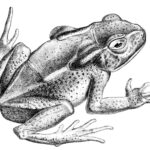
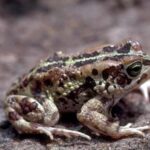
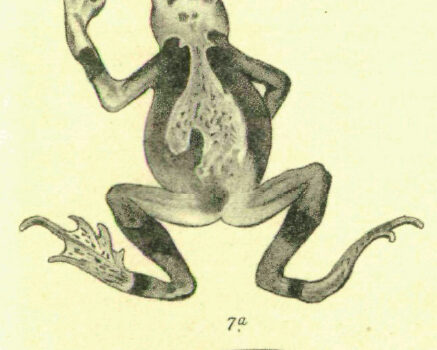
An intriguing array of physical features allows Werneria preussi to thrive amid its harsh mountainous home. Adult individuals generally measure around 30 to 50 millimeters—small by Bufonid standards, yet perfectly sized to maneuver effectively among rocky streams.
Visually, Werneria preussi exhibits muted yet varied colors, primarily featuring earthy shades of olive, brown, and gray, interspersed with punctuated darker patterns and blotches. Such coloration is adaptive camouflage, precisely mimicking wet rocks, leaf litter, and algae-covered bedrocks of their habitat’s edge. A subtly granular skin texture completes their camouflaging cloak, eliminating reflections and allowing juveniles and adults to blend seamlessly with their surroundings.
The eyes of Werneria preussi are distinctly large and protruding, providing excellent peripheral vision critical for spotting predators or potential prey with split-second lives at stake. Pupils shaped similarly to horizontal slits further enhance their visual detection at ground level, aiding in protection from overhead and terrestrial threats alike.
Behavior and Life Cycle: Living Rhythm of the Streams#
The life rhythms of Werneria preussi mirror the kinetic dance of the mountain streams they inhabit: constantly moving, delicately balanced, and rhythmically attuned to seasonal rains and water availability. Their life patterns comprise fascinating sequences of behavior tied intricately to their unique environment.
Feeding Habits and Hunting Styles#
Werneria preussi maintains a diet strictly insectivorous, seizing prey opportunistically along stream edges and forest floors. Feeding primarily on small insects, spiders, and mites, these toads perform spectacular hunting maneuvers, employing quick tongue-flicks to capture prey swiftly and accurately. Their hunting strategy emphasizes stealth and ambush, requiring minimal movement until prey passes within precise striking distance.
Mating and Reproduction#
Reproductive activity peaks during the rainy season, triggered by rainfall and environmental stimuli. Male Werneria preussi individuals produce soft yet distinct calls, usually described as a series of subdued chirps, meant to attract females and signal reproductive readiness. These gentle calls further exemplify their subtle yet vital presence within forest soundscapes.
Female Werneria preussi carefully select appropriate aquatic locations to deposit gelatinous clutches of eggs. These egg masses adhere to submerged vegetation or sheltered stream habitats, meticulously placed to ensure developmental security against strong currents or potential predators. Following hatching, tadpoles develop amid slow-moving sections of these mountain waters, utilizing algae, microorganisms, and detritus to sustain early growth.
Ecological Role: Guardians of Mountain Ecosystems#
Werneria preussi fulfills crucial ecological duties within its fragile mountain environment. As both predator and prey, it holds critical positions within the food web. By controlling insect populations, especially potential agricultural pests or disease-carrying insects, it directly benefits human populations. Furthermore, Preuss’s Torrent Frog serves as prey for birds, snakes, and small mammals—thus sustaining biodiversity among sympatric species.
The amphibian habitat itself exerts influence over aquatic ecosystems, facilitating nutrient exchange, and regulating food chain dynamics. Werneria preussi also indirectly serves as an “indicator species,” signaling ecosystem health or decline, particularly sensitive to pollution, climate variation, and habitat disturbance.
Threats and Conservation Status: Protecting Preuss’s Legacy#
The International Union for Conservation of Nature (IUCN) currently categorizes Werneria preussi as “Endangered.” Habitat loss poses the most severe threat, with expanding agricultural practices, deforestation, human settlements, and copper mining damaging pristine mountain forest ecosystems, drastically limiting suitable habitats.
Climate change exacerbates this situation, shifting rainfall distribution, increasing unpredictable droughts or flooding events, and impacting breeding habitats. Conservationists advocate strongly for habitat preservation, sustainable land-use management, establishment of protected habitats, and local community collaborations—efforts fundamental to safeguarding these fragile amphibians.
Cultural and Scientific Significance#
Though relatively unknown culturally, Werneria preussi contributes scientifically to biodiversity assessments and climate resilience studies. Researchers value such organisms as sentinels of ecological health, guiding conservation priorities and environmental policies.
Conclusion: Advocating for a Hidden Gem#
The quiet, hidden life of Werneria preussi echoes with ecological meaning and intrinsic beauty, urging the recognition and protection of these wondrous mountain frogs. Supporting Werneria preussi ensures broader environmental protection and offers hope for preserving Africa’s biological heritage. Let Werneria preussi not be forgotten—rather cherished, studied, and zealously protected.