- Exploring Werneria bambutensis: The Enigmatic Bamboo Forest Toad of Cameroon’s Highlands
- Taxonomy and Classification: Placing Werneria bambutensis Among Its Peers
- Natural Habitat: Life Among Cameroon's Misty Bamboo-covered Mountains
- Physical Characteristics: A Marvel of Specialized Adaptations
- Behavior and Life Cycle: From Mysterious Tadpole to Mountain Guardian
- Ecological Role: A Vital Indicator of Highland Ecosystem Health
- Threats and Conservation Status: Saving the Bamboutos Small-tongued Toad
- Conclusion: The Call to Preserve Werneria bambutensis for Future Generations
Exploring Werneria bambutensis: The Enigmatic Bamboo Forest Toad of Cameroon’s Highlands#
The verdant highlands of Cameroon are home to a wealth of biodiversity, hidden amidst misty peaks, lichen-covered trees, and secret forest streams. Here dwells a little-known amphibian—small, unobtrusive, yet wondrously adapted to life among the delicate symphony of nature’s intricate balance. Werneria bambutensis, commonly referred to as the Bamboutos small-tongued toad or sometimes simply the Bamboo Forest Toad, captures the essence of mystery and resilience that characterizes these lush montane habitats. Scientifically classified within the Bufonidae family, this species stands out for its intriguing adaptations and critical role within the ecosystem, serving both as prey and predator and acting as a barometer of environmental health.
Despite their ecological significance, frogs and toads often slip under the radar of public appreciation. Yet, intruding even briefly into their world reveals layers of fascinating behaviors, stunning evolutionary traits, and alarmingly poignant conservation issues. Werneria bambutensis is no exception. Its story—shaped by evolution, environment, and human influence—deserves our attention, fascination, and commitment to safeguarding.
Taxonomy and Classification: Placing Werneria bambutensis Among Its Peers#
The deeper we peer into the lives of specialized amphibians, the clearer their interrelationships become. As its scientific name suggests, Werneria bambutensis fits neatly into the genus Werneria, part of the Bufonidae or “true toads” family. Yet, the genus Werneria represents an intriguingly unique group within this broad family, differing significantly in ecology, morphology, and behavior when compared to its widespread toad cousins.
First described scientifically by Perret in 1972, Werneria bambutensis is one of several Werneria species endemic to the central and western highlands of Cameroon and adjacent regions. Its close relatives, including Werneria mertensiana and Werneria tandyi, occupy similarly specialized montane habitats. The isolated and distinctly elevated habitats of these species have shaped evolutionary trajectories, creating regionally endemic, highly adapted frogs whose presence is closely tied to habitat conditions and climate stability. For taxonomists and conservationists, species like Werneria bambutensis are invaluable indicators of environmental quality and evolutionary processes.
Natural Habitat: Life Among Cameroon’s Misty Bamboo-covered Mountains#
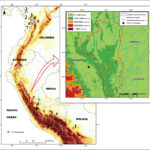
Imagine a landscape wreathed in mist, a lush patchwork of tropical bamboo forests and moist montane grasslands. This landscape, tucked away between altitudes of approximately 1,800 to 2,700 meters above sea level, forms the heartland for the elusive Werneria bambutensis. Endemic to Cameroon’s western highlands, specifically the Bamboutos Mountains—after which it derives its name—this amphibian thrives in regions characterized by cool temperatures, high rainfall, and bountiful mist-covered vegetation.
A crucial component of Werneria bambutensis’ niche is its dependence on clear, gently flowing mountain streams. These waterways serve as breeding sites and nurseries for their larvae, providing safe havens buffered largely from predation and competition typical of lower altitudes. While they frequently inhabit bamboo-dominated ecosystems, dense undergrowth and patches of moist grassland habitats also serve as essential refuges for adults, who depend on moisture-rich microclimates to sustain crucial skin hydration and general physiological functioning.
Amphibians, especially those adapted to montane habitats such as Werneria bambutensis, possess sensitive skin capable of absorbing both oxygen and moisture directly from their environment. Unfortunately, this permeability also makes them extraordinarily vulnerable to environmental disturbance, pollutants, and climate change. Their thriving existence is a clear testament to the pristine quality and ecological stability of their highland habitats—a compelling reason to conserve these precious, fragile ecosystems.
Physical Characteristics: A Marvel of Specialized Adaptations#
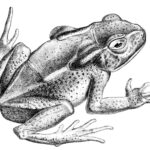
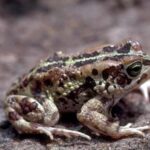
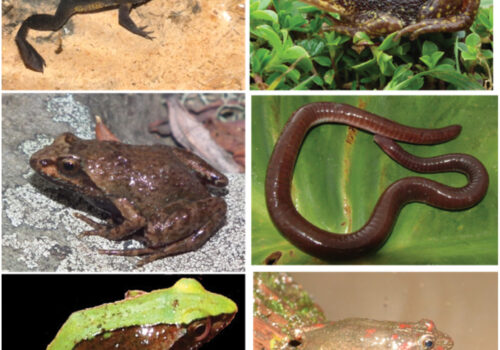
Upon first sighting, Werneria bambutensis might appear somewhat humble. Measuring roughly two to four centimeters in length, these frogs seem designed for subtlety rather than flamboyance. Yet, closer examination reveals adaptations remarkably attuned to survival in their specialized montane habitats.
Generally colored in shades ranging from brownish-gray to olive-green, their skin boasts subtle yet sophisticated camouflage patterns. Mottled blotches and ridges mimic the textures of wet moss, fallen leaves, and bamboo stems, enabling these frogs to elude predators effectively. Their small stature and cryptic coloration make them almost invisible among leaf litter and vegetation, offering critical protection from keen-eyed predators such as birds and small mammals.
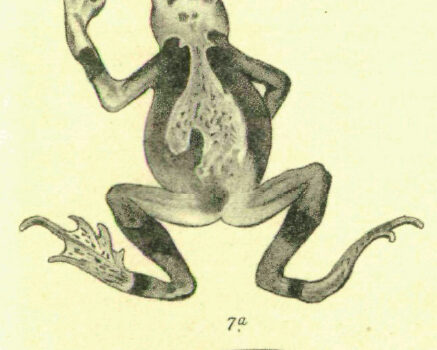
Reflective of their membership within the Bufonidae family, their warty, somewhat granular skin secretes mild toxins capable of deterring would-be predators. Although harmless to humans, these biochemical defenses signal an evolutionary arms race, demonstrating nature’s inventive strategies for survival in densely populated ecological habitats.
Each physical trait of Werneria bambutensis—from coloration to toxin production—shouts quiet testament to the ingenious artistry of evolutionary adaptation, achieved in slow, deliberate harmony with the montane ecosystem it inhabits.
Behavior and Life Cycle: From Mysterious Tadpole to Mountain Guardian#
Observing the secretive lives of Werneria bambutensis in their natural setting is both challenging and illuminating. Like most amphibians, they follow a life cycle intricately tied to their watery habitat, yet their behaviors remain remarkably specialized to the high-altitude habitats they call home.
Feeding Habits and Predatory Tactics#
Adult Werneria bambutensis primarily feeds on small invertebrates, preying upon insects, spiders, and other tiny arthropods inhabiting the dense leaf litter and vegetation layer. Equipped with sharp vision and agile reflexes, they expertly ambush prey from camouflage positions, swiftly capturing passing insects with pinpoint accuracy and a rapidly extended sticky tongue. This precision in predation serves not just for individual survival but balances insect populations within their montane ecosystem.
Breeding Rituals: The Mating Calls of High Mountain Streams#
During the rainy season, captured moisture triggers a fascinating courtship display. Male Werneria bambutensis frogs announce their reproductive readiness through quiet, yet melodious calls that reverberate gently amid the babbling of high-altitude streams. Their vocalizations differ subtly from their lowland counterparts—evolved precisely for audibility in their particular acoustic environment.
Once paired, the female deposits eggs carefully in slow-moving mountain streams, attaching gelatinous egg masses to submerged vegetation or rocky substrates. This meticulous selection ensures safety from strong currents and predators, safeguarding the next generation’s chances of survival in fragile, high-altitude aquatic nursery environments.
Tadpole Development: Navigating Life Underwater#
The tadpoles hatched from these eggs emerge morphologically adapted to their alpine streams, characterized by robust body forms and suction-like mouthparts that allow adherence to algae-covered rocks in swift-moving waters. This feature significantly enhances their survival prospects, optimizing feeding efficiency and reducing predation risks. Upon metamorphosis, the juveniles venture onto land, becoming miniature versions of their extraordinary adult parents while maintaining deep connections to their natal stream systems throughout adulthood.
Ecological Role: A Vital Indicator of Highland Ecosystem Health#
Werneria bambutensis serves dual ecological roles—as predator, consuming insects, spiders, and arthropods, and as prey for larger amphibians, reptiles, birds, and small mammals. Perhaps most crucially, as amphibians sensitive to changes in water purity and ambient climatic conditions, they perform invaluable services as ecological indicators. A healthy Bamboutos small-tongued toad population indicates the ecosystem’s resilience and stability, alerted biologists to emerging environmental threats long before human health impacts become apparent.
Threats and Conservation Status: Saving the Bamboutos Small-tongued Toad#
Listed as “Critically Endangered” on the International Union for Conservation of Nature (IUCN) Red List since 2004, Werneria bambutensis confronts grave threats to its continued existence. Indiscriminate deforestation, bamboo forest clearance for agriculture and livestock grazing, and habitat fragmentation increasingly isolate populations and degrade habitat quality. Climate change further pressures already precarious habitats, altering precipitation patterns and causing prolonged droughts and unpredictable water availability—catastrophic for a species utterly reliant upon precise habitat microclimates.
Conservationists urgently emphasize the need for extended protection of Cameroon’s montane ecosystems, forest restoration projects, and community-based sustainable land use practices. Environmental education programs deliver vital information, shaping local attitudes toward conservation and securing lasting coexistence between humans and wild populations of Werneria bambutensis.
Conclusion: The Call to Preserve Werneria bambutensis for Future Generations#
The silent existence and essential contributions of Werneria bambutensis echo the delicate interconnectedness of all life. By committing ourselves to conserving Cameroon’s mountain habitats, we safeguard not only a unique amphibian species but the fundamental fabric of the region’s biodiversity. Let us amaze and humble ourselves, acknowledging our shared responsibility to protect this extraordinary creature and the countless unseen wonders our natural world gracefully harbors.