Chimerella mira: Exploring the Enigmatic Glass Frog of the Andean Cloud Forest#
The rainforests of South America whisper countless mysteries beneath their lush canopy, harboring numerous creatures so astonishing they ignite our imaginations and captivate hearts worldwide. Few animals embody this sense of wonder more strikingly than Chimerella mira, known affectionately among herpetologists and conservationists as the exceptional “glass frog.” Discovered relatively recently, in 2020, this mysterious and delicate amphibian appears almost as a living jewel, translucent enough to render visible its beating heart and flowing internal organs.
Beyond its intriguing translucence and captivating beauty, Chimerella mira offers crucial insights into biodiversity and ecosystem health. Its occurrence draws our attention towards the vibrant yet threatened ecosystems it calls home, making it not only a fascinating subject but also an ambassador of conservation. Join us as we unravel the marvelous story of Chimerella mira, the miraculous glass frog.
Taxonomy and Classification#
Chimerella mira belongs to an intriguing family of frogs, Centrolenidae, famously known as the glass frogs. Within this family, species are characterized by their transparent ventral surfaces, allowing observers to peer directly into their internal anatomy—a remarkable evolutionary twist.
Scientifically, Chimerella mira resides within the genus Chimerella, a small genus consisting of species distinguished by subtle physical features and complex vocalizations. Its full taxonomic classification stands as:
- Kingdom: Animalia
- Phylum: Chordata
- Class: Amphibia
- Order: Anura
- Family: Centrolenidae
- Genus: Chimerella
- Species: Chimerella mira
The species name “mira,” which means “surprise” or “wonder” in Latin, aptly describes its unexpected discovery in the Peruvian Andes and highlights the ongoing potential for new species hidden within our planet’s less-explored regions.
Natural Habitat#
Nestled within the cool embrace of the Peruvian cloud forest, Chimerella mira finds itself thriving within a distinct elevation range, typically around 1,500 meters above sea level. These lush mountain habitats offer precisely the climatic conditions—humid air, frequent mists, dense vegetation—that glass frogs require to flourish. The perpetually moist foliage and abundant streams of these high-altitude forests form an ecosystem bursting with diversity, nurturing the life cycles of countless species of insects and smaller amphibians upon which Chimerella mira depends.
Habitat Preferences and Microhabitats#
Within these mystical forests, Chimerella mira frequents vegetation above slow-moving streams. The species selects the undersides of broad-leaved plants or fern fronds, which provide protection from predators and form a nurturing environment for laying eggs. The moist, shaded undersides of leaves offer perfect conditions for embryonic development, sheltering vulnerable tadpoles from the harsh rays of daylight and predators lurking beneath the surface of water.
Importance lies not only in the suitable vegetation but in maintaining impeccable water purity, since glass frogs depend critically upon clean waterways to nurture their delicate young. Densely forested riparian zones play an integral role in sustaining their habitat complexity, demonstrating that the fate of these clear-bodied amphibians is intricately linked to ecological integrity.
Physical Characteristics#
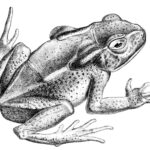
A creature crafted by nature to capture imagination, the glassy clarity of Chimerella mira’s skin offers breathtaking insights into its internal workings. Adult individuals are small, regularly measuring between 2 to 3 centimeters long—little more than a quarter in length—rendering them invisible at first glance among verdant foliage.
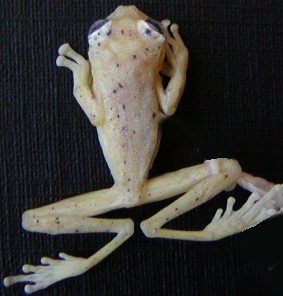
The frog’s dorsal coloration ranges softly between vivid green and subtle shades of emerald, beautifully harmonizing with the surrounding leafscape. Distinct yellowish-white markings dot the subtle skin of individuals, adding to their ornate appearance and camouflage prowess. Most spectacularly, their lower abdomen and ventral surface remain transparent, a remarkable evolutionary adaptation that startles first-time observers.
Adaptations for Survival#
This transparency is far from accidental or merely aesthetic. Blending almost seamlessly into the vegetation, Chimerella mira effortlessly camouflages itself from its predators—mostly nocturnal snakes, birds, and larger amphibians. Transparency also aids thermoregulation and physiological processes, allowing them to subtly manage heat exchange and moisture retention within a delicate habitat ecosystem. Scientists speculate that the frog’s translucent skin might have evolved partly as a mechanism to confuse both predator and prey, providing a trick of natural illusion in their daily survival endeavors.
Behavior and Life Cycle#
Each day in the life of Chimerella mira marks a delicate strategy balancing survival and propagation. Primarily nocturnal, these frogs spend the daylight hours sheltered beneath foliage. Come nightfall, they carefully venture atop leaves, awaiting suitable insect prey such as flies, mosquitoes, and tiny spiders. Equipped with patience and stealth, these frogs employ a highly calculated hunting method: they sit motionless, eyes alert. Then, with a precise, rapid strike, a sticky tongue darts forward, securing the struggling insect in a fraction of a second.
Mating Rituals and Parental Care#
In the wet season, serenades echo harmonically through moonlit cloud forests as male glass frogs perform their distinctive high-pitched calls to attract females. These ritualistic calls resonate across the narrow valleys, prompting females to select their mates with precision, evaluating their singing ability and territory quality.
Eggs are laid carefully onto the undersides of leaves suspended above streams. Remarkably attentive parents, male glass frogs guard the developing embryos vigilantly, protecting them from potential threats like wasps and flies. Upon hatching, tadpoles delicately drop into the stream below, where they undergo a remarkable metamorphosis, transitioning swiftly from gilled larvae to air-breathing frogs.
Ecological Role#
The glass frog’s significance to its ecosystem surpasses its modest size and subtle demeanor. As consuming insect prey, they function effectively as biological pest controllers, aiding in maintaining insect populations within sustainable levels. Equally vital, they serve as prey to larger predators, integrating seamlessly into food webs that entwine diverse life and ecological complexity within their rainforest ecosystem.
Furthermore, their sensitivity to environmental alterations—especially water quality—makes them important biological indicators. If their populations falter unexpectedly, it sends out alarms about subtle yet troubling environmental changes occurring in their habitats, matters scientists use to guide conservation understanding and action.
Threats and Conservation Status#
While Chimerella mira is still relatively new to science, limited data makes accurately determining its precise conservation status challenging. Nonetheless, similarities with closely related species indicate its likely vulnerability to habitat destruction and climate change impacts.
Habitat fragmentation due to deforestation, driven by logging, agriculture expansion, and increasing human settlements, remains an ever-present threat to its fragile cloud forest homes. Furthermore, the looming threat posed by climate-induced weather changes, with altered rainfall patterns, potentially disturbs breeding routines and disrupts their delicate ecosystems.
Early indicators suggest urgent conservation measures—protecting habitats, preventing pollution, and engaging local communities—are indispensable to securing the long-term survival and vitality of this remarkable amphibian.
Cultural and Scientific Significance#
Chimerella mira‘s discovery perfectly exemplifies the vast richness of our planet awaiting exploration—demonstrating biodiversity’s hidden treasures that remain untouched and unknown. Beyond scientific intrigue, such charismatic creatures spark public affection, fostering connection and care towards biologically diverse ecosystems they symbolize.
The species further embodies nature’s resilience and ingenuity, serving as powerful reminders in educational and outreach activities on how we must preserve Earth’s astounding biodiversity before such miraculous creatures disappear unnoticed and unappreciated.
Conclusion: Preserving Nature’s Small Wonders#
Chimerella mira, the stunning glass frog, invites us into a fascinating world hidden beneath the verdant leaves and swirling mist of the Andean cloud forests. Its story urges us to regard nature’s smaller, less visible wonders with reverence and care, encouraging actions toward conservation and sustainability. May we continue to explore and protect these fragile wonders—today and for generations to come.