- Introduction: The Invisible Jewel of the Cloud Forest
- Taxonomy and Classification: Unraveling the Family Tree
- Natural Habitat: Life Among Misty Ferns and Mossy Branches
- Physical Characteristics: Nature's Invisible Artwork
- Behavior and Life Cycle: Drama Under Moonlit Leaves
- Ecological Role: Guardians of Ecosystem Balance
- Threats and Conservation Status: Fragility at the Heart of Conservation
- Cultural and Scientific Significance: Bridging Humans and Nature
- Conclusion: Protecting the Fragile Jewels of the Cloud Forest
Introduction: The Invisible Jewel of the Cloud Forest#
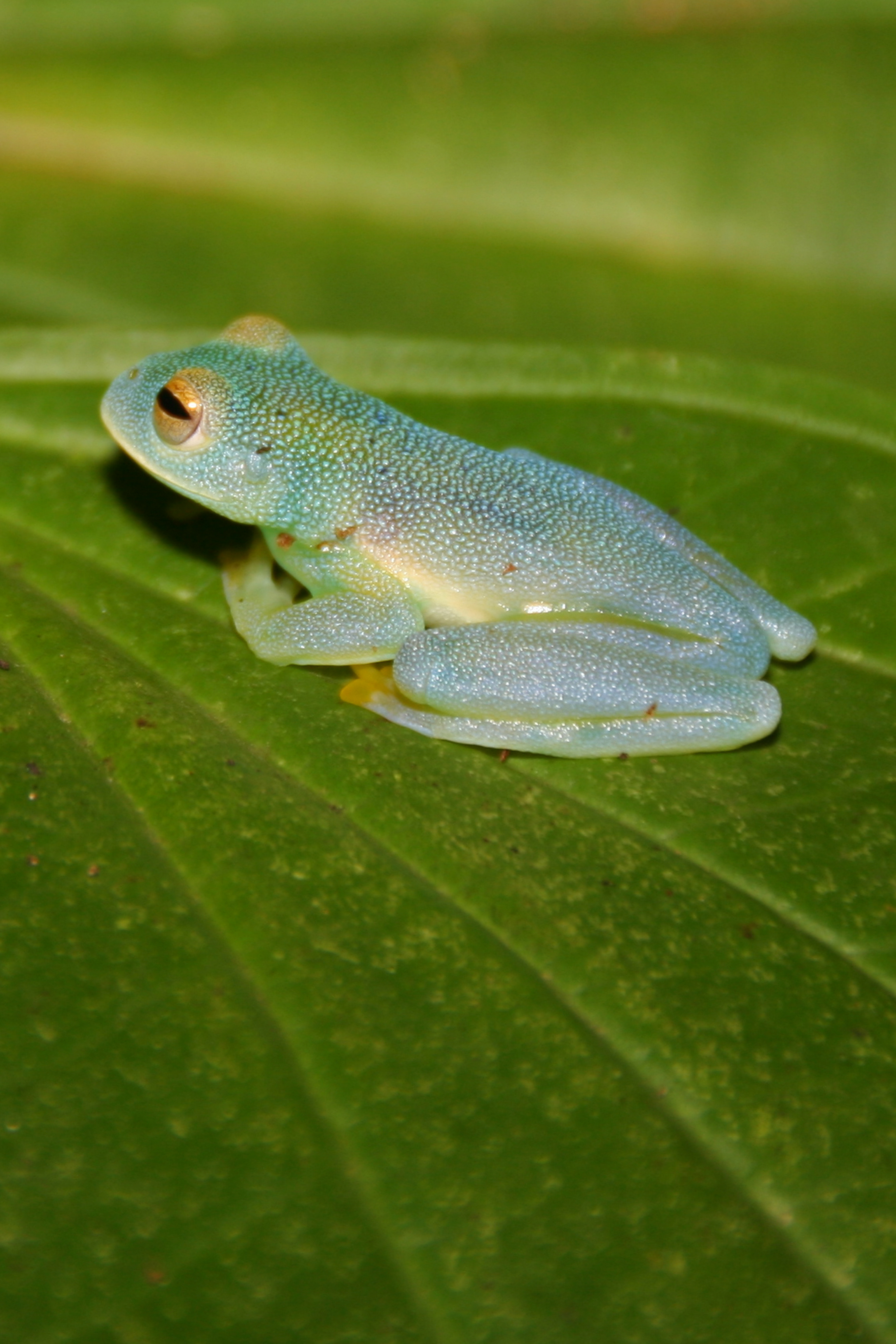
Hidden amidst lush foliage, where sunlight weaves gently through mist-covered branches, lives a delicate, almost ethereal creature known as Chimerella mariaelenae. You might know it better as Maria Elena’s glass frog—a fascinating amphibian renowned for its stunning transparency, fragile appearance, and secretive habits. Native to the cloud forests and humid lowlands of Ecuador, Peru, and portions of Colombia, this remarkable species captivates scientists, conservationists, and nature lovers alike.
What draws the eye immediately is this frog’s otherworldly translucence. Peer closely, and you can see its inner organs—a living, breathing window into biology. It’s no wonder glass frogs have inspired local legends and awe among researchers enthralled by their unusual anatomy.
Taxonomy and Classification: Unraveling the Family Tree#
Chimerella mariaelenae belongs to the family Centrolenidae, a group known universally as glass frogs due to their crystal-clear skin on the ventral surface. Classified within the genus Chimerella, the species was formally described relatively recently, reflecting how much we still have to uncover about these hidden rainforest gems.
The name “Chimerella” references the chimera-like appearance encountered within this group—translucent skin and dazzling mix of colors—while “mariaelenae” pays tribute to pioneering herpetologist Maria Elena Heredia. Closely related species within its genus exhibit similarly striking transparency, but subtle differences in coloration, calls, and habitat preferences set Chimerella mariaelenae apart, reinforcing its distinct ecological identity.
Natural Habitat: Life Among Misty Ferns and Mossy Branches#
The cloud forests provide an ideal home for this elusive amphibian—a realm wrapped perpetually in mist, cool temperatures, and vibrant biodiversity. Chimerella mariaelenae thrives within the tropical montane forests at elevations typically ranging from 500 to 1,500 meters above sea level, where constant moisture nourishes mossy branches, lush epiphytes, and sturdy broad-leaved plants.
Within this verdant canopy, glass frogs prefer proximity to slow-flowing streams or calm bodies of water essential for breeding. Beneath moonlit nights, they perch along leaves and branches hanging over streams, ensuring that their developing offspring have an immediate path from leaf nursery to freshwater refuge. This fragile ecosystem is vibrant yet vulnerable; the delicate balance sustaining it profoundly influences the survival of amphibious residents. Every fallen tree, polluted stream, or drying pond amplifies threats to their delicate existence.
Physical Characteristics: Nature’s Invisible Artwork#
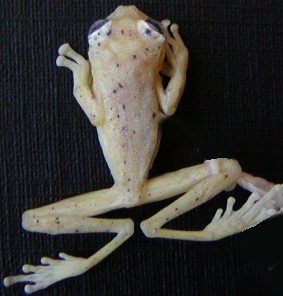
Observing a glass frog is to witness unprecedented biological artistry. Adult Chimerella mariaelenae typically measure between 20 to 30 millimeters—scarcely larger than a human thumbnail. But size isn’t their main attraction; rather, it’s their remarkable transparency. The belly skin of these frogs is wholly transparent, providing observers an incredible view of internal anatomy: a beating heart, lungs filling rhythmically with air, and blood coursing through delicate veins.
The dorsal side of this amphibian contrasts with the transparent underside, displaying varying shades of pale to vibrant green interspersed by tiny yellowish or white spots. This cryptic coloration serves as powerful camouflage against predators and curious eyes, blending masterfully into the wet leaves they call home. Their large, forward-facing eyes, usually gold or silvery-green with distinct horizontal pupils, broaden their field of view, offering superb nocturnal vision vital for hunting small invertebrates.
Behavior and Life Cycle: Drama Under Moonlit Leaves#
A Symphony in the Night: Breeding and Courtship#
Under the serene darkness of cloud forest evenings commences an intricate symphony of chirps, clicks, and whistles—a complex communication announcing courtship rituals for glass frogs. Male Chimerella mariaelenae stake territorial claims along suitable streamside plants, their uniquely delicate calls echoing softly through the dense vegetation, inviting receptive females toward carefully chosen breeding sites.
Upon selecting a worthy mate, females deposit clusters of gelatinous eggs directly underneath leaves hanging precariously over streams. Transparent eggs shimmer like jewels beneath leaf surfaces—each promising new life. Having accomplished his reproductive duties, the male provides guardianship—displaying remarkable protective instincts, supervising offspring development diligently until tadpoles break free, tumbling gracefully into streams beneath.
A Delicate Journey: Tadpoles and Metamorphosis#
The tiny tadpoles of glass frogs quickly find their watery haven downstream, where they feast primarily on algae and microscopic organisms. Their larval stage persists from several weeks to months, depending heavily upon temperature, moisture levels, and food availability. Steady development unfolds subtly beneath freshwater surfaces, culminating ultimately in a striking metamorphosis.
Emerging juvenile frogs soon return upward to forest dwellings, exchanging aquatic swimming for arboreal leaping. From birth onward, young Chimerella mariaelenae already showcase pronounced transparency, a trait intensifying with maturity—further bolstering their intriguing evolutionary story.
Ecological Role: Guardians of Ecosystem Balance#
Though modest in size and rarely noticed by casual observers, Chimerella mariaelenae contributes meaningfully to forest health. As insectivores, these small predators regulate populations of biting insects and other invertebrates, influencing food-web stability. Conversely, glass frogs themselves represent critical prey items for larger amphibians, reptiles, birds, and mammals, transferring nutrient flow upward through complex rainforest ecosystems.
Moreover, the sensitivity of amphibians, particularly glass frogs, establishes them as indicator species—early warning signals denoting environmental stressors, such as climate change, habitat erosion, or water contamination. Scientists closely monitor their survival rates and behaviors, using their populations and health status as direct reflections of regional ecological conditions.
Threats and Conservation Status: Fragility at the Heart of Conservation#
Regrettably, the forests resonant with glass frog calls face alarming threats. Vast sections of pristine cloud forests throughout Ecuador, Peru, and Colombia have fallen victim to deforestation, agriculture expansion, illegal logging, and mining activities that steadily fragment their fragile habitats. Furthermore, climate-induced changes in rainfall patterns, temperature shifts, and increased frequency of storms profoundly disrupt ecosystems where glass frogs stake their delicate survival.
Currently, Chimerella mariaelenae is categorized by the IUCN Red List as Near Threatened, recognizing the growing risks facing its populations. Conservation strategies center around habitat protection, establishing ecological reserves, promoting sustainable agriculture, and fostering careful ecotourism to encourage sustainable coexistence between humans and wild habitats.
Cultural and Scientific Significance: Bridging Humans and Nature#
In local cultures across its range, the glass frog often symbolizes purity, fragility, and unseen beauty. Art and literature frequently feature these translucent amphibians, representing hidden mysteries of wilderness awaiting discovery.
Scientifically, these frogs offer valuable biological insights into transparency—a trait of growing medical and bioengineering interest. Understanding their unique physical traits, such as translucent skin and vascular systems, contributes to innovative scientific fields, from biomaterials research to medical tool development, elevating the humble glass frog to ecological ambassador and scientific muse.
Conclusion: Protecting the Fragile Jewels of the Cloud Forest#
Reflecting on Chimerella mariaelenae, we find ourselves compelled by nature’s subtle beauty and fascinated by the delicate interactions shaping its survival. Their shimmering transparent bodies are more than biological curiosities; they embody unseen interconnectedness between habitat, biodiversity, and conservation.
As enthusiasts, students, conservationists, or simply admirers of nature’s wonders, we have a crucial role to play in their future. Educating ourselves, raising awareness, and supporting conservation efforts ensure that these mesmerizing amphibians enchant generations to come. Let Chimerella mariaelenae serve as a reminder—not only of nature’s extraordinary ingenuity—but the pressing urgency behind safeguarding its fragile existence.