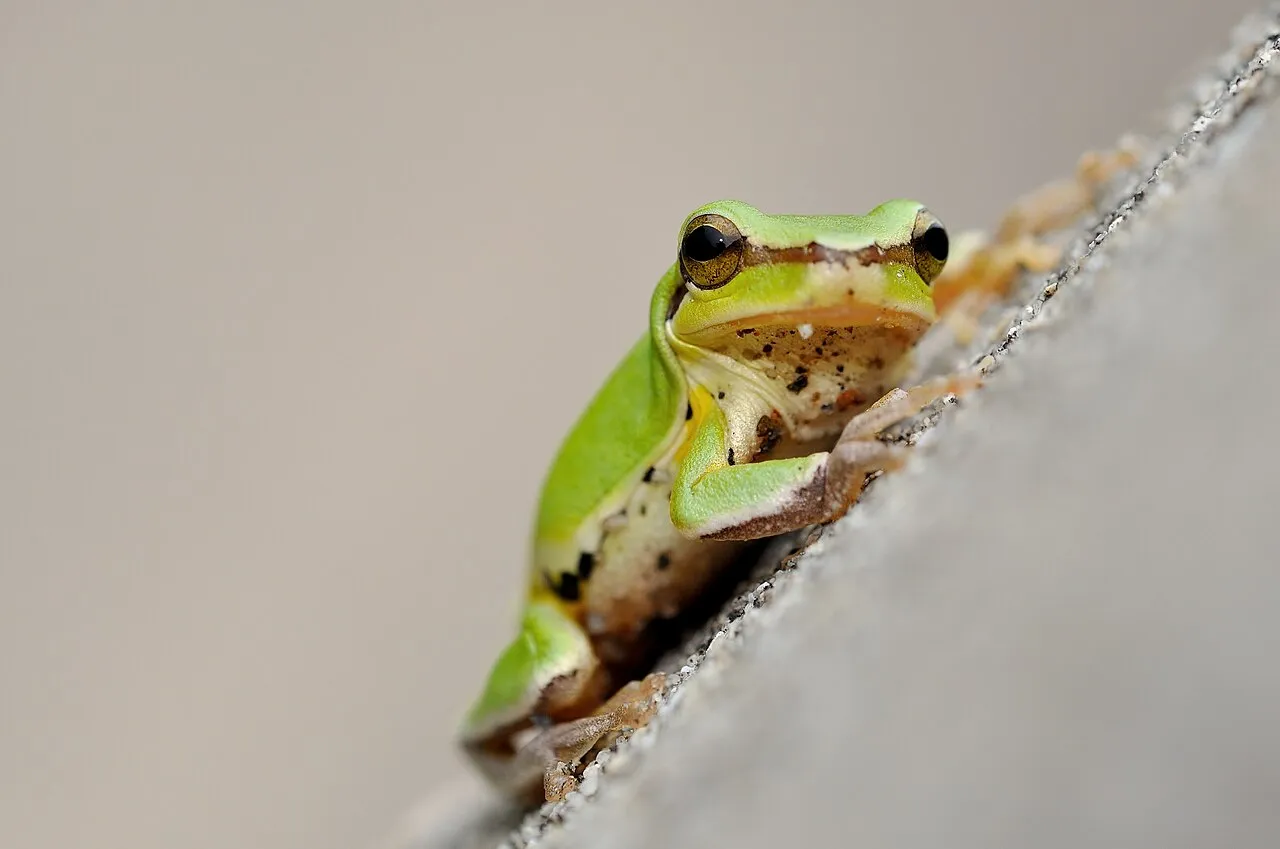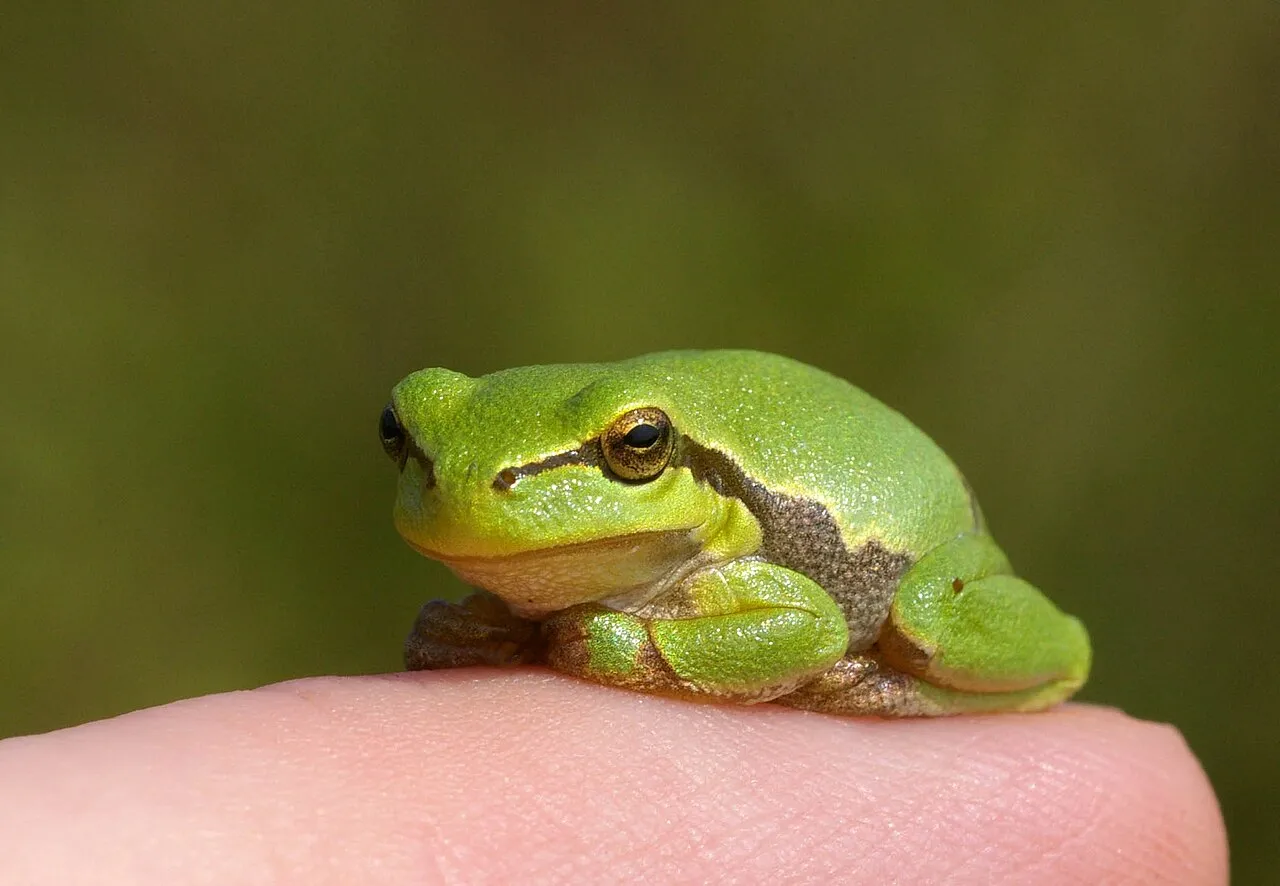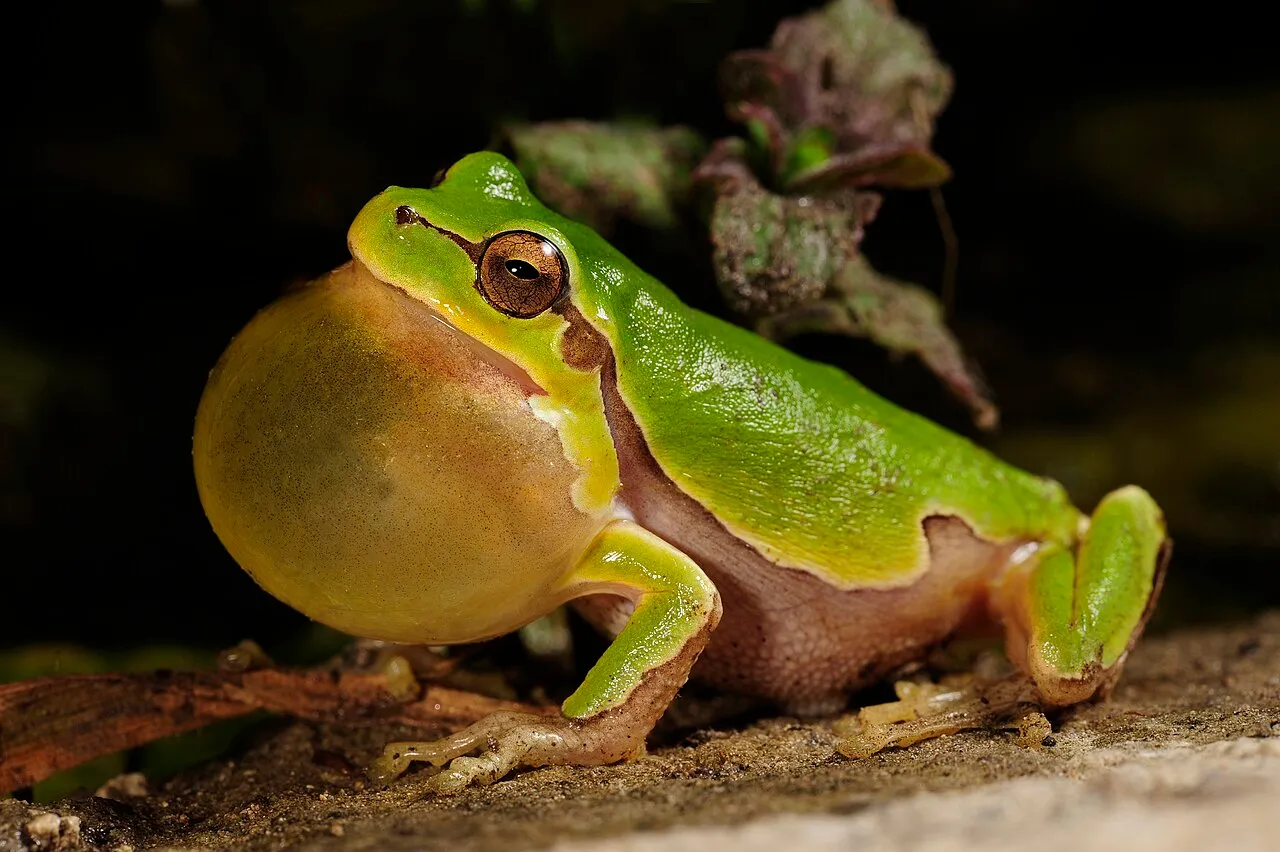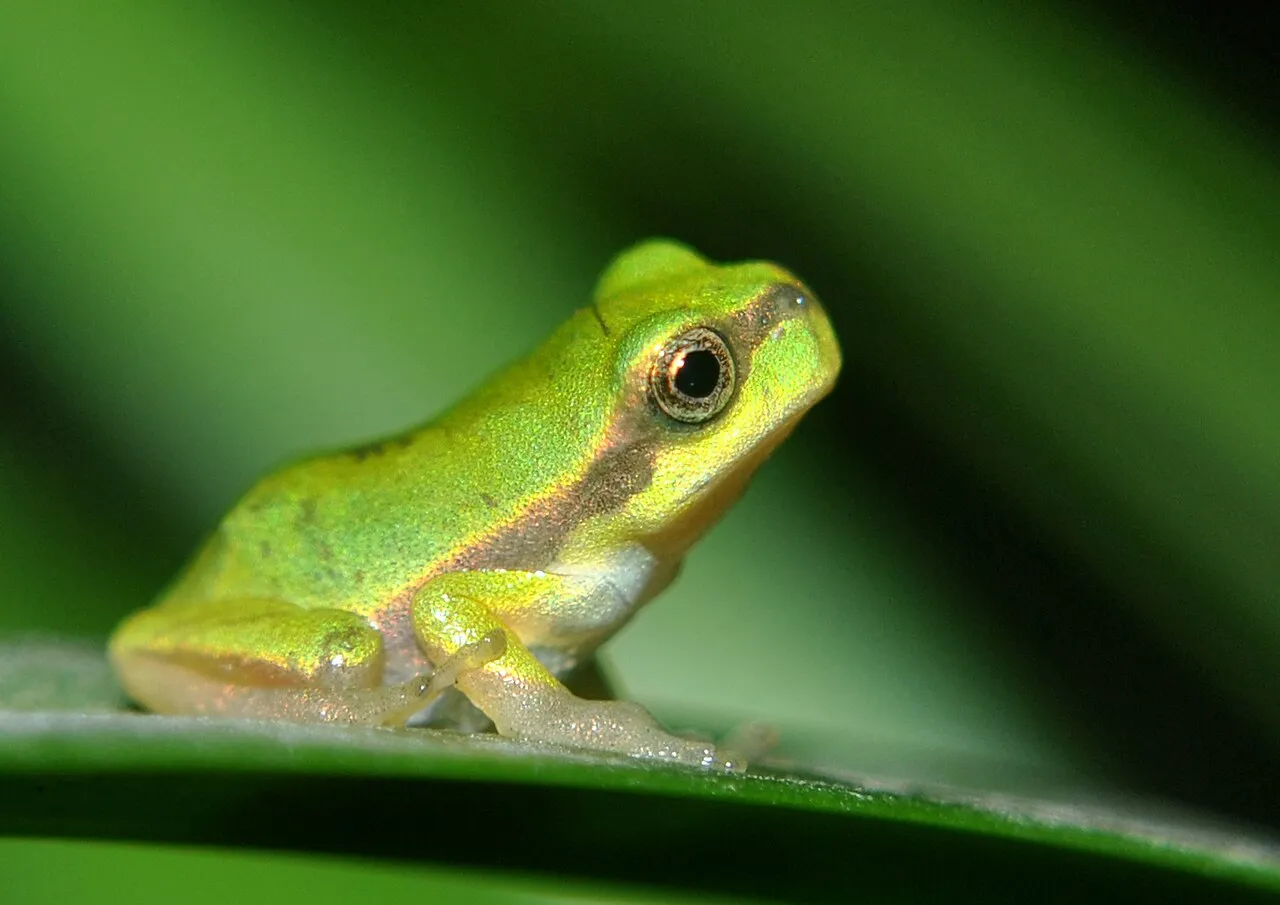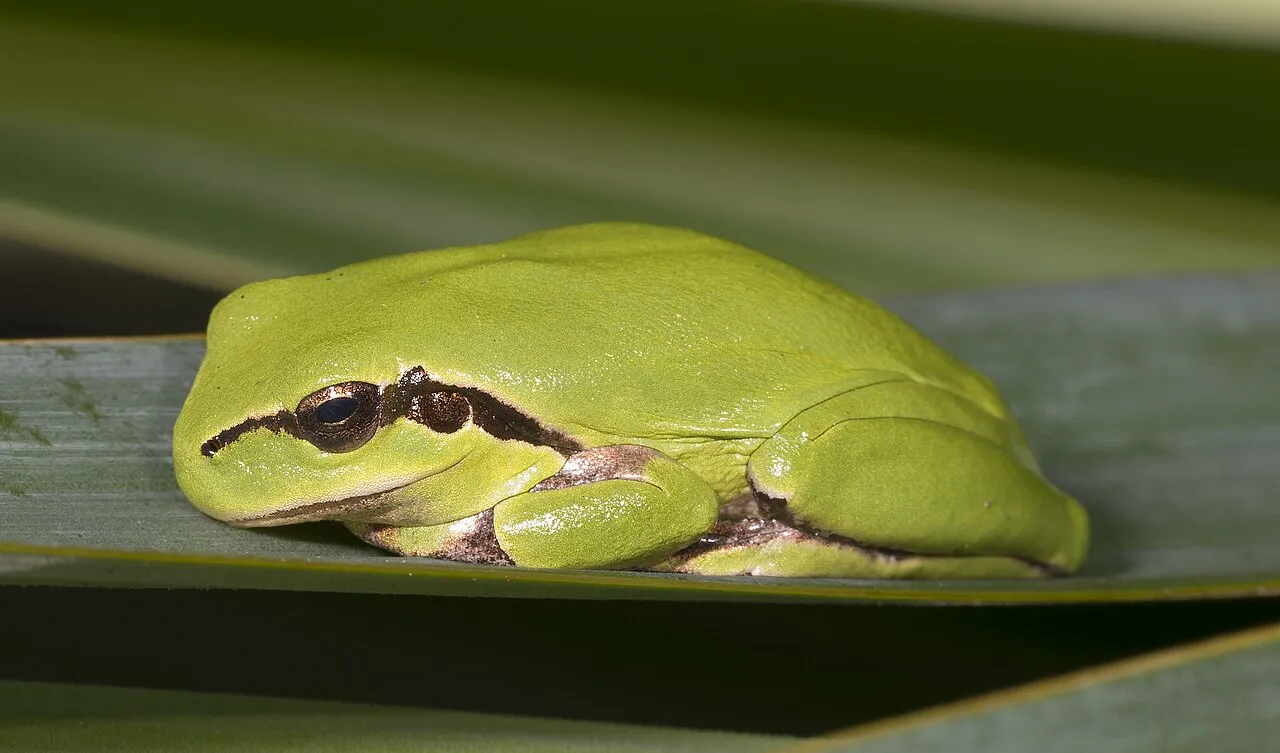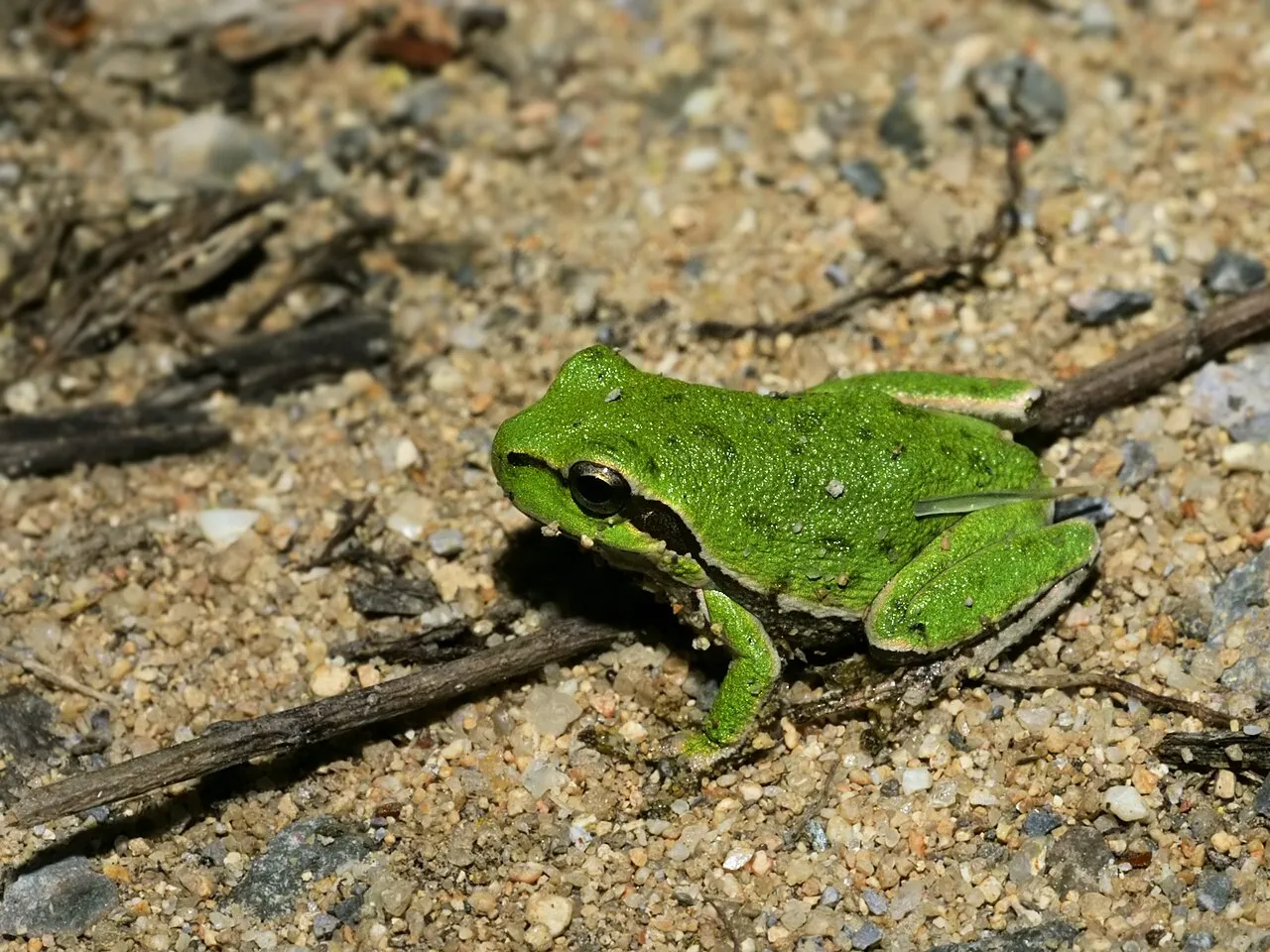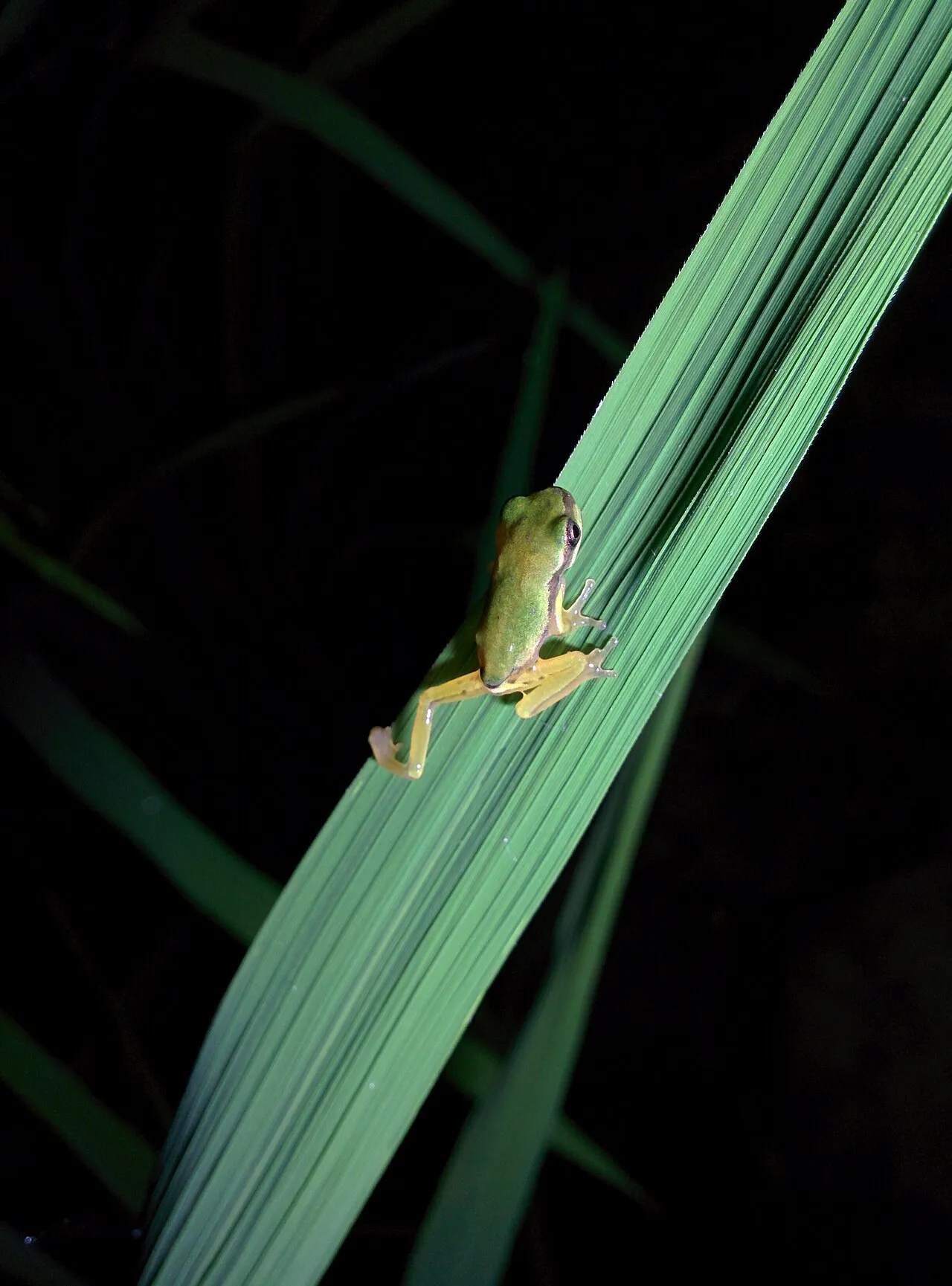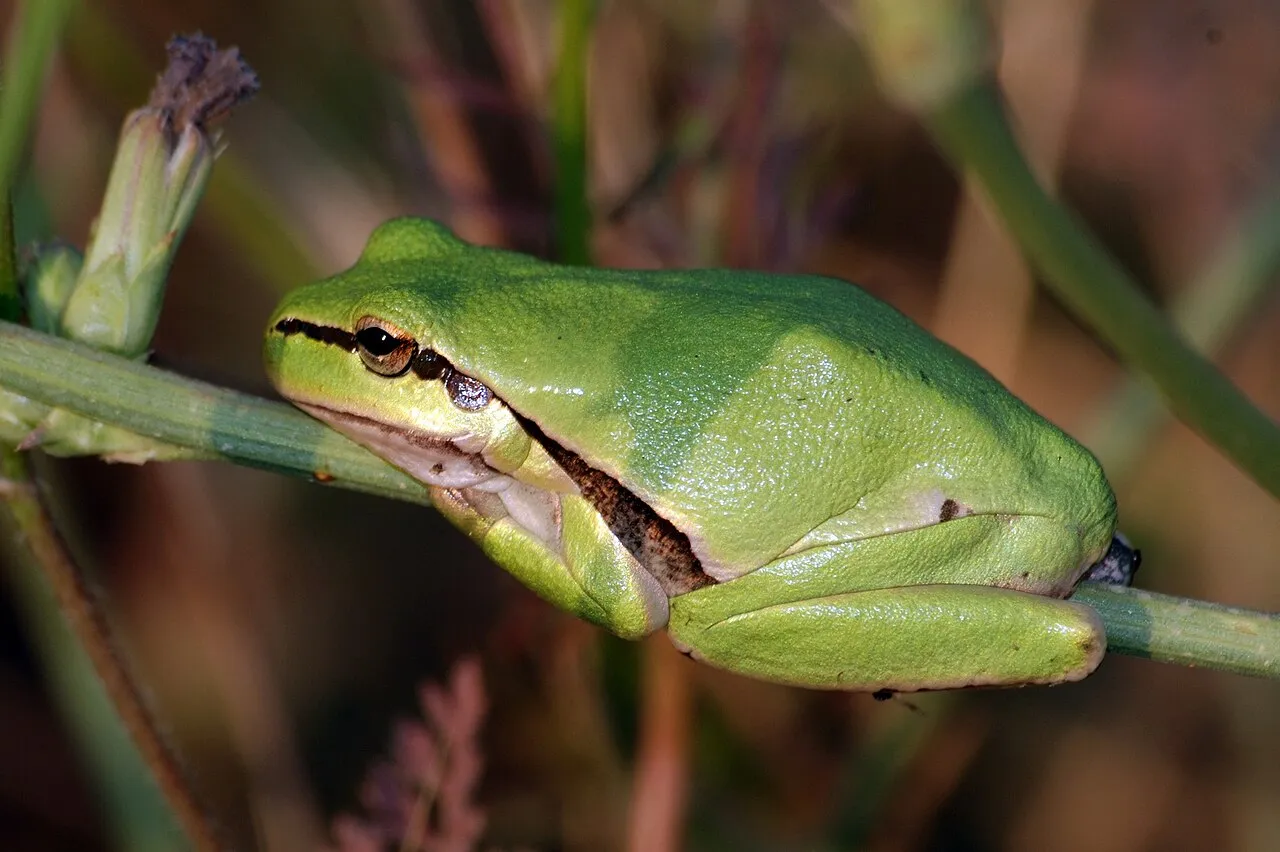
Hyla savignyi, also called Savigny’s treefrog, the lemon-yellow tree frog or the Middle East tree frog, is a frog of the family Hylidae described by Audouin in 1827. Its specific name honours the French zoologist Marie Jules César Savigny. Its geographic range1 covers Bulgaria, Armenia, Azerbaijan, Cyprus, Egypt, Georgia, Iran, Iraq, Israel, Jordan, Lebanon, Saudi Arabia, Syria, Turkey and Yemen.
Identification
The Western Palearctic tree frogs of the genus Hyla form a morphologically and ecologically cryptic group, so species in it are hard to separate by their external features. The same 2024 paper notes that amphibians in general have a relatively conservative body plan and few external characters2 useful for telling species apart, and that the taxonomy of such complexes often stays disputed until molecular data settle it.
In Iranian populations, females grow larger than males: a 2021 life-history study estimated an asymptotic body size of 43.07 mm for females and 41.16 mm for males and found significant sexual size dimorphism in all populations it studied. Froglets in that study measured 10 mm at metamorphosis3.
A 1999 study of male advertisement calls recorded in Turkey found that call duration, the interval between calls and the number of pulses per call varied between locations and with air temperature, while dominant frequency differed between groups of frogs and did not depend on temperature. The authors found the data consistent with two distinct species4 of tree frog in Turkey, H. arborea and H. savignyi.
Habitat and range
The species’ habitats include temperate shrubland, Mediterranean-type shrubby vegetation and temperate grassland1, rivers, freshwater lakes and marshes (also intermittent ones), freshwater springs, temperate desert, arable land, rural gardens, canals and ditches.
In Israel, a 2024 phylogeography study analysed 658 individuals sampled at 47 rain pools in nine regions across Israel and the West Bank. It found the H. savignyi clade only west of the Dead Sea Rift, while its sister species lives east and south of the rift, in the Golan and the northern Arava. A genetic barrier running across the centre of Israel2 separates northern from southern H. savignyi populations, a sign of limited gene flow within the species.
On why the two species are not commonly found at the same locality, the 2024 authors write that they may have evolved different habitat requirements2; they cite one model in which H. savignyi is widely distributed in semi-arid habitats, and another analysis that found no clear sign of different climatic adaptations between the two.
Behaviour and breeding
The Israeli study collected adults and tadpoles at rain pools2 between March 2019 and June 2020. In Iran, testicular activity in males is potentially continuous, peaking in April3.
Metamorphosis was completed approximately 102 days after the eggs were laid. Breeding adults reached sexual maturity at an estimated two or three years, and the oldest frogs aged in that study were six years old, the same maximum for both sexes. Adult survival rate and life expectancy were also the same for males and females, at 0.73 and 4.2 years. Females lived longer on average, with a mean age of 4.40 years against 3.63 for males3.
Conservation
In its 2009 assessment1, the IUCN listed Hyla savignyi as Least Concern5.
Similar species
- Hyla felixarabica, the Arabian tree frog: the southern clade of the former H. savignyi, named in 2010 by Gvoždík, Kotlík and Moravec. DNA places the two in separate clades; in Israel the Arabian tree frog lives east and south of the Dead Sea Rift, and it is believed to have separated some 8.4 million years ago6. The 2024 study, in line with earlier calculations, dated the split to 12.1 Mya (16S) and 13.1 Mya (COI). Its two mitochondrial haplogroups were separated by at least 63 (16S) and 64 (COI) mutational steps. At one Golan pool, Razania, the study found one H. savignyi among 20 frogs; the authors could not rule out an accidental translocation, for example with a delivery of plants or produce. Another study it cites describes the two species as parapatric along a contact zone of hundreds of kilometres2.
- Hyla arborea, the European tree frog: with several populations once included in it recognised as separate species, it is limited to Europe from France to Poland and Greece7. In Turkey, differences in advertisement calls4, among them dominant frequency, fit tree frogs there being two species, H. arborea and H. savignyi.