- The Enigmatic Pelophryne brevipes: A Journey Into the Life of a Hidden Frog
- Taxonomy and Classification: Unraveling Scientific Identity
- Natural Habitat: Hidden Worlds Beneath Towering Trees
- Physical Characteristics: Nature’s Perfect Camouflage
- Behavior and Life Cycle: Quiet Lives Amidst the Leaf Litter
- Ecological Role: Little Guardians of the Rainforest Floor
- Threats and Conservation Status: Navigating an Uncertain Future
- Cultural and Scientific Significance: Tiny Amphibians, Great Insights
- Conclusion: Appreciating the Quiet Wonders of Nature
The Enigmatic Pelophryne brevipes: A Journey Into the Life of a Hidden Frog#
Deep within the verdant depths of Southeast Asian rainforests lives a creature nearly invisible to the casual observer, yet vital to the intricate tapestry of forest life: the Pelophryne brevipes. Known colloquially as the Short-legged Dwarf Toad, this diminutive amphibian, rarely exceeding a couple of centimeters in length, manages to navigate its wet, leaf-strewn habitats with exceptional grace. Its shy demeanor and cryptic coloration keep it hidden from predators and scientists alike, making encounters with the species truly special moments. Though tiny and often overlooked, this frog serves as a critical indicator of environmental health, quietly signaling changes deep within the heart of our rapidly changing ecosystems.
In this exploration, we invite you on a vivid odyssey into the secretive universe of Pelophryne brevipes. Together, we’ll uncover the remarkable biology, ecology, and the pressing conservation realities facing this unique species. So, step carefully through the forest layers, listen closely amid the evening chorus, and immerse yourself into the extraordinary, rarely-glimpsed life of one of nature’s quiet survivors.
Taxonomy and Classification: Unraveling Scientific Identity#
To better understand the significance of Pelophryne brevipes, one must first appreciate its place within the biological catalogue of life. Classified under the family Bufonidae, this species belongs to a fascinating lineage of small-sized toads known for their discreet lifestyles and unique adaptations. The genus Pelophryne itself consists of petite toads that have adapted perfectly to life among forest litter and arboreal vegetation, a niche often overlooked by larger amphibian counterparts.
The species name, “brevipes,” derived from Latin, literally translates to “short-footed,” an homage to its notably short limbs—a defining characteristic that allows it efficient movement among dense vegetation. Close relatives within this genus include other diminutive toads such as Pelophryne signata and Pelophryne guentheri, each showcasing remarkable evolutionary strategies for thriving quietly and unobtrusively in similar habitats.
Natural Habitat: Hidden Worlds Beneath Towering Trees#
Pelophryne brevipes is predominantly found throughout certain pockets of the Southeast Asian region, focusing primarily around Borneo, particularly in Brunei, Indonesia, and eastern Malaysia. Its habitat comprises moist evergreen rainforests, often occurring on slopes and near the edges of small streams. Here, beneath a boundless green canopy, sunlight filters gently onto moss-covered logs, fallen foliage, and damp soil—a perfect haven for frogs thriving in shadow and shelter.
The Symphony of Habitat Preferences#
These tiny amphibians frequently inhabit lowland rainforest regions and occasionally venture into slightly elevated montane forests, provided moisture remains abundant. They favor dense leaf litter, moss-covered rocks, moist tree bark, or clusters of epiphytes hanging precariously on tree trunks and branches. Such humid, secretive microhabitats offer them not only sustenance but safety and opportunities for reproduction, shielding them from predators and environmental extremes.
An Interconnected Existence#
By moving subtly among the forest layers, Pelophryne brevipes performs the critical task of maintaining balance within its ecosystem. Their presence and population dynamics often indicate the health of rainforest ecosystems, as these frogs are particularly sensitive to changes in environmental conditions such as humidity, temperature variations, and even subtle shifts in vegetation structure.
Physical Characteristics: Nature’s Perfect Camouflage#
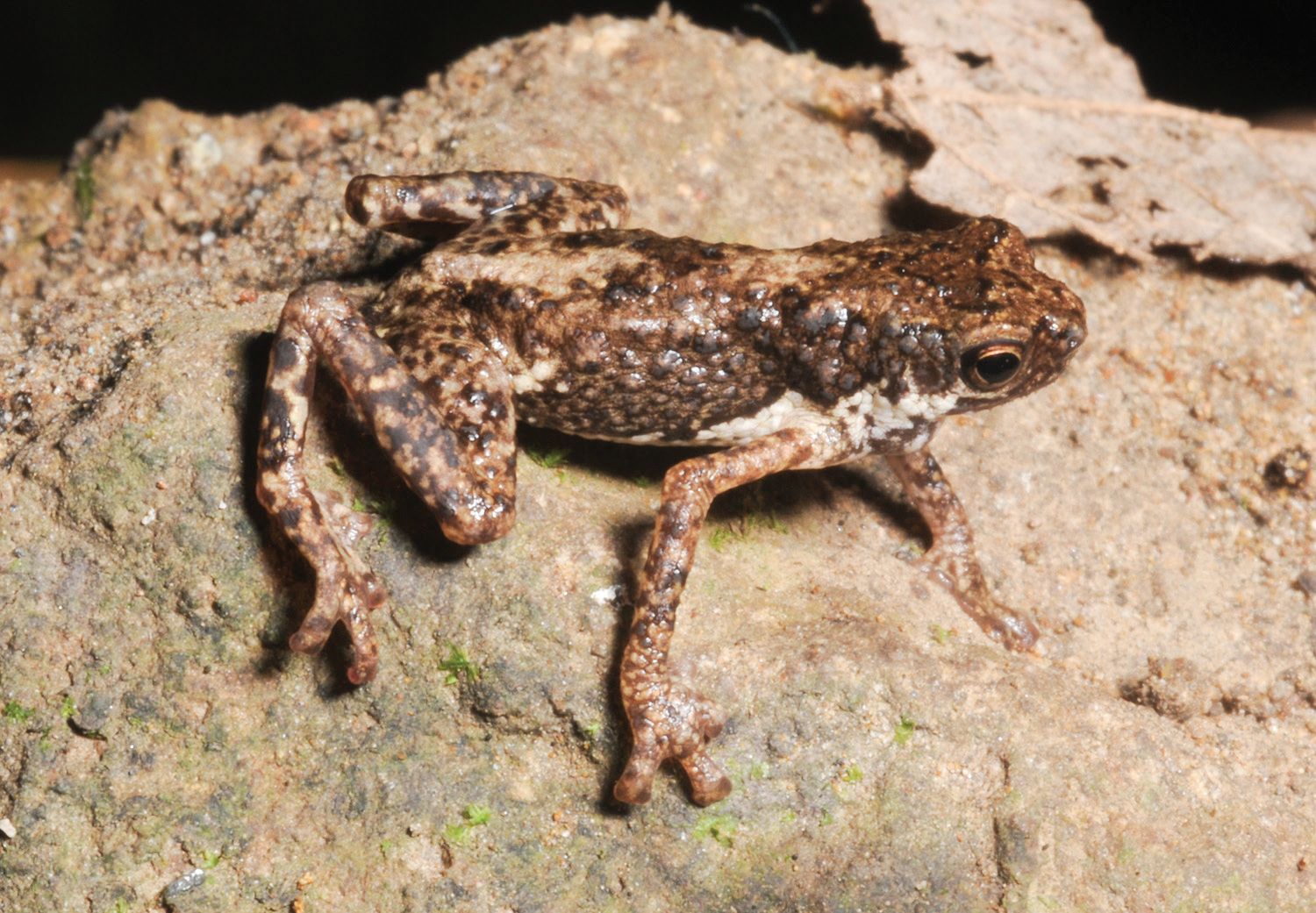
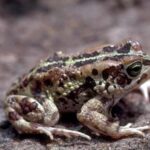
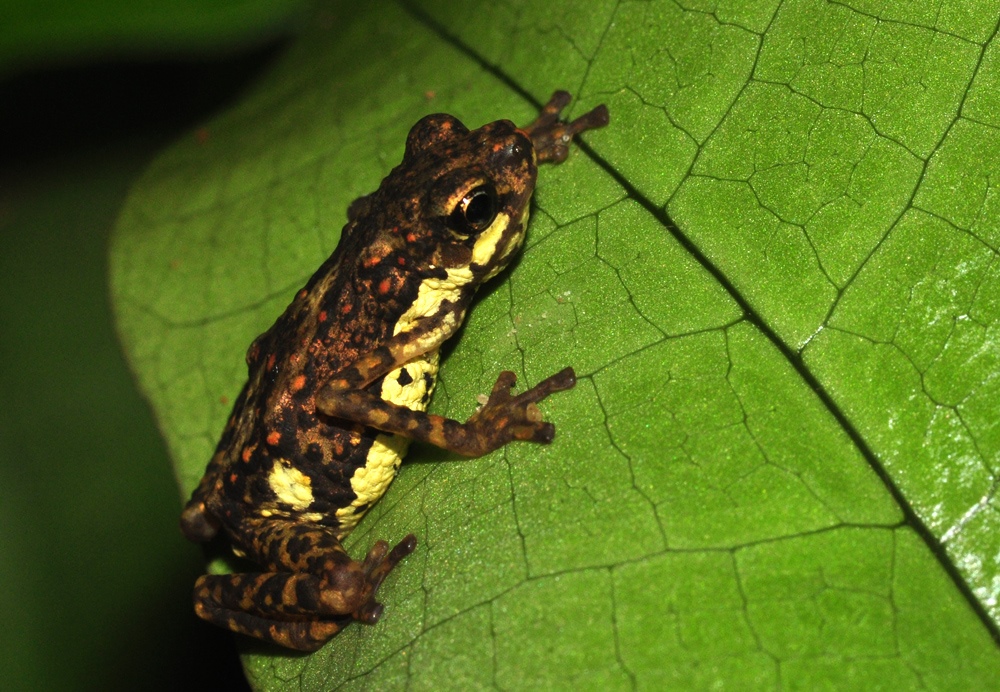
As small as a thumbnail, measuring just about 20 to 30 millimeters from snout to vent, the Short-legged Dwarf Toad’s modest dimensions belie its significance. Evidently, evolution favored minimalism in size but lavishness in detail. The subtle coloring adorns their slender yet robust bodies, ranging from rich shades of brown to muted green, interspersed with lighter spots and mottling patterns mimicking lichens and moss growth perfectly.
These cryptic shades blend impeccably amid the dimly lit forest floor and arboreal perches, allowing these frogs near-perfect concealment from aerial hunters. Prominent eyes of deep amber coloration situate themselves strategically atop the skull, offering substantial range with minimal movement, critical for detecting threats calmly and efficiently.
Adaptive Masterpieces of Survival#
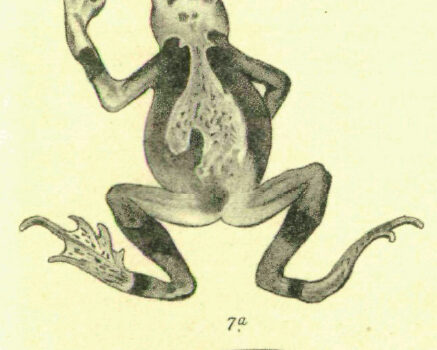
Short, powerful limbs equip Pelophryne brevipes with astonishing agility despite their compact build. Their distinctly shortened limbs enhance climbing and traversal abilities, permitting meticulous navigation through tight spaces crowded with vegetation and complex terrain. Additionally, their stout, rough-textured skin not only complements camouflage but also supports moisture retention, an indispensable survival trait for any amphibian living in an moisture-dependent habitat.
Behavior and Life Cycle: Quiet Lives Amidst the Leaf Litter#
Night creeps slowly over the forest canopy, stars twinkling faintly above. This is when Pelophryne brevipes awakens, their nocturnal ritual commencing. Carefully and quietly hunting tiny insects and arthropods, they perform an unnoticed yet essential task in maintaining insect population checks, contributing subtly yet actively to ecosystem regulation.
A Unique Breeding Symphony#
For reproduction and courtship, males produce soft, melodious calls from concealed perches on vegetation or near water sources, a delicate tune easily dwarfed by louder amphibian choruses nearby. Females are attracted by these gentle calls, and breeding often occurs following substantial rainy periods, paving the way for tadpole development. Small numbers of eggs are laid in moisture-rich habitats, occasionally hidden among plant roots, bark crevices, or leaf clusters, safe until hatching.
The tadpole phase remains largely undocumented, though we know these larvae quickly adapt to micro water bodies, benefiting from warm, nutrient-rich pools formed after heavy rains. Tadpoles swiftly develop, metamorphosing into tiny replicas of parents shortly thereafter—nature’s subtlest display of perpetual renewal.
Ecological Role: Little Guardians of the Rainforest Floor#
While their individual existence might proceed unnoticed, collectively, Pelophryne brevipes plays a crucial role in rainforest equilibrium. As an insectivore, it acts as a natural pest controller, significantly contributing towards managing insect populations. Equally critical, the species sustains a balanced food web, supporting predators such as small snakes, larger amphibians, and certain birds. Thus, the understated presence of this small toad reveals a web of life deeply interconnected and interdependent.
Threats and Conservation Status: Navigating an Uncertain Future#
The International Union for Conservation of Nature (IUCN) currently classifies Pelophryne brevipes as “Least Concern,” primarily due to its widespread presence within its fragmented habitats. However, complacency would be folly. Like many other rainforest residents, this species confronts threats escalating daily. Rapid deforestation, agricultural expansion, rampant logging, and habitat fragmentation threaten the delicate ecological equilibrium these amphibians need to survive.
Climate change further complicates their life—the unpredictable onset of dry periods and excessive rainfall disrupts breeding cycles and availability of microhabitats for reproduction. Proactive measures, habitat protection, and conservation awareness hold utmost importance in preserving these living treasures for future generations.
Cultural and Scientific Significance: Tiny Amphibians, Great Insights#
Beyond ecological importance, Pelophryne brevipes holds value culturally and scientifically. Indigenous communities within Southeast Asia recognize frogs as environmental guardians and symbols of renewal or impending rains. Scientifically, these frogs offer researchers critical insights on adaptability, ecological resilience, and broader ecosystem health indicators within threatened rainforest environments.
Conclusion: Appreciating the Quiet Wonders of Nature#
The journey into the mysterious life of Pelophryne brevipes beckons us towards deeper appreciation and empathy for life’s unseen biodiversity. Protecting and understanding even the smallest, quietest parts of our ecosystems strengthens the integrity of our shared global environment. As guardians and lovers of nature, we must extend our stewardship to the survival of this tiny amphibian ambassador, ensuring our world remains whole—one hidden, delicate life at a time.