Unveiling the Secretive Life of Pelophryne api: Borneo’s Enigmatic Dwarf Toad#
In the lush, enigmatic forests of Borneo, under layers of thick canopy and rich, moss-coated logs, hides one of nature’s most intriguing little-known amphibians—the dwarf toad, Pelophryne api. This elusive and delicate creature not only captivates scientists and nature enthusiasts alike, but also stands as a testament to the extraordinary diversity and fragility of rainforest ecosystems. Tiny yet fascinating, Pelophryne api thrives in an ecological niche characterized by humid air, shaded vegetation, and untouched terrain. Named “api,” which means “fire” in Malay, the name perhaps ironically contrasts its secretive behavior and understated physical appearance with a quietly dramatic presence within its habitat.
Despite its diminutive form and cryptic appearance, this small amphibian plays a surprisingly significant role in its forest home. Most intriguingly, due to its reclusive nature and specialized environmental needs, observing this species remains a rare privilege reserved for patient explorers and dedicated researchers. Let us journey together into the largely unexplored life history, behavior, and conservation concerns surrounding Pelophryne api, uncovering the mysteries of a creature whose story embodies both the remarkable biodiversity of Borneo and the pressing ecological challenges faced by its rainforests today.
Taxonomy and Classification#
Pelophryne api belongs to the Bufonidae family—the well-known toad family encompassing species famously adaptable across various habitats around the globe. However, unlike its resilient cousins, members of the genus Pelophryne occupy narrower ecological niches, usually specialized microhabitats hidden within dense forests. The genus itself currently includes approximately ten other recognized species, all adapted to life in Southeast Asia’s rich forests—but each individually adapted to specific conditions and needs.
Within this genus, Pelophryne api was first described scientifically in 2017, making it relatively newly known to science. Researchers named this intriguing species after Gunung Api, a well-known mountainous region in Sarawak, Malaysian Borneo. Close studies have revealed that, although sharing similarities with other dwarf toads, like Pelophryne misera and Pelophryne signata, Pelophryne api distinguished itself through subtle yet distinct morphological traits, colorations, and vocalizations.
Natural Habitat#
The very heart of Pelophryne api‘s existence lies in the dense tropical forests that carpet the slopes of Sarawak’s mountainous regions in Malaysian Borneo, particularly within the lush vicinity of Gunung Api. These locales are renowned for their remarkable biodiversity and ecological complexity, encompassing an array of microclimates, vegetation types, and unique habitats.
Pelophryne api is particularly specialized, preferred microhabitats characterized by rainforest understories laden with moss-covered rocks, fallen logs, and forest litter rich in decay—ideal cover and moisture retention needed by small amphibians. Rarely encountered in open areas, these honorable little toads bravely navigate thick layers of leaf litter and twisty roots, their diminutive frames taking full advantage of hiding spaces inaccessible to predators.
An indispensable feature of this species’ environment involves the moist, consistently humid atmosphere prevalent in cloud forests. Mist and light rain showers frequently drench their habitat, providing the moisture critical for their skin’s respiration and maintaining an ideal nursery for their terrestrial eggs. Understanding the vital nature of such habitats clarifies why preserving these delicate forest ecosystems represents a major priority for amphibian conservationists today.
Physical Characteristics#
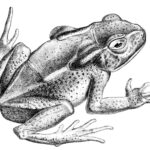
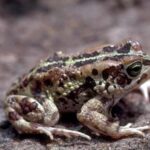
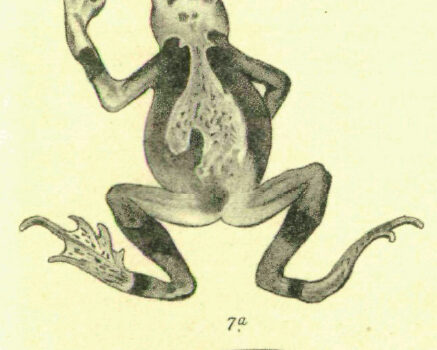
At first glance, Pelophryne api appears small and unassuming, quietly camouflaged among forest debris. With adults typically measuring only around 17 to 22 millimeters in length, one could easily overlook these miniature marvels hidden within their cryptic hunting grounds. Their small size indeed aids in eluding predators like snakes and larger frogs, making these diminutive yet adapted to a perfect lifestyle among the cluttered shadows of their rainforest haunts.
Their coloration ranges from muted brownish-gray to dark reddish-brown shades, accented by irregular speckles and subtle blotches across their backs. Such intricate patterning provides exceptional camouflage, mimicking textures of decaying leaves and sodden soil beneath dense vegetation. Their bodies exhibit a somewhat flattened profile, making them ideally suited to hide in shallow crevices or under layers of damp moss-covered logs.
Interestingly, while they might resemble other familiar toads in general form, one unique adaptation specific to some species within genus Pelophryne lies in their remarkably reduced very short limbs and digits, designed ideally for terrestrial, leaf-litter-dwelling lifestyles rather than rapid jumping or climbing activities. This physical trait helps them move discreetly within restricted spaces, further evading predators’ visibility.
Behavior and Life Cycle#
Feeding Habits and Diet#
As predators in miniature form, these tiny toads thrive on an abundant diet of small rainforest insects and various minute invertebrates that flourish among forest litter—ants, termites, tiny beetles, springtails, and small flies. Their keen eyesight, though subtle, combines efficiently with their quick, precise tongue actions to swiftly secure their prey. Typically nocturnal or crepuscular, their quiet foraging activities mostly occur under the helpful cloak of darkness, further aiding their survival and feeding efficiency.
Breeding, Reproduction, and Parental Care#
The life story of Pelophryne api becomes especially fascinating when one considers their reproductive behaviors. Unlike some amphibians that rely on ponds or streams, this species exhibits direct terrestrial reproduction—females lay small clutches of eggs in dampened moss and leaf litter, carefully chosen locations providing stable temperatures, humidity, and minimal disturbance.
Males frequently participate actively, employing distinctive, quiet calls resembling soft chirps or clicks—an understated, beautiful melody rarely enjoyed unless encountered by chance deep in haven-like forests. These tiny songs attract females during selective breeding seasons, carefully timed with environmental cues and weather patterns promising ideal conditions for egg-laying and embryonic development.
The offspring undergo embryonic development within these carefully selected terrestrial sites without aquatic experiences, immediately hatching into fully-formed miniature adults, known scientifically as direct developers. Such adaptive life cycles provide remarkable advantage, especially in environments lacking consistent, predator-free aquatic habitats, underscoring the astonishing adaptability of Pelophryne api.
Ecological Role#
Despite their humble size, the ecological influence of Pelophryne api reaches surprisingly far. These small amphibians significantly impact insect populations, preying heavily on minuscule forest creatures and thus contributing directly to ecological balance. In turn, they serve as prey themselves for various rainforest predators such as snakes, larger frogs, and small mammals, fulfilling critical roles in nutrient cycling and energy transfer within their intricate ecosystems.
Moreover, their sensitivity to environmental disturbances makes this amphibian species an effective bioindicator. Rapid alterations in local populations of Pelophryne api can warn conservationists about broader ecological health issues, signaling potential risk before larger, more easily observed species experience population declines.
Threats and Conservation Status#
Currently, detailed assessments continue regarding the IUCN conservation status of Pelophryne api, particularly given its relative newness to scientific scrutiny. Yet, habitat loss from logging, human development, and agriculture expansion undeniably poses significant threats to their delicate habitats. Climate change-associated impacts, such as shifting rainfall patterns and warming temperatures, also threaten their hard-earned conservation niches, emphasizing urgent action for habitat protection.
Active efforts to conserve Sarawak’s mountainous forests, protected area establishment, and scientific monitoring initiatives play crucial roles in safeguarding these specialized ecosystems, contributing to the continued survival and success of species like Pelophryne api.
Cultural and Scientific Significance#
While new to science, Borneo’s indigenous cultures possess profound understanding and respect for the intricate interconnections within their forests. Thus, stories, customs, and traditional knowledge often reflect deep-rooted understanding and significance attributed to all rainforest creatures, including easily overlooked ones like Pelophryne api.
Conclusion#
Pelophryne api represents far more than simply another tiny amphibian deep in Borneo’s forests—it symbolizes the extraordinary biodiversity and delicate ecological balances urgently needing conservation action and sustained global attention. By championing knowledge, appreciation, and habitat protection, we empower efforts ensuring such marvelous, mysterious creatures continue to enrich our shared natural heritage. Take this call to action further—support conservation efforts, protect forest ecosystems, and share the incredible wonders of nature’s intricate diversity with others, ensuring Pelophryne api’s continued survival into future generations.