Exploring Osornophryne sumacoensis: Secrets of Ecuador’s Enigmatic Frog#
Deep within the verdant cloud forests of Ecuador’s eastern slopes, shrouded by mists and echoes of hidden waterfalls, lives a curious guardian of the leaf-litter, a frog unlike any other: Osornophryne sumacoensis. This fascinating amphibian, known popularly as the Sumaco stubfoot toad, embodies all the delicate prowess and quiet resilience of nature’s countless evolutionary masterpieces. With its unassuming size and exquisite adaptation, this enigmatic species has become more than merely a biological curiosity; it has evolved into an icon—a testament to the spectacular biodiversity and fragile ecosystems hidden in South America’s Andean foothills.
Named after its lofty and mysterious home, the Sumaco Volcano region, Osornophryne sumacoensis holds secrets that intrigue scientists and conservationists alike. Perhaps most fascinating of all is the species’ stark adaptation to its moist, high-altitude habitat, prompting us to ask how such a subtle creature has conquered challenges that remain formidable even to sturdier species. Through this exploration, we’ll immerse ourselves in the arresting worlds that shape and shelter this rare amphibian, revealing its biology, ecology, and the pressing conservation threats it faces today.
Taxonomy and Classification#
Belonging to the diverse Bufonidae family (commonly known as “true toads”), Osornophryne sumacoensis is a member of the genus Osornophryne. This genus comprises a unique group of Andean toads, differentiated distinctly from their lowland relatives by their unique adaptations to cooler, moisture-rich cloud forests and paramo habitats.
The species name sumacoensis comes directly from Mount Sumaco, the volcano whose cloud-covered slopes exclusively shelter this species. First scientifically described by Gluesenkamp in 2001, Osornophryne sumacoensis quickly captured the attention of biologists and conservationists due to its restricted distribution and striking ecological specialization.
Closely related species within the genus, such as Osornophryne guacamayo and Osornophryne percrassa, similarly reflect localized adaptations to specific Andean microhabitats. Though small and subtle, the members of this remarkable genus collectively embody the nuances and complexities of evolution in cloud forest ecosystems.
Natural Habitat#
Geographic Range and Distribution#
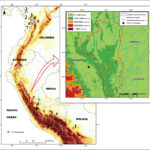
The Sumaco stubfoot toad is endemic to Ecuador’s Sumaco Volcano region—found nowhere else on Earth. Here, at elevations ranging approximately from 2,500 to 3,500 meters above sea level, this species clings to life among the constantly shifting clouds, lush moss-covered rocks, vibrant bromeliads, and dense, cool forests that define its habitat.
Habitat Preferences and Niches#
Unlike many lowland frog species that thrive near prominent water bodies, Osornophryne sumacoensis has adopted a lifestyle unconventionally adapted to moist leaf-litter, moss beds, and small bromeliad pools along these steep volcanic slopes. The constant drizzle and fog rolling down the montane forest canopy creates an ideal damp environment in which this amphibian prospers.
Every aspect of the Sumaco stubfoot toad’s behavior and physiology has been shaped by its humid, cool niche. The creature’s permeable skin, suited exquisitely for moisture absorption, and its ability to camouflage seamlessly into leaf-litter, suggests a nuanced evolutionary response to an environment both nourishing and demanding.
Physical Characteristics#
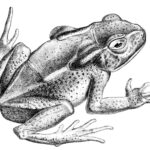
Despite its captivating adaptations, Osornophryne sumacoensis remains an elusive resident of its rainforest habitat, partly due to its minuscule stature and remarkably effective camouflage. Adults typically reach lengths no more than an inch, with the larger females slightly exceeding the males. Their compact, somewhat robust bodies contain short limbs, padding their slow and deliberate movement across delicate bryophyte carpets and decaying leaves.
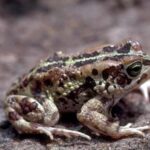
The coloration of this frog is intricately cryptic, ranging from mottled grays and browns to subtle traces of greenish or dark yellow patterns—camouflage perfected through millennia of selective pressure. Its hardy, textured skin boasts an appearance evocative of rocks and lichens scattered throughout its environment, offering perfect refuge in plain sight from prying predator eyes.
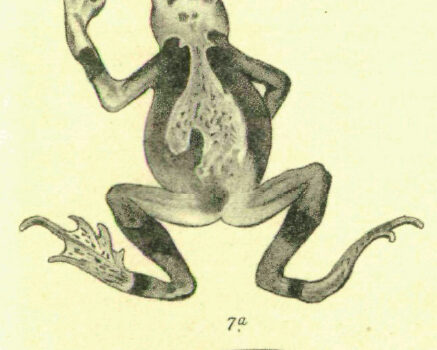
A characteristic of note in Osornophryne sumacoensis—and indeed its genus—is the presence of reduced digits with prominently absent or vestigial toe-webbing, inspiring the common name “stubfoot”. These diminished digits remarkably suit their terrestrial habits and minimize energy expenditure navigating their vertical, rugged terrain.
Behavior and Life Cycle#
Feeding and Foraging Habits#
Shrouded in mist, the forest floor of Sumaco buzzes unobtrusively with countless minute insects, mites, and small arthropods. This inconspicuous buffet is precisely suited to the Sumaco stubfoot’s needs. With diligent stealth and patient ambush, the frog captures prey using a rapid extension of its short, sticky tongue. Their dietary habits underscore their critical role as small-scale insectivores, healing microbalances within this fragile web of life.
Mating and Reproductive Behaviors#
During the frequent rainy episodes that characterize their home, male Sumaco stubfoot toads break their typical stealthy silence, emitting distinctive yet delicate vocalizations to attract females. Unlike the vibrant chorus of frogs found in other climes, these gentle calls blend softly into the whispering forest ambiance, requiring trained, patient listening.
Reproduction mirrors their terrestrial lifestyle adaptation, as females carefully lay small clusters of eggs hidden beneath damp moss or fallen leaves, where humidity remains consistent and protection from predators is optimal. These habitats shield eggs throughout their gradual development, with terrestrial tadpoles exhibiting direct development—a fascinating reproductive adaptation to life away from standing water.
Ecological Role#
As discreet insectivores in these high-altitude ecosystems, Osornophryne sumacoensis efficiently regulates populations of numerous arthropods, including species potentially harmful to plant health. This pivotal role positions the Sumaco stubfoot toad as an essential regulator of the forest’s complex trophic web, controlling insect populations and subsequently protecting broader ecological balances.
Moreover, their diminutive size and terrestrial habits also expose the frogs themselves to a variety of predators, including arthropods, small reptiles, birds, and even mammals. Their role as prey thus links this small amphibian intimately within the complex food chains of the cloud forest ecosystem hey inhabit.
Threats and Conservation Status#
Like countless amphibians worldwide, Osornophryne sumacoensis teeters perilously close to vulnerability due to impacts from habitat loss, climate change, disease, and environmental degradation. Their highly restricted range exacerbates their susceptibility to such threats. Despite limited research explicitly focused on this species, its fragmented populations and specialized habitats place it under near-constant threat from human encroachment, pollution, and shifting climatic patterns affecting cloud forest integrity.
Currently classed as “Data Deficient” by the IUCN due to limited formal assessments, this status underscores an urgent need for further research and monitoring to ensure that appropriate conservation actions are swiftly and effectively applied.
Cultural and Scientific Significance#
In addition to its inherent ecological and evolutionary marvel, the Sumaco stubfoot toad offers valuable insights for scientists studying climate adaptation and biodiversity. Understanding this species enhances our grasp of ecosystem health and shifting climate impacts, enabling better conservation and environmental decision-making in a constantly changing world.
Conclusion: Preserving Nature’s Quiet Wonders#
In exploring Osornophryne sumacoensis, we uncover a story of extraordinary adaptation and intricate ecological connection. By recognizing the fragility and hidden beauty represented by such enigmatic creatures, we commit ourselves anew to protect and conserve the remarkable places they inhabit. Preserving the cloud forests of Mount Sumaco—and the delicate amphibians that call it home—remains our collective responsibility and our urgent calling.
To safeguard these quiet wonders is to uphold the intricate tapestry of life itself—an endeavor to ensure survival of biodiversity for generations to treasure and explore.