- The Enigmatic Glass Frog: Revealing the Mysteries of <em>Nymphargus grandisonae</em>
- Taxonomy and Classification: Understanding the Glass Frog Family Tree
- Natural Habitat: Life Among Mist and Moss
- Physical Characteristics: An Astonishing Window into Biology
- Behavior and Life Cycle: A Symphony of Streams and Moonlit Nights
- Ecological Role: The Ambassador of Ecosystem Health
- Threats and Conservation Status: Fragility Facing an Uncertain Future
- Cultural and Scientific Significance: Windows into Biodiversity Research
- Conclusion: Championing Transparent Treasures
The Enigmatic Glass Frog: Revealing the Mysteries of Nymphargus grandisonae#
Hidden deep within the lush mountain forests of the Andes, a tiny emerald being—age-old yet freshly fascinating—continues a delicate existence. Among mist-coated leaves and soft trickles of crystal-clear streams resides a captivating ambassador of biodiversity: Nymphargus grandisonae, the elusive glass frog. With transparent skin offering an intimate peek into its very heartbeat, this small amphibian embodies the striking beauty and fragility of its rainforest home.
Known colloquially as Grandison’s glass frog, Nymphargus grandisonae captivates scientists and nature enthusiasts alike with a combination of delicate translucence and intriguing biological adaptations. Though modest in size—often no longer than your thumbnail—this remarkable species serves as a vivid reminder of nature’s capacity for both wonder and subtlety.
Taxonomy and Classification: Understanding the Glass Frog Family Tree#
Nymphargus grandisonae belongs to the enigmatic family Centrolenidae, gathered lovingly under the common name “glass frogs.” Centrolenidae comprises frogs whose remarkable transparency sets them apart from their rough-skinned relatives. At the genus level, the species finds its home in Nymphargus, sharing lineage and adaptations with a group known for their small, graceful builds and unmistakable green hue. Originally described by Cochran and Goin in 1970, the species’ nomenclature pays tribute to noted herpetologist Alice Georgie Cruikshank Grandison, honoring her significant contributions to amphibian biology.
Glass frogs, particularly those within the genus Nymphargus, have generated considerable intrigue among scientists. Distinguishing one glass frog species from another often depends upon subtly varying physical traits, behavioral patterns, or even breeding call distinctions—nuances that only add to the complexity of studying these tiny amphibians and understanding their precise evolutionary relationships.
Natural Habitat: Life Among Mist and Moss#
To envision the natural habitat of Nymphargus grandisonae is to wander mentally into cloud-shrouded Andean forests, particularly along the slopes of Ecuador and Colombia. Within these evergreen sanctuaries, warmth mingles with moisture, crafting ideal conditions for this amphibian species to thrive and prosper.
The glass frog’s affinity lies with habitats typically associated with fast-running mountain streams. Streams cascading down from highland elevations provide the frog with both mating grounds and essential reproductive sites. Surrounding vegetation grows thick and abundant, forming canopies of green that intercept sunlight in dappled patterns, creating a twilight realm perfect for an amphibian that depends on moisture and subtle refreshing humidity.
Epiphytes—plants that grow non-parasitically upon trees—festoon the trees and branches, creating ecosystems unto themselves. These miniature worlds offer ideal resting and feeding places, furnishing the frogs abundant shelter away from predators. Lush mosses, glossy leaves, bromeliads, and delicate ferns cover the landscape, offering safety, camouflage, and hunting opportunities to the inquisitive glass frog.
Physical Characteristics: An Astonishing Window into Biology#
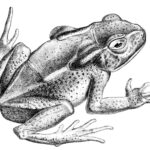
At first glance, Nymphargus grandisonae mesmerizes viewers, inviting closer inspection. Resembling delicate jade sculptures carved by the silent artisan hands of evolution itself, these tiny amphibians typically measure around 2–2.5 centimeters in length—small enough to perch unnoticed upon the forest leaves.
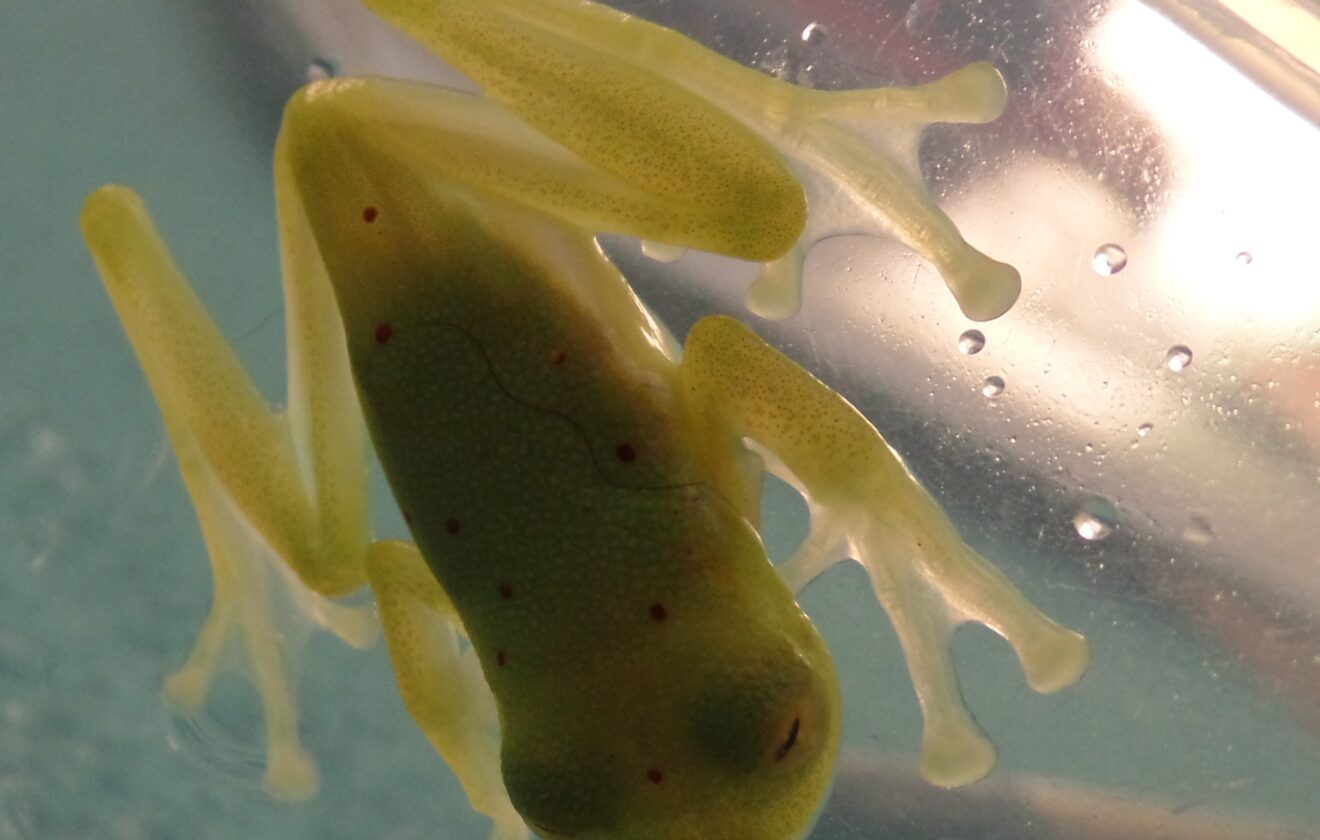
Their vivid apple-green to emerald-green skin is peppered with minute yellow and white spots, blending perfectly against a backdrop of forest foliage. Yet, their most astounding—and perhaps defining—feature is their translucent abdominal skin. Gently turning this fragile creature over reveals more than mere skin; observers can witness the rhythmic pulsing of their heart, the intricate process of digestion, and even glimpses of internal organs. Thus, the nickname “glass frog” comes alive with tangible reality. Evolution seems to have painted these frogs in transparency, a daring yet highly successful adaptation whose exact function remains partially shrouded in mystery, though suggestions range from camouflage from predators to subtle methods of thermal regulation.
With large, expressive golden eyes oriented forward, their binocular vision assists beautifully in night-time hunting, allowing them to spot minuscule prey amid darkness. The feet feature large, rounded suction pads, perfectly designed to grasp slippery leaves and steep branches amidst their lively arboreal lifestyle.
Behavior and Life Cycle: A Symphony of Streams and Moonlit Nights#
Like silent woodland sprites, glass frogs spend their lives intimately tied to a highly specialized ecosystem along streamside vegetation. They feed voraciously yet subtly, preying upon small invertebrates like insects, spiders, and ants, ambushed swiftly under the gleam of filtered moonlight. Their nighttime hunting sessions are characterized by deliberate stalking followed by rapid, precise leaps upon their prey—a true ballet of subtropical forests.
Breeding Rituals: Streams of Life and Parental Devotion#
The courtship rituals of Nymphargus grandisonae carry an air of delicate romance. Male frogs station themselves strategically above running water, producing a series of quiet, trilling advertisement calls to attract receptive females. Upon successful courtship, female frogs lay small clusters of eggs—usually numbering a few dozen—upon leaves above gentle streamwaters. The transparency of the eggs mirrors the future translucence of the tadpoles that will soon hatch.
Remarkably, certain glass frogs exhibit forms of parental care, with males fiercely guarding egg clutches until the tadpoles emerge safely into the water below. This vigilant parental protection minimizes risks of predation and egg desiccation, resonating as yet another fascinating behavior displayed by these delicate amphibian marvels. Tadpoles, once hatched, drift gracefully into the stream, relying initially upon yolk nourishment before adapting opportunistically within their aquatic cradle.
Ecological Role: The Ambassador of Ecosystem Health#
Nymphargus grandisonae, through quiet existence, fulfills an important ecological role. They belong to a complex food web, acting both as predator and prey. While feeding upon insects and spiders, glass frogs contribute significantly to controlling populations of potential pests that might otherwise threaten local vegetation or agriculture.
Conversely, these creatures provide vital nourishment to many predators, including birds, snakes, small mammals, and larger insects like dragonfly nymphs. Their presence or absence within forested streams thus becomes a clear indicator of ecosystem health, signaling balanced biodiversity or environmental distress.
Threats and Conservation Status: Fragility Facing an Uncertain Future#
Despite an aura of near-magical charm, glass frogs face increasing threats. Nymphargus grandisonae is listed as Least Concern by the IUCN, yet its existence remains tenuous amidst ongoing habitat loss and human-led environmental changes. The destruction and fragmentation of cloud forests, driven mainly by expanding agriculture, logging, and the pervasive specter of climate change, threaten to diminish or eliminate entirely the sensitive habitats these frogs call home.
Moreover, amphibian populations globally are facing additional pressures—from chytridiomycosis (a deadly fungal infection) to pollutants contaminating delicate waterways—making the conservation of pristine habitats paramount for their continued survival.
Cultural and Scientific Significance: Windows into Biodiversity Research#
The profound translucency of the glass frog represents more than just natural curiosity; scientists actively study these frogs to illuminate broader ecological truths. Their susceptibility to environmental disruption means they are perfect bio-indicators, allowing researchers insight into the direct effects of human influence and climate shifts on sensitive ecosystems.
Culturally, glass frogs have been appreciated and embraced as symbols of fragility and the urgent need to preserve our natural heritage. Local folklore throughout Andean communities often reveres these gentle creatures, incorporating them symbolically into traditions rooted in respecting the vibrant tapestry of rainforest life.
Conclusion: Championing Transparent Treasures#
Nymphargus grandisonae, with intricate subtleties and stunning beauty, plays a vital ecological role and symbolizes the delicate balance within nature. To protect this translucent jewel is to safeguard entire ecosystems and, consequently, our place within them. It is a call to action, not merely by dedicated conservationists, but by each of us—nature-lovers, students, scientists, and advocates alike—to ensure that the forests of tomorrow still resonate with the vibrant whispers of the extraordinary Grandison’s glass frog.
Let us be inspired by their delicate perseverance and commit to championing the elements essential to their continued survival—clean water, pristine forests, and thoughtful stewardship. In doing so, we protect not only one remarkable species but the intricate tapestry of life they represent.