Introduction: An Elusive Jewel of the Cloud-Forested Peaks#
High atop the mist-shrouded summit of Mount Murud, hidden within the verdant folds of Sarawak’s remote montane forests, lives a curious and little-known amphibian—Pelophryne murudensis. Known commonly as the Mount Murud dwarf toad, this enigmatic creature possesses a magical charm, fascinating both researchers and nature lovers alike. Despite its inconspicuous demeanor, this small amphibian plays an essential yet often overlooked role within its distinctive fragile ecosystem.
Classified scientifically in 2009, Pelophryne murudensis remains elusive, often discovered quietly dwelling amid moss-laden branches or camouflaged upon rain-soaked leaf litter. What secrets does this understated creature harbor, and why does understanding and safeguarding its existence matter deeply? Venture with us into the heart of its mountainous home and uncover the life story of the extraordinary Mount Murud dwarf toad.
Taxonomy and Classification#
Pelophryne murudensis belongs to the Bufonidae family, nestled within the genus Pelophryne, a unique assemblage of dwarf toads endemic primarily to Southeast Asia. The genus name Pelophryne translates to “mud toad,” subtly reflecting their preference to damp microhabitats amidst rich organic debris.
This species was distinguished clearly from its close relatives through subtle morphological traits and genetic differentiation. Notably, the species epithet “murudensis” references its highly localized occurrence atop Mount Murud in Borneo’s Sarawak region. Its closest relatives include other dwarf toads scattered through highland regions, each remarkably adapted to their distinct montane habitats.
Natural Habitat#
A Sanctuary Amidst the Clouds#
To understand the life of Pelophryne murudensis, one must ascend the slopes of Mount Murud. This isolated mountain, the highest peak in Sarawak at roughly 2,423 meters, serves as a sanctuary cloaked perpetually in clouds—a true heaven for mosses, bromeliads, and orchids. Within this moist and biodiverse paradise, the Mount Murud dwarf toad thrives in montane heath forests and mossy cloud forests. Its range is extraordinarily restricted, confined entirely to the summit region of Mount Murud at altitudes between 2,100 and 2,400 meters.
Here, temperatures remain consistently cool, punctuated by frequent mist and rainfall. Fallen branches, moss-covered stones, rotting leaves, and rainforest detritus collectively form an elaborate tapestry perfect for small, cryptic animals seeking shelter and moisture. Pelophryne murudensis chooses microhabitats saturated with humidity, preferring dense, mossy vegetation where subtler coloration provides optimal camouflage.
Physical Characteristics#
Small Body, Remarkable Camouflage#
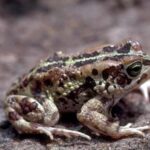
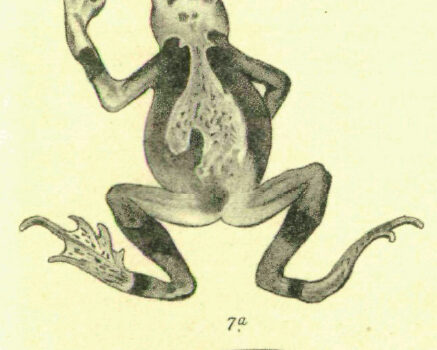
Measuring just about 2 centimeters in length, the Mount Murud dwarf toad easily fits into the palm of one’s hand. Its minuscule size contributes to its cryptic nature, evading the eye of even the most seasoned naturalist. Its skin is predominantly rough-textured, often resembling moist bark or moss, with colors predominantly varying shades of olive, burnt brown, and muted green.
Each color pattern and skin texture carefully mirrors the surroundings of damp foliage and lichens. Their small bodies feature distinctively short limbs, which emerge perfectly adapted for slow, highly precise movements over unstable and damp terrain. The fingers and toes are equipped with rudimentary pads that aid subtle gripping actions necessary for navigating vertical surfaces and slippery substrates.
Adaptations Born from Cloud-Forested Living#
Numerous physical adaptations uniquely equip Pelophryne murudensis for its chilly montane environment. Its compact body limits heat loss, while its cryptic coloration provides essential camouflage against predators like birds and snakes. Delicate nostrils and uniquely positioned eyes enable superior detection of subtle changes in the microhabitat, crucial to locating tiny insect prey and detecting environmental risks.
Behavior and Life Cycle#
A Quiet Existence in a Misty Realm#
The elusive nature of these tiny toads has made them challenging subjects for behavioral studies. Nonetheless, dedicated field observations have shed some light upon their fascinating daily habits. Pelophryne murudensis exhibits predominantly nocturnal behavior, emerging from hiding at twilight when moisture levels peak, and cloud cover provides additional camouflage from predation. Feeding discreetly, they pursue a diet of tiny arthropods, including ants, mites, beetles, and small insects, grabbing their prey with rapid, accurate tongue strikes.
While vocalizations remain scarcely documented, like other small frogs, subtle yet distinctive chirping calls often characterize their breeding seasons. These understated calls are carefully tailored to their damp, densely vegetated habitat—to attract mates without readily alerting predators.
Reproduction and Delicate Beginnings#
Like other amphibians, their lifecycle begins submerged in humidity-rich environments. Breeding typically correlates with periods of consistent rainfall, prompting group congregations near shallow, ephemeral pools or damp vegetation patches. Females deposit clutches of delicate eggs containing developing larvae in carefully chosen microhabitats shielded from harsh weather extremes and potential threats.
The tadpoles develop rapidly, morphing speedily into miniature toadlets—so small and intricate that one might mistake them at first glance for tiny insects scuttling across the mossy carpet.
Ecological Role#
An Integral Thread in the Web of Life#
Despite their petite stature and secretive habits, dwarf toads play a significant role in their ecosystems. Pelophryne murudensis acts as both predator and prey, forming intricate relationships within Mount Murud’s delicate ecological web. Concerning prey populations, their feeding habits help regulate insect numbers, subtly shaping the composition of arthropod communities.
Conversely, they serve as crucial prey animals for several predators inhabiting the cloud forest, including specific bird species, reptiles, and invertebrates. Their presence serves as an indirect indicator of habitat quality, representing ecological stability within their fragile, specialized montane ecosystem.
Threats and Conservation Status#
As with many amphibians worldwide, Pelophryne murudensis faces increasing threats primarily from habitat loss, climate change, pollution, and possible emerging disease threats like chytrid fungus. Although specific population studies remain sparse, its small, highly restricted range inherently makes the species highly susceptible to extinction risks should drastic environmental changes occur.
Currently, the IUCN classifies it as Data Deficient, acknowledging insufficient information to assess fully its vulnerability. Conservationists urgently advocate further surveys, ecological research, and habitat protections to better secure this species’ future.
Cultural and Scientific Significance#
Though remote and niche, Mount Murud has tremendous local and tribal cultural significance. This mountain landscape frequently features in local folklore and serves as an inspiring symbol of nature’s beauty and harmony.
Beyond cultural appeal, scientifically revealing insights await future researchers—new knowledge around cryptic species interactions, undiscovered medicinal compounds in amphibian skin secretions, or advanced understanding of conservation challenges in isolated montane ecosystems.
Conclusion: Protecting Mount Murud’s Diminutive Treasure#
The Mount Murud dwarf toad, Pelophryne murudensis, may be small and seldom seen, yet its existence brightly symbolizes the potential stories and knowledge hidden within our planet’s remote corners. Conservation of this species, synonymous with safeguarding its cloud-forested sanctuary, calls for awareness, admiration, and careful stewardship.
Let your curiosity lead your voice in advocating the protection of these remote, magical ecosystems. In doing so, we protect not merely one enigmatic amphibian but the entirety of the living tapestry to which we too belong.