- Introduction: Meeting the Secretive Pelophryne ingeri
- Taxonomy and Classification of Pelophryne ingeri
- Natural Habitat: The Lush Domain of a Forest Specialist
- Physical Characteristics: Master of Camouflage
- Behavior and Life Cycle: Quietly Complex Lives
- The Vital Ecological Role of Inger’s Dwarf Toad
- Threats and Conservation Status: Challenges in a Rapidly-Changing World
- Cultural and Scientific Significance: Honoring a Herpetological Luminary
- Conclusion: Championing the Quietly Extraordinary Pelophryne ingeri
Introduction: Meeting the Secretive Pelophryne ingeri#
In the dense rainforest undergrowth of Southeast Asia, amidst the humid embrace of the verdant islands, quietly dwells a fascinating yet inconspicuous amphibian: Pelophryne ingeri. Often referred to as Inger’s dwarf toad or the Inger’s flathead toad, this tiny, cryptically colored creature captures the imagination of naturalists, biologists, and conservationists alike, embodying the rich biodiversity that characterizes its biologically vibrant habitat.
Named in honor of renowned herpetologist Robert F. Inger, this species is a notable symbol of the astonishing biodiversity hidden within the jungles of Borneo. Despite its humble size and retiring habits, the intricate role that Pelophryne ingeri plays in its ecosystem lends it an outsized significance in the health of forest ecosystems.
Taxonomy and Classification of Pelophryne ingeri#
The amphibian world is a richly diverse taxonomic mosaic, and Pelophryne ingeri beautifully exemplifies evolutionary adaptation. Belonging to the family Bufonidae, this species is part of a group commonly known as true toads. However, the genus Pelophryne distinguishes itself through small size, flattened body shapes, and cryptic coloration tailored intricately to match their humid rainforest homes.
Known scientifically as Pelophryne ingeri, the species was first described by Cochran in 1931. Its classification was subsequently refined by researchers over decades. Within the genus Pelophryne, Inger’s dwarf toad finds kinship among related Southeast Asian species, each adapted uniquely to their ecological niches and offering herpetologists insightful evolutionary perspectives.
Natural Habitat: The Lush Domain of a Forest Specialist#
Deep amid the rainforests of Borneo, specifically in parts of Sabah and Sarawak, Malaysia, as well as Indonesian regions like Kalimantan, Pelophryne ingeri inhabits a luxuriant and ancient ecosystem. Here, the temperature is stable, humidity perpetually high, and sunlight filtered through layers of towering foliage. This amphibian has evolved to specifically inhabit leaf-littered substrates on the shaded forest floor, often near gentle streams or lightly trickling waters.
These habitats, characterized by twisted roots, rotting logs, and moss-covered rocks, create an ideal micro-environment for this small amphibian, offering abundant foraging opportunities and shelter from predators. With such precise habitat preferences, Inger’s dwarf toad has become something of an ecological sentinel—a delicate indicator whose presence often signals a healthy riparian forest ecosystem.
Physical Characteristics: Master of Camouflage#
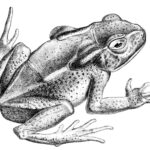
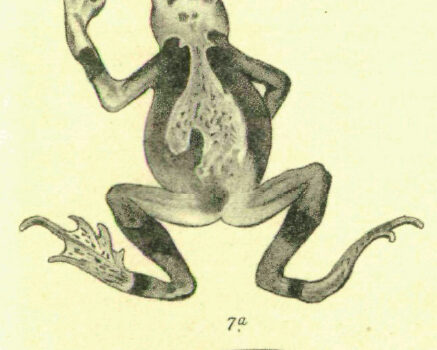
At first glance, the diminutive stature of Pelophryne ingeri—measuring usually no more than two centimeters—could easily lead to its being overlooked. Yet this modest sizing exemplifies sophisticated adaptation to rainforest life. Its compact body form, flattened and subtly shaped, is perfectly adapted to slip unnoticed among leaf debris on the forest floor.
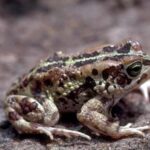
Iridescent yet understated in appearance, its coloration consists typically of different muddy hues—variations of dark browns, mossy greens, ochre, and muted grays—echoing precisely the colors of the forest floor substrate. This coloration provides the frog an essential camouflage, minimizing detection from aerial predators and hunting reptiles. Its eyes, proportionate yet distinctively rounded, are perfectly adapted for nocturnal life, enabling excellent night vision as it hunts for small prey.
Perhaps most notably, its skin texture, punctuated with small granular bumps, serves not just to blend into its surroundings but also aids in moisture retention, a crucial adaptation for forest-floor amphibians.
Behavior and Life Cycle: Quietly Complex Lives#
The subtle lifestyle of Pelophryne ingeri belies an intriguingly complex pattern of behavior and reproduction. Primarily nocturnal, the species spends daylight hours tucked beneath moist vegetation or hidden in shaded crevices, emerging at twilight ready to hunt. Their diet predominantly comprises arthropods: small insects, spiders, ants, or mites that inhabit leaf litter.
Breeding behavior of this species remains mysterious due to their shy, cryptic nature. However, available field observations suggest these tiny amphibians prefer locating breeding sites near shallow, slow-moving or standing pools—small forest puddles and rain-filled tree hollows are typical choices. Male toads produce delicate, high-pitched collective calls to attract females during the damp months of the rainy season, creating soft choruses audible only to those attuned to the subtleties of the nocturnal jungle.
Females lay strings of eggs in discrete water bodies, where tadpoles quickly hatch, completing their aquatic stage swiftly before metamorphosing into miniature replicas of their terrestrial parents. This efficient lifecycle enables them to take advantage of ephemeral pools and temporary forest ecosystems that fluctuate with seasonal rainfall.
The Vital Ecological Role of Inger’s Dwarf Toad#
Ecologically, Pelophryne ingeri occupies an essential niche as both predator and prey within its rainforest biome. Their consumption of insects helps regulate insect populations, maintaining a balance crucial for vegetation health in delicate forest ecosystems. Simultaneously, their presence provides a protein-rich food source for carnivorous creatures such as snakes, birds, and larger amphibians.
The frog also serves as a potent indicator species. Its specialized lifestyle makes it highly sensitive to environmental changes. Shifts in forest health, water quality, or microclimatic conditions often lead to noticeable impacts on their wellbeing first, acting as an early alarm signaling potential ecological disruptions.
Threats and Conservation Status: Challenges in a Rapidly-Changing World#
According to researchers and conservation organizations like the International Union for Conservation of Nature (IUCN), habitat loss driven particularly by deforestation for agriculture, logging, and expanding palm oil plantations represents the gravest threat to Pelophryne ingeri. As a habitat specialist, even minor disturbances in local forests can have disproportionately negative impacts on its survival.
Climate change also threatens longevity, altering rainfall patterns and potentially affecting the availability of critical breeding ponds. Diseases such as amphibian chytrid fungus, currently devastating amphibian populations across the globe, pose additional threats, although its specific impact on this species remains poorly known.
Owing to inadequate data and cryptic nature, Pelophryne ingeri is currently listed by IUCN as a “Data Deficient” species. Nevertheless, experts advocate proactive conservation approaches, focusing on preserving large intact tracts of forest, continued research, and raising local awareness to safeguard its critical habitats.
Cultural and Scientific Significance: Honoring a Herpetological Luminary#
The naming of this species after Dr. Robert F. Inger highlights the profound scientific importance of this modest toad. Dr. Inger, an eminent figure in amphibian study and conservation in Southeast Asia, contributed significantly to herpetological knowledge of Borneo’s ecosystems. Thus, the species epitomizes scientific collaboration and dedication to biodiversity understanding and conservation.
Although relatively unknown culturally beyond academic and conservation circles, the toad exemplifies the hidden richness of Southeast Asia’s biotic heritage. Discoveries of such species continue to inspire biologists who delve deeper into the mysteries of rainforest life, reminding societies of the unexplored wealth concealed within pristine ecosystems.
Conclusion: Championing the Quietly Extraordinary Pelophryne ingeri#
Whether as a tiny predator expertly hidden within dense leaf litter or as an ecological sentinel signaling health within its rainforest domicile, Pelophryne ingeri personifies nature’s quiet, yet marvelous complexity. Appreciating such species propels us to act responsibly and helps demonstrate the deep interconnectedness of life within Earth’s ecosystems.
To preserve this toad and countless similarly vital species, readers can support rainforest conservation initiatives, research efforts, and environmental policies promoting habitat protection. In doing so, we safeguard not just this modest amphibian but entire ecosystems, benefiting nature and our shared ecological heritage.