- Exploring the Enigmatic Osornophryne talipes: A Rare Jewel of Andean Amphibians
- Taxonomy and Classification: Understanding Osornophryne talipes's Place in Nature
- Natural Habitat: Dwelling in the Realm of Clouds
- Physical Characteristics: Draped in Cryptic Elegance
- Behavior and Life Cycle: Secrets Within the Misty Foliage
- Ecological Role: A Quiet Guardian of Biodiversity
- Threats and Conservation Status: Challenges on Cloud-forest Horizons
- Cultural and Scientific Significance: The Quiet Ambassador from the Andes
- Conclusion: Protecting a Jewel Among Clouds
Exploring the Enigmatic Osornophryne talipes: A Rare Jewel of Andean Amphibians#
High in the mist-swept forests and rugged terrain of the Colombian Andes, there dwells a diminutive and enigmatic frog whose very existence embodies both fragility and resilience. Scientific name: Osornophryne talipes. This fascinating amphibian, though modest in size and elusive in nature, carries immense ecological significance, its quiet presence signifying the delicate balance of high-altitude ecosystems. Known commonly as the “Pastaza Plump Toad,” Osornophryne talipes is distinctly adapted to the niche conditions of its mountainous home—a realm of misty forests, rocky outcrops, and cool, moisture-laden air.
Few people outside specialist circles may have heard of Osornophryne talipes. Yet, its subtle beauty, secretive ways, and sensitivity to environmental changes make it a beacon species, a tiny bio-indicator offering crucial insight into the health and stability of Andean habitats. Let us embark on a journey into the cloud forests of South America, home to this peculiar and precious amphibian, weaving through mountains draped in uncertainty and exploring the life and times of a frog species that quietly yet spectacularly illustrates nature’s intricacy and interconnectedness.
Taxonomy and Classification: Understanding Osornophryne talipes’s Place in Nature#
Osornophryne talipes belongs to the family Bufonidae, an expansive group that includes various species commonly known as true toads. Within the Bufonidae family, Osornophryne—often colloquially called “plump toads”—stands apart due to unique morphological traits and geographic specificity.
This remarkable frog finds company with close relatives also adapted to mountainous habitats across South America. The genus Osornophryne currently comprises a modest number of species, each one exquisitely evolved to thrive in Andean micro-climates. Species such as Osornophryne guacamayo and Osornophryne bufoniformis share similar appearances and behaviors, yet maintain distinct ecological niches to prevent intense competition.
Named and described scientifically in 1978 by distinguished herpetologists, Osornophryne talipes stands as a symbol of the ongoing biodiversity discoveries yet to come from the biologically rich yet largely unexplored cloud-forest regions of Colombia and Ecuador.
Natural Habitat: Dwelling in the Realm of Clouds#
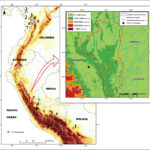
Stepping into the world of Osornophryne talipes takes one into the mysterious high-altitude environments of Colombia and the northern Andes. Predominantly found between elevations of approximately 2,600 to 3,000 meters, O. talipes favors misty montane forests characterized by perpetual cloud cover, moss-draped trees, and constant humidity.
A Home Shrouded in Mist#
These mountain ecosystems, often referred to as cloud forests or montane rainforests, provide the ideal refuge. Thick fog rolls in daily, nurturing a lush landscape teeming with epiphytes, orchids, and layers of vibrant green moss that carpet every exposed surface. Within this moist, shadowy realm, O. talipes discreetly navigates the leaf litter and moss-covered branches, remaining inconspicuous yet pervasive—a quiet guardian of these high-altitude ecological sanctuaries.
Adaptations to Mountain Life#
Life at high elevations challenges all species, including frogs. Temperatures fluctuate rapidly, oxygen concentration is lower, and ecological stability requires unique evolutionary adaptations. With leathery, thick skin adept at conserving vital moisture, O. talipes endures temperature drops and variable environmental conditions effortlessly, showcasing a remarkable resilience.
Such specialized habitat requirements underline the inherent vulnerability of O. talipes: alterations to climatic conditions or human-induced habitat degradation can quickly lead to population declines, positioning this amphibian as an essential indicator species for ecosystem health.
Physical Characteristics: Draped in Cryptic Elegance#
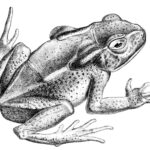
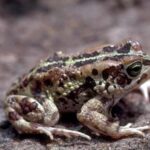
Osornophryne talipes does not claim attention through flamboyant colors or grand size. Rather, its evolutionary investment has been directed towards inconspicuousness. Typically between 20-30 millimeters in length, it is a small species, yet its textured body and subdued tones perfectly suit its ecological strategy.
Camouflaged Masters of Moss and Leaf#
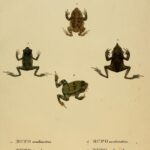
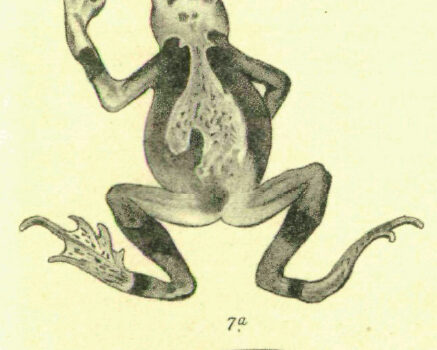
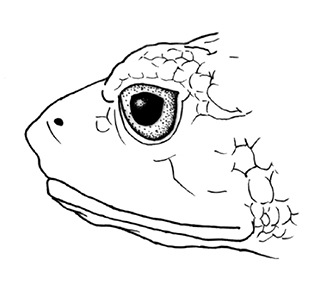
The skin is wart-covered, uneven, and mottled in hues ranging from deep brown, dark olive, to muted greens—colors borrowed directly from the lush montane life that surrounds it. This cryptic coloration, combined with a stocky, rounded figure—clusively adapted limbs with reduced foot webbing and finger discs—helps the frog effortlessly blend into the arboreal and terrestrial vegetation of its habitat.
The intriguing shape of their feet, exhibiting slight enlargement and rough textured pads, adds practical advantage, enhancing their capacity to hold stable positions on slippery moss-covered surfaces. It’s a remarkable adaptation ensuring firm footing amidst the perpetual moisture of their cloud-based home.
Behavior and Life Cycle: Secrets Within the Misty Foliage#
Understanding the behavior of Osornophryne talipes offers its own set of challenges; observations are scarce and precious. Like others in its genus, O. talipes leads a predominantly nocturnal life, becoming active under the protective veil of nightfall and the dense shroud of mist.
Diet and Foraging Habits#
Small invertebrates are this amphibian’s mainstay—ants, beetles, springtails, and other insects common in the leafy substrate provide sustenance. Through careful ambush or patient hunting, their efficient feeding methods reflect a life closely interconnected with insect populations.
The Dance of Courtship and Continuation#
Osornophryne talipes exhibits direct development, a remarkable reproductive strategy characteristic of high-elevation and moisture-rich forest frogs. Here, traditional frog tadpoles never appear—the eggs laid by females hatch directly into tiny froglets, skipping lengthy aquatic phases, adaptation crucial for survival in wet yet stream-limited terrains like cloud forests. Courtship and mating remain secluded; soft vocalizations and tactile movements hidden among foliage illustrate subtle yet effective communication strategies evolved over thousands of years.
Ecological Role: A Quiet Guardian of Biodiversity#
Despite their elusive lifestyle, Osornophryne talipes is an indispensable part of its habitat’s ecological tapestry. Its predatory activity helps regulate the abundance of invertebrate species, maintaining balance among insects and other prey, thus contributing to ecological equilibrium.
An Indicator of Environmental Stability#
Moreover, serving as sensitive bio-indicators, these frogs can offer early warnings when their habitats experience degradation. Declines in amphibian populations overwhelmingly reflect issues like habitat destruction, pesticides, climate variation or pollution—making their monitoring and conservation even more significant.
Threats and Conservation Status: Challenges on Cloud-forest Horizons#
Osornophryne talipes is currently classified by the International Union for Conservation of Nature (IUCN) as Vulnerable, reflecting concerns about habitat fragmentation, climate change, and the spread of chytrid fungus, a pathogen devastating global amphibian populations.
Conservationists tirelessly advocate for protection and restoration of cloud-forest habitats to safeguard O. talipes and its equally rare kin. Protected areas, sustainable land management, climate action, and scientific monitoring provide critical threads in the ongoing effort to ensure this unique amphibian’s survival.
Cultural and Scientific Significance: The Quiet Ambassador from the Andes#
While Osornophryne talipes may not feature prominently in folklore or cultural symbolism, its scientific distinctiveness elevates its stature. Biologists view it as emblematic of evolutionary specialization and ecosystem interdependence. Investigations into their physiology and ecology continue to yield valuable insights into adaptation, climate resilience, and conservation biology.
Conclusion: Protecting a Jewel Among Clouds#
To encounter Osornophryne talipes, even briefly within its mist-shrouded mountain home, is to glimpse an extraordinary example of evolutionary finesse and ecological patience. The future of this amphibian rests on our mutual commitment to conserving the fragile cloud forests it calls home. Each conservation effort, small or vast, ensures not only protection for one specialized frog, but preservation for an entire realm of biodiversity—a treasure-trove entirely deserving of our ongoing vigilance, respect, and dedication.