Oreophrynella vasquezi: The Enigmatic Amphibian of Venezuela’s Lost World#
High atop the mist-covered summits of the Venezuelan tabletop mountains—those great mesas known as “tepuis,” reminiscent of islands floating among clouds—a small, extraordinary frog ekes out an existence so peculiar and isolated it has captivated scientists and nature enthusiasts alike. Oreophrynella vasquezi, commonly referred to as Vasquez’s Bush Toad or Vasquez’s Pebble Toad, is one of nature’s many hidden gems, a species that, despite its diminutive size, astonishes with an array of unique adaptations and behaviors. Named in honor of prominent Venezuelan herpetologist Luis Vasquez, this species embodies the mysteries of tepui ecosystems, emblematic not only of evolutionary marvels but also of the urgent conservation challenges we face today.
Taxonomy and Classification#
The scientifically classified Oreophrynella vasquezi belongs to the Bufonidae family, which encompasses true toads and many specialized amphibians scattered across the globe. Within this vast lineage, Oreophrynella represents a truly exceptional genus—one whose evolutionary divergence parallels the isolation and uniqueness of its remote habitat. Classified formally in 1994 by renowned Venezuelan scientists Señaris, Ayarzagüena, and Gorzula, this species shares its genus with several close relatives, each endemic to separate tepui summits and displaying subtle yet intriguing distinctions in appearance and behavior.
Oreophrynella vasquezi and its relatives are model examples of allopatric speciation, an evolutionary process in which geographic separation drives the formation of unique species. The misty tepuis, rising abruptly above Venezuela’s dense jungle, act as natural evolutionary laboratories, each plateau home to distinct creatures that are ironclad residents, evolving in isolation for hundreds of thousands of years.
Natural Habitat#
The Majestic Tepuis of Venezuela#
Oreophrynella vasquezi makes its home exclusively upon the rugged crown of Ilú-Tepui, one of the numerous tabletop mountains in southern Venezuela’s Gran Sabana region. These tepuis, locally revered as sacred lands, tower dramatically upwards, sheer cliffs ascending dramatically hundreds of meters from the surrounding flatlands.
The tepui summits are distinctly inhospitable habitats: rocky, windswept, nutrient-poor, and frequently cloaked in dense mist. Yet, nestled amidst these ancient rocks and stubborn mosses, tiny ecosystems thrive. Oreophrynella vasquezi inhabits low scrub vegetation, damp rocky crevices, and the nutrient-rich soils of moss-covered depressions. Here, in this cool, damp embrace provided by perennial moisture and heavy cloud formation, a sheltered microhabitat thrives, sustaining the delicate amphibian life that makes such a challenging habitat home.
These ecosystems are remarkably fragile; subtle changes can have far-reaching consequences. The delicate balance between moisture, temperature, and vegetation type is critical for this shy and reclusive amphibian—fundamental for providing nourishing insects, vital moisture, and suitable breeding sites nestled within the vegetation.
Physical Characteristics#
At first glance, Oreophrynella vasquezi exhibits an unassuming stature, rarely surpassing two centimeters in body length. Yet, a closer inspection reveals intriguing adaptations specifically evolved to thrive in its unique environment. Its diminutive size allows it to navigate tight spaces between rocks and beneath moss carpets, enabling shelter-seeking behaviors vital to survival in harsh climatic conditions.
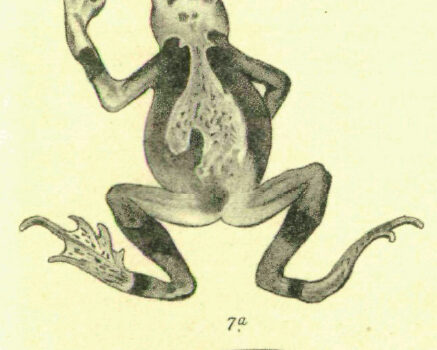
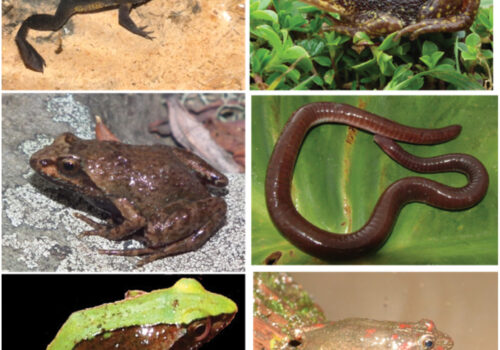
Coloration among individuals typically ranges from mottled shades of dark brown, grey, to nearly black, exquisitely camouflaged against the rocky terrain and lichen-coated surfaces of their natural habitat. The dorsal skin is roughened and granular in texture, mimicking small rocks and pebbles—a masterful evolutionary camouflage strategy designed to evade predators such as endemic bird species.
Perhaps most fascinating among its adaptations is Oreophrynella vasquezi’s skeletal flexibility and musculature, which collectively grant it the astonishing ability known as “passive rolling.” When threatened or disturbed, this tiny amphibian tucks itself into a rounded ball, rolling helplessly down slopes and cliffsides rather than leaping away. Though counterintuitive, this “pebble” strategy vastly reduces predation risks. The compact, rounded-bodied shape protects soft-sensitive eyes and limbs while dispersing the force of impact, allowing this tough little creature to survive descents from considerable heights unharmed.
Behavior and Life Cycle#
Secretive Life Amongst Clouds#
Like many amphibians adapting to harsh environments, Oreophrynella vasquezi leads a largely hidden existence. Primarily crepuscular and nocturnal, these tiny frogs emerge at dusk to forage, capitalizing on cooler temperatures and elevated humidity to thrive.
Their diet is exclusively insectivorous, feeding primarily on tiny arthropods such as mites, ants, beetles, and other small insects endemic to tepui habitats. Equipped with sharp eyesight and impressive agility, they expertly seize their prey’s swift, furtive movements. Each summer, coinciding with the increased rains of the tepui wet season, Oreophrynella vasquezi engages in a short, yet captivating breeding period. With subtle, high-pitched calls reverberating across the mist-shrouded summit, males seek out receptive females nestled amidst moist mossbeds and lush carpets.
Unlike many amphibian species laying eggs in freshwater sources, O. vasquezi employs an entirely terrestrial reproductive strategy. Females deposit clutches of eggs within moist moss and leaf litter, where they are sheltered and remain consistently damp from sustained cloud moisture. After a relatively brief incubation, the hatchlings emerge as fully formed miniature frogs, bypassing a free-swimming tadpole stage altogether—an adaptation vital in environments where pools of standing water are virtually nonexistent. Such a direct-developing lifecycle showcases the remarkable evolutionary strategies essential for survival in these high-altitude habitats.
Ecological Role#
Despite their tiny stature, Oreophrynella vasquezi fills a surprisingly vital ecological role. Not only are they important insect predators, contributing to balanced invertebrate populations upon which the entire fragile tepui ecosystem depends; they also serve as indicators of ecosystem health. Any shifts in their populations are early signs of environmental disturbance or change, making them invaluable for ecosystem monitoring.
In turn, this species faces pressures from predation, primarily by endemic birds such as tepui swallows and other insectivorous birds adapted to challenging climates and determined enough to seize these delicate morsels amid dense vegetation. This delicate predator-prey balance illustrates the interconnectedness of life atop the isolated summit plateau.
Threats and Conservation Status#
The remoteness of Ilú-Tepui provides some protection from traditional threats; nevertheless, the unique vulnerability of small, isolated populations means that even minimal habitat changes hold grave consequences. Increasingly, climate change is emerging as their most pressing threat, altering rainfall patterns, increasing temperatures, and potentially drying critical moss beds serving as their primary habitat.
According to the International Union for Conservation of Nature (IUCN), Oreophrynella vasquezi is classified as Vulnerable. This status primarily reflects its small geographic range, and limited habitat size compounded by climate-driven impacts. While protected within Canaima National Park, enforcement remains a concern due to limited resources—magnified further by increasing pressures from illegal mountaineering excursions and potential eco-tourism impacting fragile microhabitats.
Cultural and Scientific Significance#
The mysterious tepuis—from Arthur Conan Doyle’s “Lost World” inspirations to Indigenous Pemon folklore—hold rich cultural symbolism and reverence. Oreophrynella vasquezi, emblematic of these isolated evolutionary islands, plays a quiet but impactful cultural role as a creature symbolizing resilience, unique evolution, and mystery.
Scientifically, this pebble toad captures considerable fascination. Ongoing study promises to illuminate secrets of evolutionary ecology, climate adaptation, and isolation-driven speciation. Questions raised through Oreophrynella vasquezi’s distinct biology continue to offer potential insights into evolutionary processes, conservation paradigms, and even biomedical discoveries through amphibian skin chemistry and microhabitat interactions.
Conclusion#
Oreophrynella vasquezi exemplifies evolutionary resilience under constraints of isolation and harsh environmental conditions. Its compelling story resonates deeply, reminding us of both the wonders that nature harbors and our responsibility to safeguard these extraordinary lifeforms. Preserving Oreophrynella vasquezi requires recognizing its vulnerability within isolated eco-havens, supporting ongoing research, promoting habitat protection, and confronting climate challenges directly.
In protecting this diminutive amphibian—a symbol of evolution’s majesty and fragility—we commit ourselves to preserving the purity, mystery, and ecological integrity of one of Earth’s most enchanting and fragile ecosystems: the lost world of Venezuela’s legendary tepuis. Together, let us embrace our role as custodians of these remarkable species and inspire actions necessary for their enduring survival.