- Melanophryniscus biancae: The Enigmatic and Vibrant Amphibian of South America
- Taxonomy and Classification: The Colorful Toad from the Bufonidae Family
- Natural Habitat: The Living Emerald Jewelbox of South America's Atlantic Forest
- Physical Characteristics: Nature's Masterpiece Painted in Vivid Colors
- Behavior and Life Cycle: A Secretive Existence in Leaf Litter and Forest Mists
- Ecological Role: Tiny Yet Essential Gatekeepers of Forest Health
- Threats and Conservation Status: Fragile Amphibians amid Vanishing Habitats
- Cultural and Scientific Significance: A Toad with Profound Impact
- Conclusion: Preserving a Jewel of Biological Heritage
Melanophryniscus biancae: The Enigmatic and Vibrant Amphibian of South America#
Hidden among the lush greenery and damp forest floors of South America lives a creature so vibrant and uniquely adapted to its environment that it leaves observers enchanted—the Melanophryniscus biancae. Known for its striking appearance and secretive lifestyle, Melanophryniscus biancae, commonly known as Bianca’s Redbelly Toad, is a fascinating yet delicate testament to nature’s artistry. Discovered recently and described officially in 2015, this diminutive amphibian species has swiftly gained attention from scientists and conservationists alike for both its beauty and its vulnerability.
But what exactly makes Bianca’s Redbelly Toad so special? Beyond its captivating colors and cryptic habits lies a complex life intertwined intimately with its delicate ecosystem. Join us as we explore the enthralling story, biology, conservation challenges, and ecological significance of Melanophryniscus biancae.
Taxonomy and Classification: The Colorful Toad from the Bufonidae Family#
The scientific designation of this amphibian adds credibility to its distinctive nature: Melanophryniscus biancae. It belongs to the Bufonidae family, often referred to collectively as the “true toads.” Yet, unlike its stereotypically drabber cousins, Bianca’s Redbelly Toad boasts striking patterns and brilliant hues that immediately distinguish it from other members of its family. Its closest relatives are other species within the genus Melanophryniscus, a group notable for boldly colored and toxin-rich amphibians native primarily to South America.
The species name, “biancae,” serves as a warm-hearted tribute to Bianca Luiza Reinert, an instrumental conservation biologist and dedicated researcher who played a significant role in the initial discovery and description of these remarkable frogs. Taxonomic classification at a glance:
- Kingdom: Animalia
- Phylum: Chordata
- Class: Amphibia
- Order: Anura
- Family: Bufonidae
- Genus: Melanophryniscus
- Species: Melanophryniscus biancae
Natural Habitat: The Living Emerald Jewelbox of South America’s Atlantic Forest#
Melanophryniscus biancae is endemic exclusively to the Atlantic Forest biome of Brazil, one of the world’s most biologically rich and endangered regions. This species has been identified in restricted highland wetland and cloud forest zones, particularly within Serra do Quiriri mountain range in the southern Brazilian states such as Santa Catarina. The habitat’s complex terrain—a lush mosaic of humid forests, mist-covered peaks, bromeliad-rich canopies, and marshy wetlands—provides critical microclimates essential for the species’ survival.
Preferring elevations ranging from approximately 1,100 to over 1,400 meters above sea level, Bianca’s Redbelly Toad thrives within carefully balanced ecosystems often characterized by pristine moisture and minimal human intrusion. These cryptic amphibians seek refuge beneath leaf litter, among moss-covered rocks, and inside the watered rosettes of bromeliads, effectively camouflaging themselves from predators and curious eyes alike.
Physical Characteristics: Nature’s Masterpiece Painted in Vivid Colors#
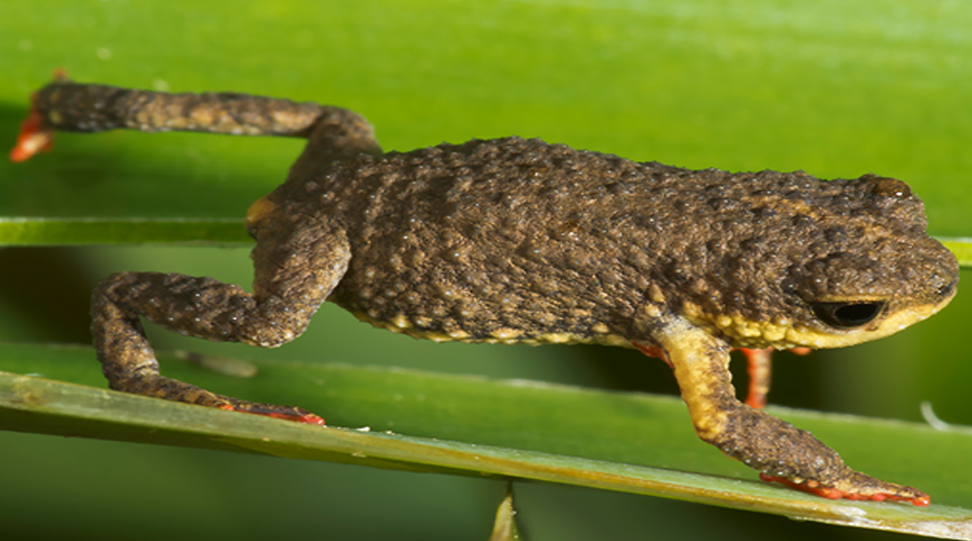
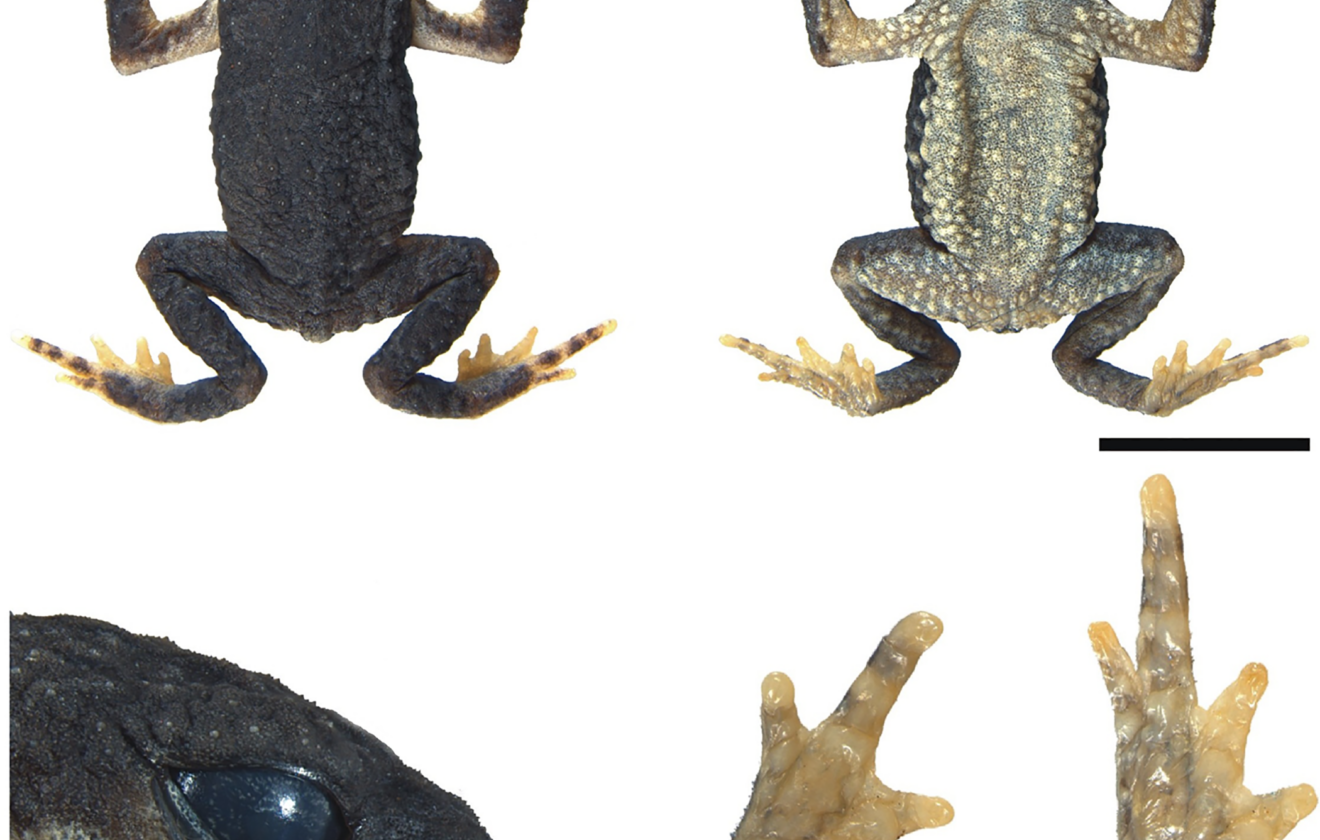
Upon first glance, what captivates most observers about Melanophryniscus biancae is undeniably its striking coloration and relentless vibrancy. Adults typically measure a mere 2 to 3 centimeters in length, yet these toads radiate a vivid combination of pigments rarely observed in such small amphibians. Their dorsum ranges from dark charcoal black to vibrant orange-red, beautifully interrupted with intricate blotches and spots in gleaming golds and intense vermilions.
The ventral side is often starkly contrasted, sporting an even brighter shade of orange or red, a vivid warning (aposematic) coloration effectively communicating its inherent toxicity to potential predators. Indeed, like many species within the genus Melanophryniscus, Bianca’s Redbelly Toad synthesizes potent compounds from the arthropods it consumes—primarily ants and mites—transforming dietary toxins into powerful defensive chemicals secreted through the skin.
This brightly-hued defensive strategy provides protection, allowing the toad freedom from predation despite its small stature. Its skin, roughened considerably with bumpy textures, assists with hydration and absorption of environmental moisture, maintaining suitable electrolyte balances required for survival in its delicate habitat.
Behavior and Life Cycle: A Secretive Existence in Leaf Litter and Forest Mists#
Diet and Feeding Strategies#
As decidedly opportunistic feeders, Melanophryniscus biancae toads sustain themselves predominantly on a diet of small invertebrates. Ants, termites, mites, and tiny arthropods constitute the bulk of their prey. Due to their miniature stature and shy nature, these toads utilize a sit-and-wait ambush strategy, patiently awaiting unsuspecting prey amid dense foliage and forest debris.
Mating Rituals and Tadpole Development#
Melanophryniscus biancae exhibits highly specialized reproductive behavior adapted to its unique ecology. Breeding selectively during wet periods or after heavy seasonal rainfalls, males gather around transient aquatic habitats—shallow pools or flooded depressions—to call fervently in hopes of attracting females. Their mating calls, described vividly as short chirps punctuated by whimsical bursts, echo softly beneath the forest canopy.
Females lay modest clusters of eggs within shallow water bodies or hidden within bromeliads, providing protection for developing offspring. Tadpoles quickly hatch and undergo rapid development, leveraging dense algae and microscopic organisms abundant in these temporary water habitats. Within a matter of weeks, tadpoles morph into miniature versions of adults, moving quickly to terrestrial habitats before the ephemeral pools evaporate.
Ecological Role: Tiny Yet Essential Gatekeepers of Forest Health#
Though modest and secretive, Melanophryniscus biancae plays a significant ecological role within its restricted rainforest ecosystem. Acting as both predator and prey, these small, insectivorous amphibians help control populations of smaller arthropods and serve as critical prey items for larger predators insensitive to their chemical defenses. Perhaps most crucially, the Melanophryniscus species—rich in sensitive skin and toxins—act as bio-indicators, reflecting environmental changes with unparalleled precision.
Threats and Conservation Status: Fragile Amphibians amid Vanishing Habitats#
Sadly, Bianca’s Redbelly Toad currently faces several existential threats, primarily stemming from habitat destruction, climate change, and exotic diseases such as chytridiomycosis, a fungal infection devastating amphibian populations globally. Despite ongoing conservation efforts, habitat fragmentation and deforestation rampant across the Atlantic Forest region remain severe threats, jeopardizing the survival of this extraordinary species.
The International Union for Conservation of Nature (IUCN) currently characterizes Melanophryniscus biancae as Critically Endangered, prompting urgency among conservationists and researchers to bolster protective measures. Current efforts emphasize habitat preservation, captive breeding programs, and research into fungal diseases to ensure long-term viability.
Cultural and Scientific Significance: A Toad with Profound Impact#
Early studies into the biochemistry of Melanophryniscus toxins demonstrate significant potential for future biomedical research, potentially benefitting pharmacological applications, such as novel analgesics or antimicrobial agents. Furthermore, Melanophryniscus biancae serves as a charismatic ambassador species, encouraging local community engagement and broader global movements aimed at rainforest conservation.
Conclusion: Preserving a Jewel of Biological Heritage#
The vibrant Bianca’s Redbelly Toad exemplifies the wonder inherent within our planet’s ecosystems, each species offering invaluable stories and biological mysteries yet to unravel. However, the immediacy of its threats reminds us of the fragility and interconnectedness inherent within nature. It is our collective responsibility to advocate vigilantly for the conservation of precious habitats like Brazil’s Atlantic Forest, not only to safeguard Melanophryniscus biancae but to ensure the brilliant tapestry of biodiversity endures as our shared and irreplaceable heritage.
Together, let’s support conservation efforts, educate others about the wonders and vulnerabilities of unique species like Bianca’s Redbelly Toad, and commit ourselves to protecting this tiny yet exquisite amphibian for future generations to marvel at and learn from.