The Four-Ridged Toad (Ingerophrynus quadriporcatus): Hidden Gem of the Tropical Forests#
In the lush undergrowth of tropical rainforests in Southeast Asia, hidden among dripping leaves and tangled vines, thrives a peculiar and understated amphibian known scientifically as Ingerophrynus quadriporcatus. More commonly called the four-ridged toad, this species rarely catches the casual observer’s eye, yet it holds a wealth of fascination for those who pause to closely examine the secrets of its life. Named after the distinct ridges lining its back, this toad has quietly persisted for countless generations, embodying both the vulnerability and resilience of amphibian life in an ever-changing environment.
With subtle beauty and intriguing behaviors, the four-ridged toad tells a unique ecological story that deserves attention. This amphibian plays a vital role in its habitat, and understanding its biology, behavior, ecological rôle, and threats is crucial in our wider conservation efforts.
Taxonomy and Classification#
The four-ridged toad, formally classified as Ingerophrynus quadriporcatus, belongs to the family Bufonidae—a diverse and widespread group known commonly as true toads. Within this family, the genus Ingerophrynus comprises several closely related species endemic to Southeast Asian tropical forests.
Originally described by Boulenger in 1887, the species epithet “quadriporcatus” precisely refers to the distinctive rows of raised, wart-like ridges or tubercles running longitudinally down the back of this charismatic amphibian, making it easily distinguishable from its relatives upon closer inspection. Today, scientific taxonomy recognizes this species as integral to understanding regional biodiversity in Southeast Asia.
Natural Habitat#
Geographical Distribution: A Tropical Triumph#
The natural range of the four-ridged toad centers around the rich tropical forests of Southeast Asia, particularly within the lush expanses of Indonesia, Malaysia, Singapore, Thailand, and parts of Brunei. Evolved to harmonize with the moist, warm climate, it thrives predominantly at lower elevations up to about 700 meters.
Everyone who ventures quietly into these dense tropical environments soon discovers the microcosmic universe these forests shelter—deep shadows, perpetual dampness, and tangled foliage create the ideal habitat that ensures survival and growth for amphibians like Ingerophrynus quadriporcatus.
Habitat Preferences: Embracing the Forest Floor#
Unlike many arboreal frog species, the four-ridged toad lives most comfortably on and near the forest floor—a place alive with decomposing leaf litter, moss-coated tree roots, and a network of shallow streams and waterlogged areas. Its preference for humid terrestrial niches perfectly aligns with the preserved canopy cover above, which moderates temperatures and retains much-needed moisture.
The species’ subtle nocturnal activity and camouflage coloring blend with leaf litter, allowing it to avoid detection from predators lingering above branches or squatting in ambush among rocks.
Physical Characteristics#
A Portrait of Distinction and Camouflage#
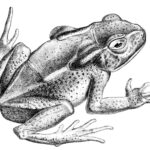
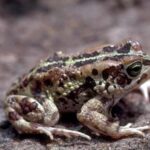
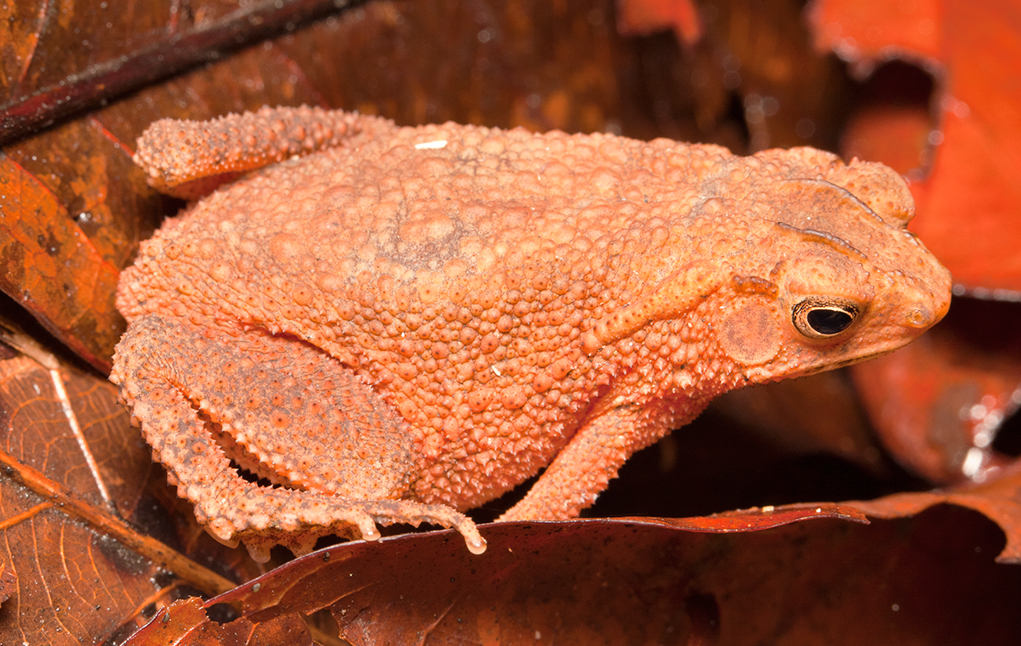
The four-ridged toad typically measures approximately 5 to 8 centimeters in length, modestly sized though strikingly characterized. Its skin texture typically features pronounced warty protrusions arranged in four distinct longitudinal rows down its back, from which it derives its common name. These ridges not only distinguish the species visually but may also contribute to its camouflage by disrupting its silhouette.
Coloration varies broadly from golden or sandy brown tones to darker earthy shades, enabling each individual to blend seamlessly with fallen autumnal leaves, damp soils, and mossy boulders of their forested surroundings. This concealment proves pivotal for evading predators as well as for ambushing tiny insect prey—a key survival strategy perfected through countless generations of evolutionary refinement.
Furthermore, its eyes, protruding prominently atop its flattened head, have evolved excellent nocturnal sensitivity, enabling effective hunting and cautious predator avoidance under twilight and moonlit conditions.
Behavior and Life Cycle#
Nocturnal Activities: Silent Lives Under Moonlight#
When dusk falls and diurnal animals retreat into darkness, the four-ridged toad awakens, quietly emerging from its daytime hiding spots. Employing careful movements and remarkable stealth, it prowls leaf litter and damp forests floors, hunting small invertebrates such as beetles, ants, termites, and other insects that constitute the bulk of its diet.
While foraging, these amphibians remain solitary, methodically covering familiar territory each night. Their alert eyes and lightning-fast tongue strikes allow them to capture prey quickly and quietly, minimizing potential exposure to predators in their vicinity.
Mating Behavior and Reproductive Rituals#
Seasonal shifts in rainfall trigger breeding activity. The males, generally territorial during the breeding period, select shallow pools or slow-flowing streams to court females by emitting a distinctive, resonant croak—audible among the evening chorus amid other forest frogs.
Once a female willingly accepts a male’s proclamation, the duo engages in a brief, amphibious dance culminating in egg-laying. The resulting clusters of tiny, gelatinous eggs anchor onto submerged vegetation or float appealingly on the water’s surface. Within days, the water teems with wriggling tadpoles, whose development depends on clean, stable freshwater ecosystems.
The tadpoles undergo metamorphosis overseen solely by environmental conditions, emerging from water onto the forest floor as tiny replicas of the adults—a silent testimony to the natural cycles perfected through thousands of years.
Ecological Role#
Ingerophrynus quadriporcatus fulfills essential ecological roles within its tropical habitat network. Primarily insectivorous, they contribute significantly to pest population control, managing insects and preventing outbreaks that could otherwise harm forest vegetation. On the other hand, their own population forms a vital link within the food web—serving as a source of food for predatory birds, snakes, monitor lizards, and even small mammals.
Due to their permeable skin, which absorbs water and environmental compounds directly, amphibians frequently indicate broader environmental health. The thriving presence—or concerning absence—of the four-ridged toad signals underlying ecological conditions within its habitat, elevating its significance as a valuable indicator species for conservationists seeking to gauge ecosystem resilience among Southeast Asian rainforests.
Threats and Conservation Status#
Despite currently holding the IUCN Red List classification as “Least Concern,” the four-ridged toad faces mounting anthropogenic pressures incrementally endangering its population stability. These threats primarily stem from habitat destruction linked to agricultural expansion, logging, urbanization, infrastructure development, and pollution affecting stream health.
Accelerating climate change further compounds these threats, altering rainfall patterns that influence breeding cues and tadpole survivorship. Furthermore, emerging invasive species or non-native predators—coupled with threats like chytridiomycosis, a widespread fungal disease devastating amphibian populations worldwide—pose potential future issues requiring preemptive attention.
Conservation groups actively promote habitat preservation and sustainable management in critical areas, emphasizing the importance of safeguarding forest integrity and fresh waterways to ensure long-term survival of species dependent upon such habitats—including the four-ridged toad, whose quiet existence persists beneath our awareness.
Cultural and Scientific Significance#
Historically, amphibians across Southeast Asia have inspired folklore and symbolic meanings tied to fertility, abundance, and weather predictions. Although the four-ridged toad specifically remains relatively obscure within cultural narratives, the wider significance of forest amphibians as indicators of ecological harmony resonates strongly within indigenous and local communities.
Moreover, ongoing scientific research increasingly highlights these toads’ bioactive compounds, many holding potential pharmaceutical interest. Understanding their natural chemicals may yield insights beneficial for medical and scientific advancement—another powerful argument underscoring their conservation.
Conclusion#
As explorers, naturalists, students, and conservation advocates grow increasingly mindful of ecological interdependencies, the four-ridged toad stands quietly waiting for recognition. By deepening our understanding, encouraging protective measures, and preserving its habitat, we contribute to the broader tapestry of global biodiversity. May the quiet frogs hidden among the leaves forever symbolize our commitment to a balanced, harmonious coexistence with nature.
When next walking beneath the verdant canopies of Southeast Asia’s great forests, listen closely—perhaps somewhere in the quiet rustling leaves beneath your feet is the timeless whisper of Ingerophrynus quadriporcatus, a secret treasure among our planet’s extraordinary amphibians.