- Vandijkophrynus robinsoni: Unearthing the Story of the Elusive Robinson's Toad
- Taxonomy and Classification
- Natural Habitat: Thriving in Arid Lands
- Distinct Physical Characteristics: A Master of Camouflage
- Behavior and Life Cycle: Battling the Elements
- Ecological Role: Integral Threads in an Arid Tapestry
- Threats and Conservation Status: Facing the Future
- Cultural and Scientific Significance: A Hidden Gem of Arid Ecosystems
- Conclusion: Preserving a Unique Amphibian Legacy
Vandijkophrynus robinsoni: Unearthing the Story of the Elusive Robinson’s Toad#
In the rocky terrains and arid savannas of Southern Africa, hidden among sun-baked stones and sparse vegetation, lives a creature easily overlooked but essential within its ecosystem—the Robinson’s Toad. Scientifically known as Vandijkophrynus robinsoni, this enigmatic amphibian remains largely mysterious even to those who tirelessly explore marvels of the natural world. While frogs and toads are familiar symbols of moist wetlands, riversides, and dense rainforests, Robinson’s Toad remarkably defies these stereotypes, surviving and thriving in conditions that might seem harsh to its moist-skinned kin.
This resilient frog is not merely surviving; it is shaping its habitat, playing fine-tuned roles in a delicate ecological dance. With nocturnal croaks echoing through silent desert nights and bold adaptations for water scarcity, Robinson’s Toad embodies nature’s remarkable adaptive power. Journey with me now into its little-known domain as we uncover its fascinating ecology, intricate behavior, and the conservation battles it quietly faces.
Taxonomy and Classification#
Vandijkophrynus robinsoni belongs to the family Bufonidae, commonly known as “true toads,” a diverse group comprising over 500 species worldwide. Within this vast family, Robinson’s Toad resides in the genus Vandijkophrynus, named in honor of renowned amphibian conservationist Pim Van Dijk, reflecting this toad’s critical importance and distinct lineage among African amphibians.
Previously classified under the genus Bufo, modern genetic and morphological studies necessitated the creation of the genus Vandijkophrynus. Closely related species within this genus share traits adapted explicitly to semiarid climates, demonstrating an evolutionary bond shaped under Southern Africa’s challenging environmental conditions.
Natural Habitat: Thriving in Arid Lands#
The Robinson’s Toad is primarily distributed across rocky grasslands, savannas, semi-desert areas, and sandy floodplains within regions of Namibia, Botswana, Zimbabwe, and parts of northern South Africa. It occupies habitats typically characterized by sparse and harsh conditions, demonstrating an impressive adaptation to an environment that few other amphibians dare inhabit.
Hiding Among Rocks and Scrub#
The Robinson’s Toad prefers dry, stony outcrops interspersed within thorny scrub vegetation and sparse grasses. In these regions, rainfall arrives irregularly, often in brief torrents that temporarily transform dry valleys and depressions into ephemeral pools and shallow streams. These moments of abundance enable survival and reproduction, highlighting the frog’s ability to synchronize life processes with erratic seasonal rains.
Adapting to Unsteady Waters#
Due to the predictably unpredictable availability of water, Vandijkophrynus robinsoni has evolved specialized behavioral and physiological adaptations. A remarkable burrowing behavior, involving sheltering underground or beneath rocks during periods of drought, helps retain moisture and protection from extreme daytime heat. This cryptic lifestyle makes sightings of Robinson’s Toad rare and exhilarating for scientists and nature enthusiasts alike.
Distinct Physical Characteristics: A Master of Camouflage#
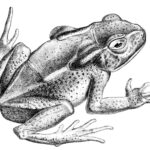
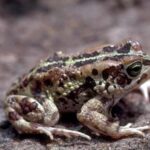
The Robinson’s Toad is a relatively small amphibian, typically measuring between 40 and 60 millimeters in length. With a robust body, short limbs, and a rounded snout, its appearance reflects a lifestyle predominantly spent on solid ground rather than agilely leaping between tree branches or lily pads.
Coloration as Defense#
A mix of earthy tones covers its warty skin, ranging from grey and olive to sandy brown or reddish hues. This natural coloration, perfectly matching its rocky habitat, serves as exceptional camouflage from predators—birds, larger mammals, and even snakes—in a landscape offering little shelter and few places to hide. Their eyes, large and expressive, are adorned with golden or coppery flecks, lending them an almost gemlike quality amid their frequently dusty environment.
Adaptations of a Harsh Environment Survivor#
Unlike species inhabiting humid climates, Robinson’s Toads exhibit particularly hardy skin, well-equipped to slow water evaporation significantly. Their rough, granular epidermis minimizes moisture loss, reducing vulnerability to dehydration. They also show unusual tolerance to temperature extremes, managing mild hydration loss and enduring days or weeks buried underground or beneath protective rock formations awaiting rainfall.
Behavior and Life Cycle: Battling the Elements#
The nocturnal and secretive nature of the Robinson’s Toad gives it a particular allure. Most active at night, they spend their evenings hunting under moonlit skies, feeding on insects and arthropods drawn out by cooler temperatures.
Dietary Habits and Predatory Techniques#
Vandijkophrynus robinsoni primarily feeds on beetles, ants, termites, and spiders abundant in their arid and semiarid environments. Equipped with a sticky tongue and excellent vision attuned to detect movement even in low light, they patiently await prey near rocky shelters and open terrestrial patches, quickly striking to secure their meal. With resourcefulness born of necessity, Robinson’s Toad exemplifies how even modest-sized predators significantly shape localized biodiversity and insect populations.
The Musicality of Courtship and Reproduction#
When heavy seasonal rains finally fall, igniting a brief abundance in these harsh landscapes, Robinson’s Toads emerge en masse, congregating around temporary water sources. Males broadcast their presence with deep, resonant croaks echoing into the darkness, showcasing a beautifully orchestrated mating ritual adapted perfectly to intermittent opportunities.
Each female lays hundreds of eggs, fertilized externally by the attending males. These fertilized eggs rapidly develop into tadpoles, whose urgent development is dictated by the transient nature of the available water. Metamorphosis is rapid, an essential adaptation as pools dry rather swiftly, urging juveniles to disperse quickly and begin their terrestrial lives before moisture disappears completely.
Ecological Role: Integral Threads in an Arid Tapestry#
The ecological roles played by amphibians, including Robinson’s Toad, extend deeply into food chains and environmental indicators. As predators, they control insect populations, regulating pests that could otherwise multiply dramatically and harm local vegetation and crops. Additionally, they serve as vital prey items themselves for larger predators, providing crucial nutrition within the food-web structure.
Equally significant, amphibians act as early indicators of environmental distress due to their permeable skin and sensitive life stages—signaling changes in ecosystem health before other species reveal distress. Changes in the Robinson’s Toad populations can offer essential clues about habitat shifts, climate stress, and human impacts long before bigger ecological tipping points appear.
Threats and Conservation Status: Facing the Future#
Currently, according to the International Union for Conservation of Nature (IUCN), Robinson’s Toad holds the status of Least Concern, thanks to its relatively wide distribution and local abundance. Yet this does not imply immunity from looming threats.
Environmental Stresses and Habitat Degradation#
Habitat destruction arising from agricultural expansion, increased herbicide and pesticide usage, and human-driven settlements poses significant risks to this resilient toad. Climate change patterns also threaten to disturb their delicate synchronization with seasonal rains, possibly reducing reproductive success and altering their readiness for drought.
Conservation Efforts in Place#
Local and international amphibian conservation programs increasingly recognize the need to preserve harsh yet fragile ecosystems hosting unique species like Robinson’s Toad. Targeted research, habitat monitoring, and environmental education initiatives seek to build awareness around their ecological importance, conservation challenges, and the resilience lessons these amphibians offer in the face of climate volatility.
Cultural and Scientific Significance: A Hidden Gem of Arid Ecosystems#
Though often overlooked because of their elusive lifestyle and subtle beauty, amphibians in arid environments, such as the Robinson’s Toad, attract increasing scientific interest for the specialized adaptations they have evolved. Researchers studying water conservation biology, drought response, and habitat adaptations draw invaluable insights from this species, insights potentially applicable to broader ecological, agricultural, and climate resilience contexts.
Culturally, the Robinson’s Toad remains relatively unknown, overshadowed by charismatic megafauna like elephants, lions, and giraffes. However, their inclusion in biodiversity storytelling and local environmental education deepens public comprehension of intricate ecological threads sustaining entire ecosystems—even those seemingly harsh or barren at first glance.
Conclusion: Preserving a Unique Amphibian Legacy#
The Robinson’s Toad, with its quiet adaptations and resilient nature, indeed symbolizes the resourcefulness and beauty of amphibious life thriving in challenging habitats. While its place within our climate-stressed world becomes ever more pertinent, protecting Vandijkophrynus robinsoni emerges as an essential reminder and responsibility for all who cherish wildlife and wild places. By elevating this remarkable amphibian into public awareness, we foster appreciation and action supporting ecological health, ultimately protecting the ultimately essential yet extraordinary lifeforms that quietly share our planet.