- Unveiling the Secrets of Strauchbufo raddei: The Intriguing Asian Toad of the East
- Taxonomy and Classification: Understanding the Amphibian Lineage
- Natural Habitat: The Amphibian Steppes of the East
- Physical Characteristics: A Masterpiece of Subtle Adaptation
- Behavior and Life Cycle: Existence in Harmony with the Elements
- Ecological Role: Amphibians as Indicators and Regulators
- Threats and Conservation Challenges
- Cultural and Scientific Recognition
- Conclusion: Honoring a Quiet Survivor
Unveiling the Secrets of Strauchbufo raddei: The Intriguing Asian Toad of the East#
In the hidden corners of Eastern Asia, amidst grassy steppe regions, lush mountain landscapes, and temperate forests lies an understated creature whose life unfolds quietly yet profoundly beneath the human radar: Strauchbufo raddei, commonly known as the Mongolian or Radde’s toad. On the surface, it may seem an ordinary amphibian, familiar in appearance to anyone who’s wandered through fields and wetlands. Yet, beyond the mere toad lies a story rich in ecological significance, unique adaptations, and delicate symbiotic relationships. This seemingly modest amphibian tells a tale of survival, adaptation, and ecological balance, revealing a world that thrives quietly beneath the hum of human civilization.
Named after the Russian naturalist Gustav Radde, who first described the species scientifically in the mid-19th century, Strauchbufo raddei inhabits parts of Mongolia, China, Korea, and Russia’s Far East. It thrives under conditions many amphibians find inhospitable, providing valuable insights into ecological resilience. Before we journey deeper into its world, let’s pause to admire an often overlooked fact: this amphibian displays a quiet yet astonishing ability to adapt to diverse and often harsh habitats—a feat worthy of respect, study, and conservation.
Taxonomy and Classification: Understanding the Amphibian Lineage#
To fully appreciate Strauchbufo raddei’s evolutionary journey, it’s integral to understand its taxonomy. Categorized within the family Bufonidae—the true toads—Strauchbufo raddei enjoys familial relations with many robust, adaptable, and intriguing amphibians globally recognized for their resilient natures and specialized skin toxins.
Initially classified under the broader genus Bufo, taxonomic reevaluation placed it into the newly-formed genus Strauchbufo, created to better encompass its unique biological and genetic characteristics. This classification not only accentuates its uniqueness among amphibians but also underscores its specialized adaptations and distinct lineage. Closely related species in its genus share common morphological and ecological traits, signifying a fascinating evolutionary branching crucial for understanding biodiversity and speciation in East Asian amphibians.
Natural Habitat: The Amphibian Steppes of the East#
Imagine vast expanses of grassy steppes stretching as far as the eye can see, punctuated occasionally by rocky outcrops, sparse shrubs, and small ponds or streams that glisten under the pale morning sun. In these habitats, where the terrain ranges from arid plains to montane grasslands and forest edges, Strauchbufo raddei emerges each season, navigating a landscape both beautiful and treacherous.
Geographic Range and Distribution#
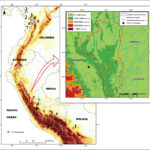
The Mongolian toad inhabits a diverse yet specific geographic range across Eastern Asia. It spans vast areas of Mongolia’s dry steppe regions, crosses into China’s northeastern provinces like Inner Mongolia and Heilongjiang, then reaches Russia’s Siberian outskirts and extends into parts of the Korean Peninsula. Its ability to thrive in such varied locations tells a story of adaptability few amphibians can match.
Preferred Habitats and Environmental Adaptations#
The habitats Strauchbufo raddei prefers aren’t the lush rainforests most associate with amphibians. It prefers temperate grasslands, semi-arid steppes, forest edges, riverbanks, and even modified habitats such as agricultural fields and suburban areas. Blessed with the capabilities to survive fluctuating temperatures and varying moisture levels, these toads remain hidden beneath stones, logs, and leaf litter during the day, emerging at dusk to roam their territories and forage for food. Their rich pigmentation and warty skin patterns perfectly match the mosaic patterns of rocky grasslands, providing superb camouflage against predators and prey alike.
Physical Characteristics: A Masterpiece of Subtle Adaptation#
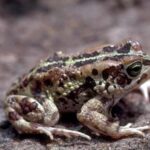
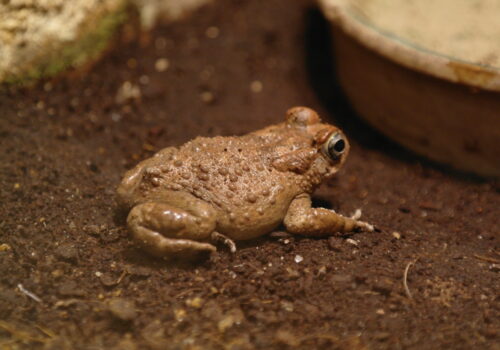
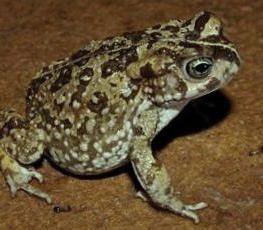
At first glance, Strauchbufo raddei resembles the typical toad that children chase during summer evenings. However, upon closer inspection, one begins to appreciate the subtle complexities of its evolutionary adaptations. Mature individuals typically average between 5 to 9 centimeters—a modest size that belies their hardiness.
Coloration and Camouflage#
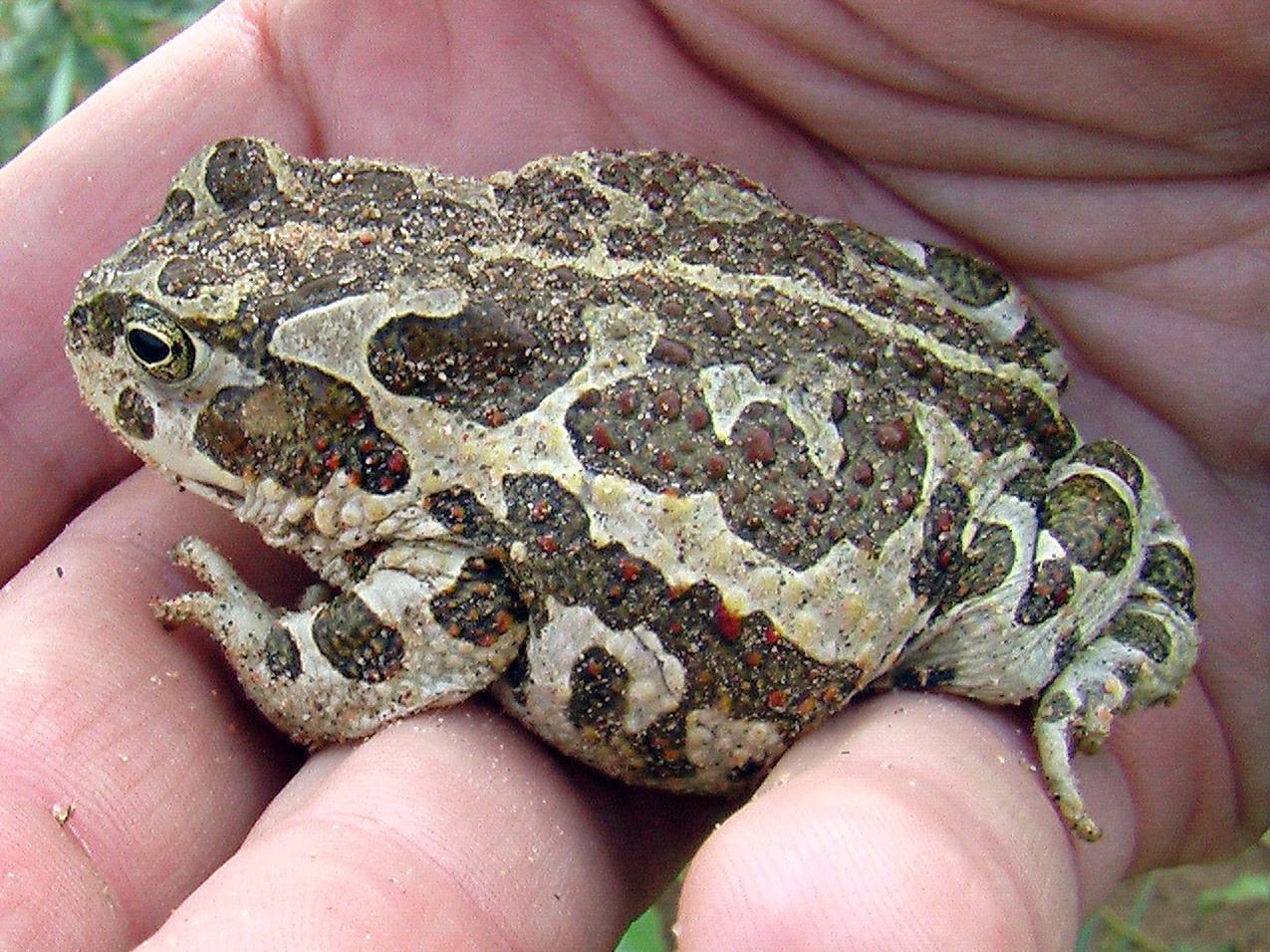
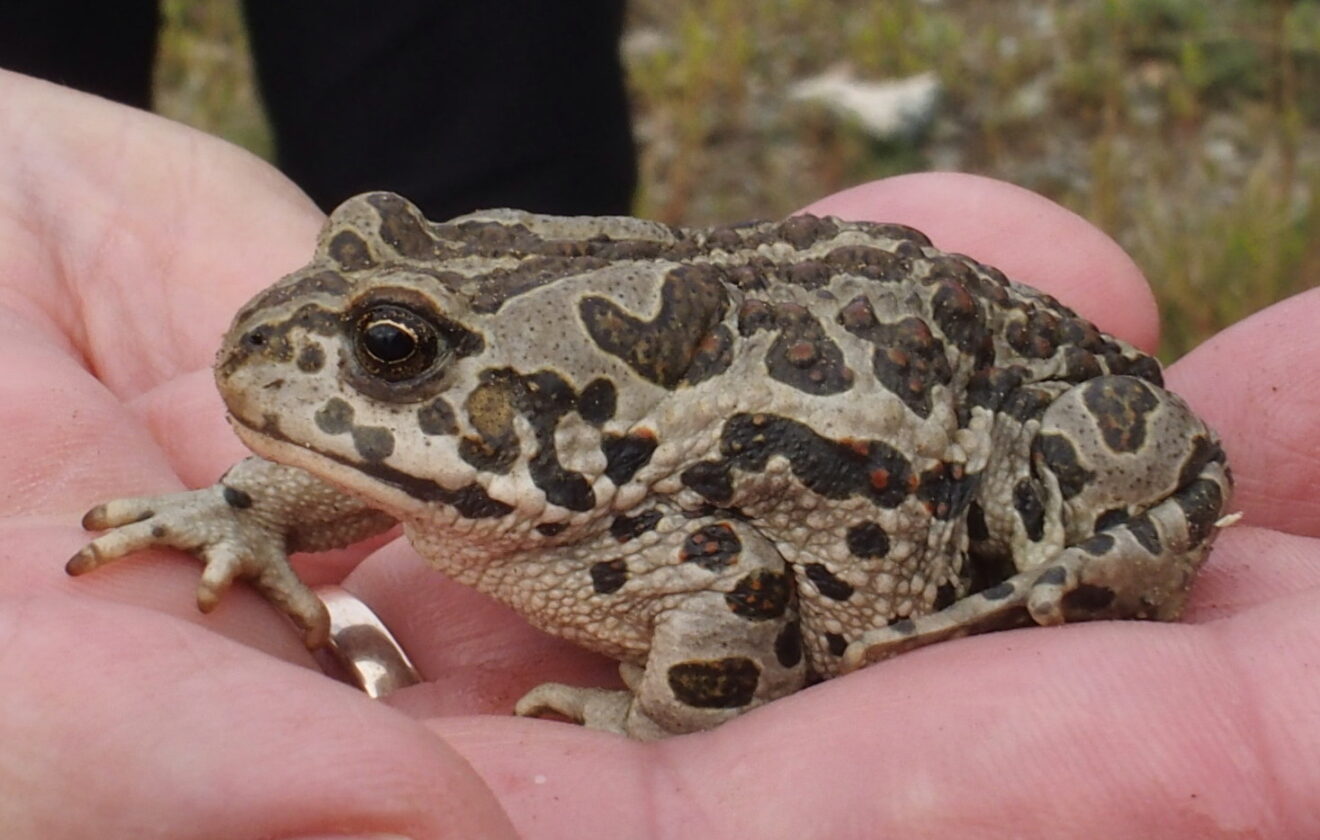
The body coloration of Strauchbufo raddei varies from shades of olive and grey-green to mottled brown, often peppered with darker splotches. These shades effortlessly blend with their steppe environment, combining earth tones and gentle patterns that mimic shadows cast by tufts of grasses and small stones. Such efficient camouflage protects this species from aerial predators like birds of prey and terrestrial threats like snakes and mammals.
Skin and Defensive Adaptations#
A defining feature of the Mongolian toad is the characteristic rough, warty texture of its dorsal surfaces—a crucial adaptation far more elaborate than it first appears. These warts aren’t merely bumps but glands that secrete defensive chemical compounds. When threatened, these toads secrete a mildly toxic substance, deterring potential predators and adding an extra layer of defense in their struggle for survival. Their underside, by contrast, is smoother and pale grey or beige, allowing them to absorb moisture and breathe partially through their skin.
Behavior and Life Cycle: Existence in Harmony with the Elements#
The rhythms of daily life for Strauchbufo raddei are intricately tied to environmental cues. Stepping from their daytime shelters as the sun sets behind distant hillsides, the twilight-hued steppe becomes their hunting ground and mating arena.
Feeding and Hunting Patterns#
Predominantly insectivores, these amphibians act as nocturnal hunters, consuming a variety of invertebrates including beetles, flies, moths, and ants. Their hunting method is a patient ambush, utilizing their cryptic coloration to blend seamlessly into their surroundings and strike quickly using their sticky tongues. This behavior not only exemplifies evolutionary efficiency but also helps control insect populations, providing vital ecological services, especially in agricultural settings.
An Enchanting Courtship: Mating and Reproduction#
Spring transforms their usual quiet habitats into vibrant symphonies, filled with the soft yet persistent chorus of mating calls. Strauchbufo raddei males gather around shallow pools, ponds, or slow-moving streams, their throaty croaking announcing readiness to breed. Females select prospective mates based on the vigor of these calls, embarking on a brief, fascinating courtship ritual that culminates in spawning thousands of jelly-like eggs into the shallow waters.
Once laid, these eggs undergo rapid metamorphosis, hatching into tadpoles within days, who hurriedly feed, grow, and transition into adult toads over the ensuing months. Remarkably adaptable, the developmental timeline adjusts to match the harshness or bounty of the season—a testament to their adaptability and resilience.
Ecological Role: Amphibians as Indicators and Regulators#
Serving not only as predators helping control invertebrate populations, Strauchbufo raddei plays a crucial role in their ecosystems as prey for larger organisms—forming a critical part of the food web. Amphibians like these are often ecological indicators, their population status providing early warnings of environmental degradation, pollution, or climate anomalies.
Due to their semi-permeable skin and dependence on aquatic habitats for breeding, these toads quickly respond to chemical pollutants or habitat disturbances, their presence or absence signaling broader ecosystem health. Thus, maintaining robust populations directly contributes to both regional biodiversity and the stability of the ecosystems they inhabit.
Threats and Conservation Challenges#
Despite its adaptability, Strauchbufo raddei faces threats primarily derived from human activities. Habitat transformation, pollution from agricultural pesticides, and accelerated climate change pose existential risks. While yet considered a “Least Concern” species by the IUCN Red List due to their relatively wide distribution, localized declines have been recorded, particularly in areas undergoing intensive agriculture, infrastructure expansions, and industrial activities.
Concerted conservation initiatives are imperative, focusing on habitat preservation, pollution regulations, monitoring systems, and environmental education to safeguard the continuity and healthy populations of Radde’s toad.
Cultural and Scientific Recognition#
Though modest and relatively obscure to general public awareness, Strauchbufo raddei has featured occasionally in eastern folklore, symbolizing resilience and adaptability. Scientifically, its genetics and adaptations provide opportunities for biomedical research, ecological monitoring, and conservation science, cementing its value beyond mere regional prominence.
Conclusion: Honoring a Quiet Survivor#
Strauchbufo raddei, the Mongolian toad, exemplifies ecological resilience, evolutionary adaptation, and subtle beauty. Each night, beneath starlit steppes and shadowed forests, they quietly persist—living indicators of environmental health, ambassadors of biodiversity, and essential partners toward understanding ecosystems and biodiversity conservation. As stewards of the natural world, appreciating the delicate yet vibrant stories of species like Strauchbufo raddei enhances our own story, reminding us of the complex interconnectedness of life.
Let us take inspiration and action, supporting habitats near and far, ensuring the chorus of Radde’s toad continues resonating across the lands it calls home, through generations yet to come.