Cochranella euknemos: The Enchanting Glass Frog of the Rainforest Canopy#
High in the lush cloud forests of Central America, where the mist weaves through emerald leaves and sunlight dances on damp foliage, lives an enigmatic amphibian whose slender, translucent form seems plucked straight from a fantasy tale—the Cochranella euknemos. Often referred to as one of the “glass frogs,” this diminutive creature mesmerizes observers not just with its delicate, almost ethereal appearance but with its remarkable biological adaptations, intricate ecological relationships, and fascinating behaviors.
Scientifically named Cochranella euknemos, this tiny amphibian is an ideal ambassador for rainforest biodiversity. As with many creatures inhabiting the dense vegetation of tropical forests, the survival and continued prosperity of this species depend on the delicate balance and health of its unique habitat. Delving into the life of Cochranella euknemos opens insight into broader concepts of conservation, ecological health, and species interconnectivity.
Taxonomy and Classification#
Belonging to the family Centrolenidae, Cochranella euknemos stands among numerous other glass frog species—remarkable amphibians noted for their translucent ventral skin. Within this family, the genus Cochranella comprises frogs known for their arboreal and streamside lifestyles. While its classification has occasionally been subject to scientific rearrangements as genetic research progresses, C. euknemos remains clearly situated within a compelling lineage of Central and South American amphibians.
Commonly called the San Jose Cochran frog or the Nicaragua glass frog, Cochranella euknemos shares its taxonomic journey with several closely related glass frogs—each subtly differentiated by unique vocalizations, pigmentation, and geographic distribution. Genetic sequencing and detailed ecological field studies continue to help researchers understand the nuanced evolutionary relationships within these frogs, further illuminating the evolutionary history of Central America’s amphibian diversity.
Natural Habitat#
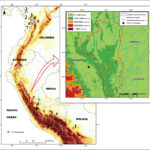
The captivating Cochranella euknemos thrives under the dense, damp canopy of montane and premontane rainforest habitats. Found predominantly across Nicaragua, Costa Rica, Panama, and northern Colombia, these frogs dwell in areas of perpetual humidity, where clouds gather around mountainous slopes and rivers form a vital part of the forest ecosystem.
At elevations ranging from about 300 to 1,500 meters above sea level, the ideal home for this glass frog is characterized by heavy rainfall, moderate temperatures, and abundant vegetation along crystal-clear streams. Perched delicately on wet leaves and twigs, the frogs find shelter from predators and optimal locations for breeding and feeding activities. The continuous dripping of water from the dense vegetation canopy sets the rhythmic backdrop against which these frogs live their discreet, yet profoundly interconnected lives.
Adaptations to an Arboreal Lifestyle#
Thriving in a treetop world requires special adaptations. The long fingers and toes of Cochranella euknemos are crowned with adhesive disks, allowing them to dexterously navigate slick leaf surfaces and delicate branches high above the forest floor. This arboreal mastery confers both hunting advantages, such as stalking their insect prey shallowly hidden among leaves, and protective measures, allowing the frog to retreat rapidly from predators.
Physical Characteristics#
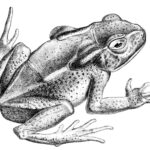
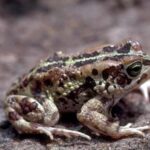
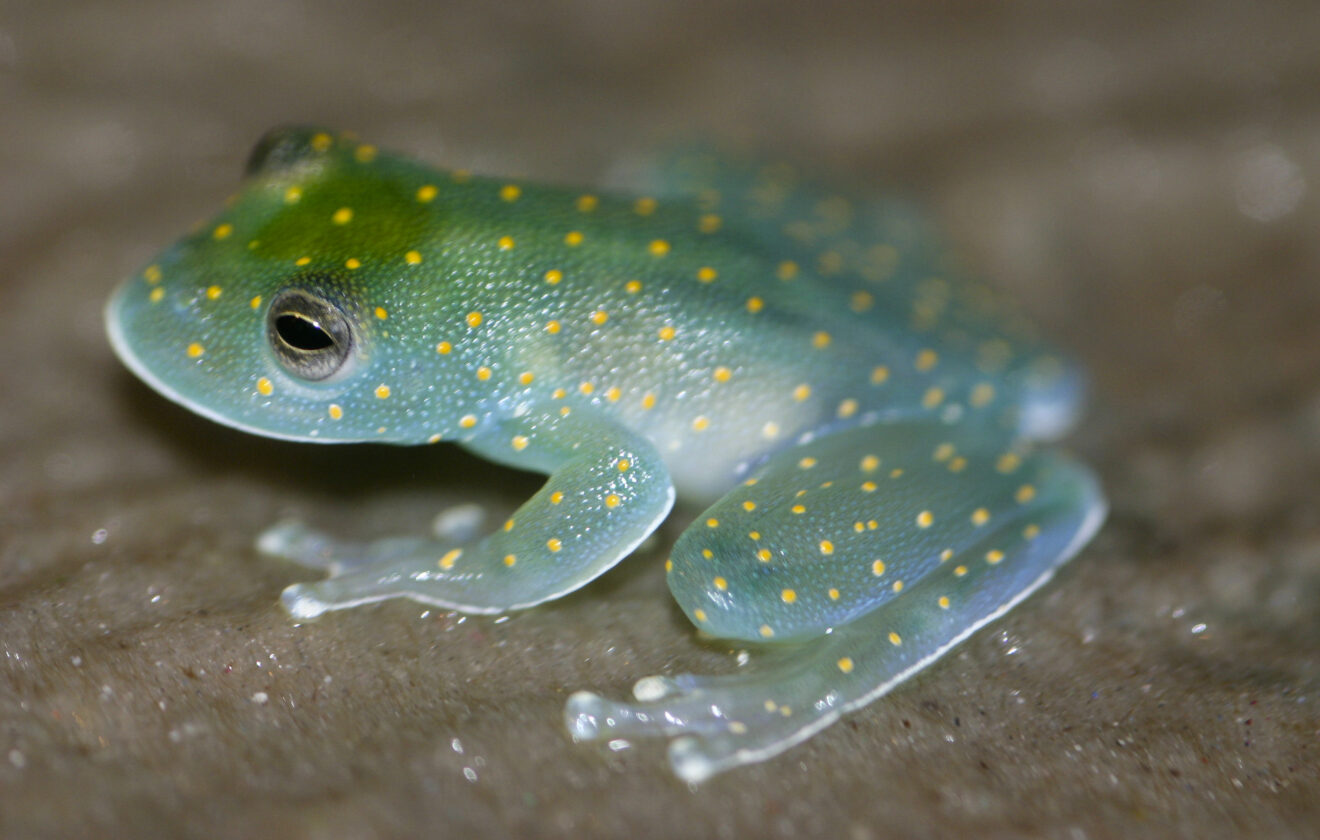
The immediate charm of Cochranella euknemos comes from its extraordinary appearance—its partially transparent body renders internal organs visible, captivating observers lucky enough to encounter this tiny amphibian. Adult frogs typically measure between 20 and 30 millimeters in length, roughly the size of a thumb’s joint, making them among nature’s more diminutive and delicate amphibians.
Its dorsal skin—beautiful shades of emerald green or lime—provides perfect camouflage when nestled against glistening leaves, blending seamlessly with rainforest surroundings and avoiding detection by predators. Notably, the ventral surface, including muscles, bones, and internal organs, frequently possesses varying degrees of stunning translucence. This near-magical adaptation offers Cochranella euknemos an unparalleled form of disguise, disrupting predators’ visual perceptions by blurring depth perception and silhouette outlines.
An Evolutionary Advantage: Transparency#
The exact evolutionary advantage of transparency is a captivating question for biologists. Some theories suggest transparency reduces shadow casting beneath the frog, making it difficult for both predators and prey to detect movement. Others hypothesize it helps frogs reflect ambient vegetation colors, adopting a passive form of camouflage. Either way, clear or semi-transparent skin remains a remarkable example of evolutionary creativity in natural selection, perfectly illustrated by Cochranella euknemos.
Behavior and Life Cycle#
Life among the humid greenery requires an orchestra of carefully choreographed activities from Cochranella euknemos. When night falls upon the rainforest, the males begin serenading, their delicate calls emanating melodiously through darkness to attract potential mates. These whistles and chirps, each unique to the species and recognizable to receptive females, set the stage for fascinating and refined courtship rituals.
Mating Rituals and Parental Care#
Once a partner is attracted, mating usually follows quickly in the rainforest canopy adjacent to freshwater streams. Females deposit strings of eggs directly overhanging flowing waters, carefully attached to the undersides of leaves. Strung delicately, resembling beads of pearls in moonlight, these eggs undergo development suspended high above the dangerous pools of predatory fish and insect larvae lurking below.
Here, Cochranella euknemos parents exhibit remarkable parental behaviors, especially the males. In contrast to many amphibians laying their eggs and leaving their offspring to fate, many glass frogs—including C. euknemos—show vigilant parental care. Male frogs frequently guard egg clutches, protecting them from predators and frequently engaging in intricate behaviors like hydrating eggs with frequent ministrations of water droplets. When the larvae reach sufficient maturity, they drop gracefully into the stream below, where they begin their aquatic life stage and complete development into juvenile frogs.
Ecological Role#
Every creature in the rainforest plays its distinct role in maintaining biodiversity and ecosystem balance, and Cochranella euknemos is by no means an exception. Due to their insectivorous diet, composed primarily of ants, beetles, flies, and moths, glass frogs play vital roles in controlling insect populations, indirectly supporting plant life and reducing pest species.
Simultaneously, glass frogs also serve as an important prey source. Snakes, birds, and a variety of insectivorous mammals all incorporate these small amphibians into their diet. Their health and population stability thus speak directly to forest ecosystem wellbeing, making glass frogs an excellent indicator species signaling ecological disturbances or changes, often preceding more extensive ecosystem effects.
Threats and Conservation Status#
Though captivating and adaptable within their microhabitats, Cochranella euknemos faces growing threats from human activities, climate change, and habitat destruction. Expanding agriculture, deforestation for urban development, and clear-cutting for timber extraction continually diminish existing rainforest habitats, fragmenting populations, and reducing genetic diversity.
Additionally, climate change imposes new stressors, altering rainfall patterns and temperature ranges within these delicate habitats. Amphibians, famously sensitive to environmental fluctuations due to permeable skin and delicate balance needs, are especially vulnerable. Cochranella euknemos, currently classified by the IUCN Red List as Least Concern due to widespread distribution, faces escalating threats in many parts of its range, presenting increasing urgency for coordinated conservation actions.
Cultural and Scientific Significance#
The enchanting image of a Cochranella euknemos perched like a tiny emerald jewel on a rainforest leaf has become an iconic symbol of tropical biodiversity and conservation. It’s often used in outreach campaigns to attract international attention toward rainforest preservation efforts.
Scientifically, glass frogs such as Cochranella euknemos offer valuable insights into amphibian adaptations, ecosystem health monitoring, and even biomedical research. Studies examining their translucent skin and internal organ visibility open intriguing possibilities for understanding organ function, developmental biology, and environmental toxicity impacts.
Protecting an Amphibian Jewel#
Cochranella euknemos embodies a deeply interconnected web of biology, ecology, and conservation necessity. By understanding this remarkable species—not just as an isolated animal but as part of a complex ecological tapestry—readers, nature lovers, and conservationists alike can become active participants in preserving the fragile but magnificent world of the rainforest canopy. Each effort made to safeguard this glass frog’s environment resonates through countless living connections within the delicate ecosystem. Such is not merely about the conservation of one small frog, but about preserving the astonishing diversity and wonder of life itself.