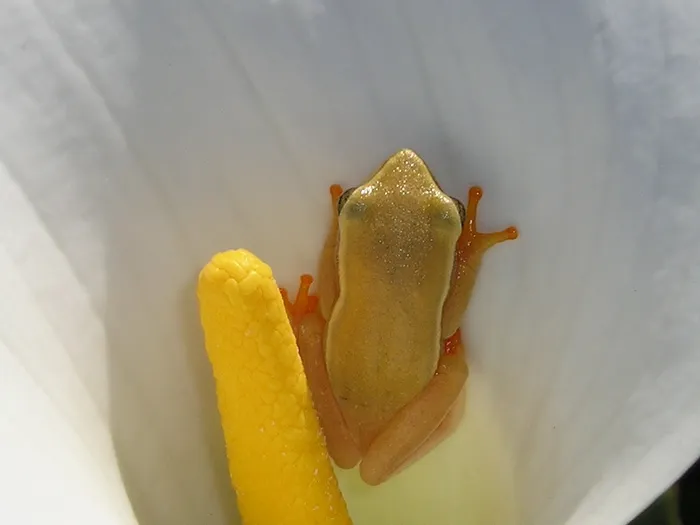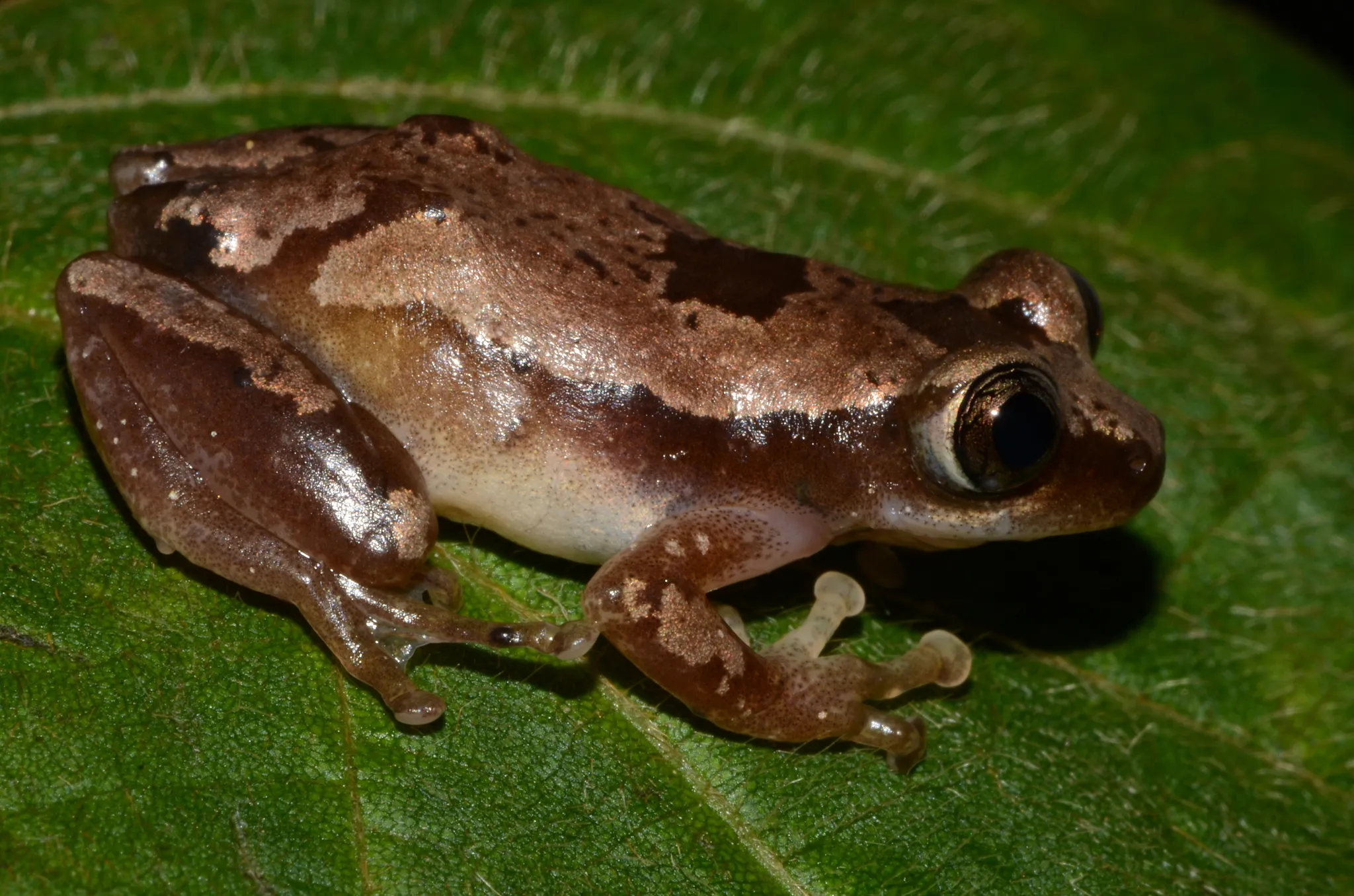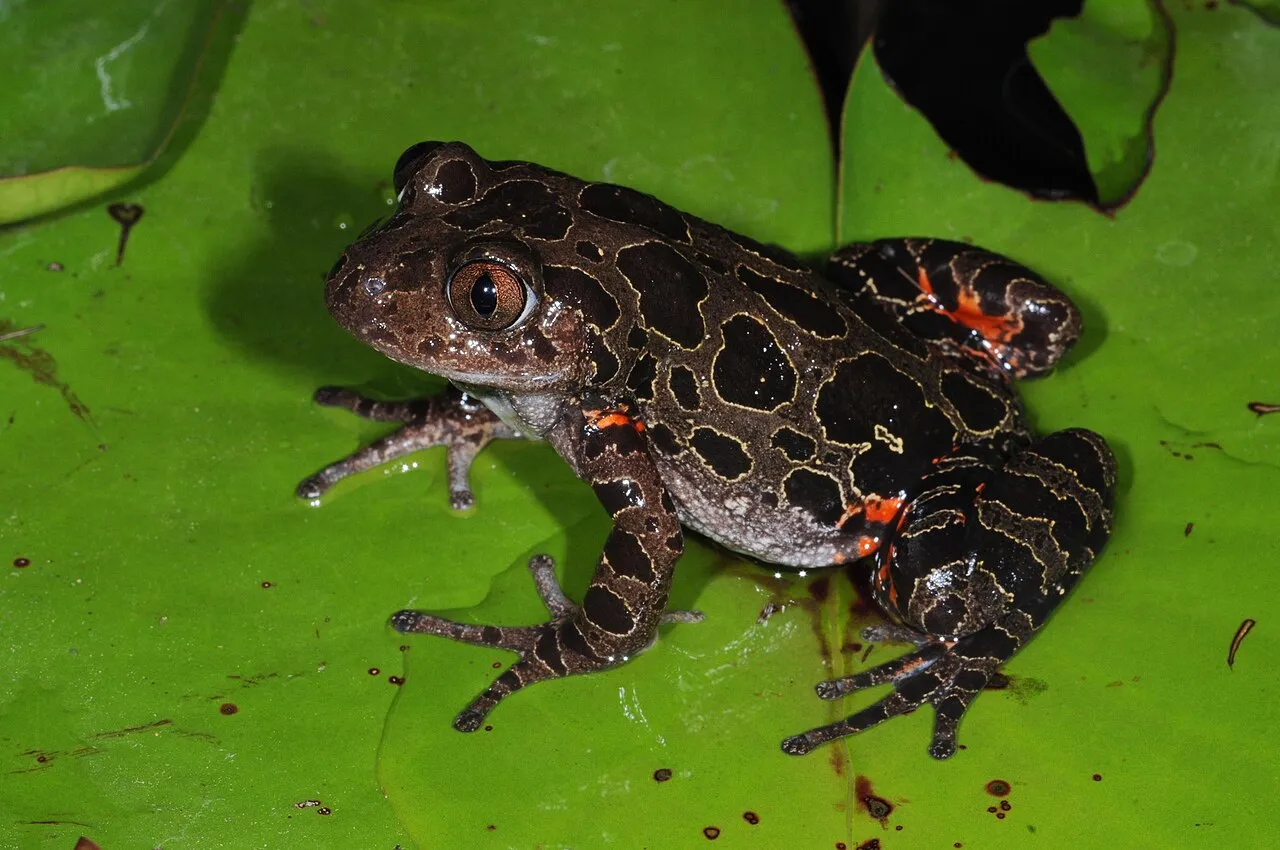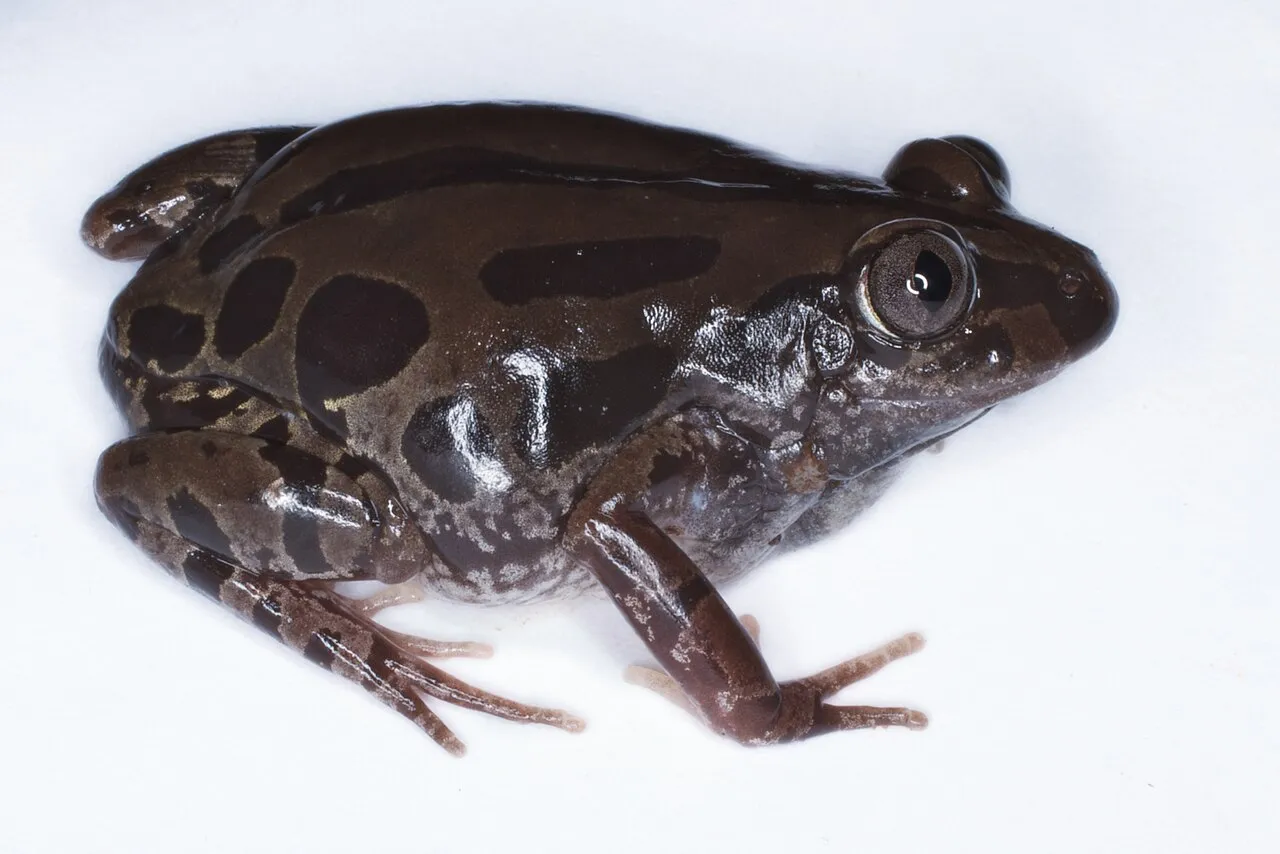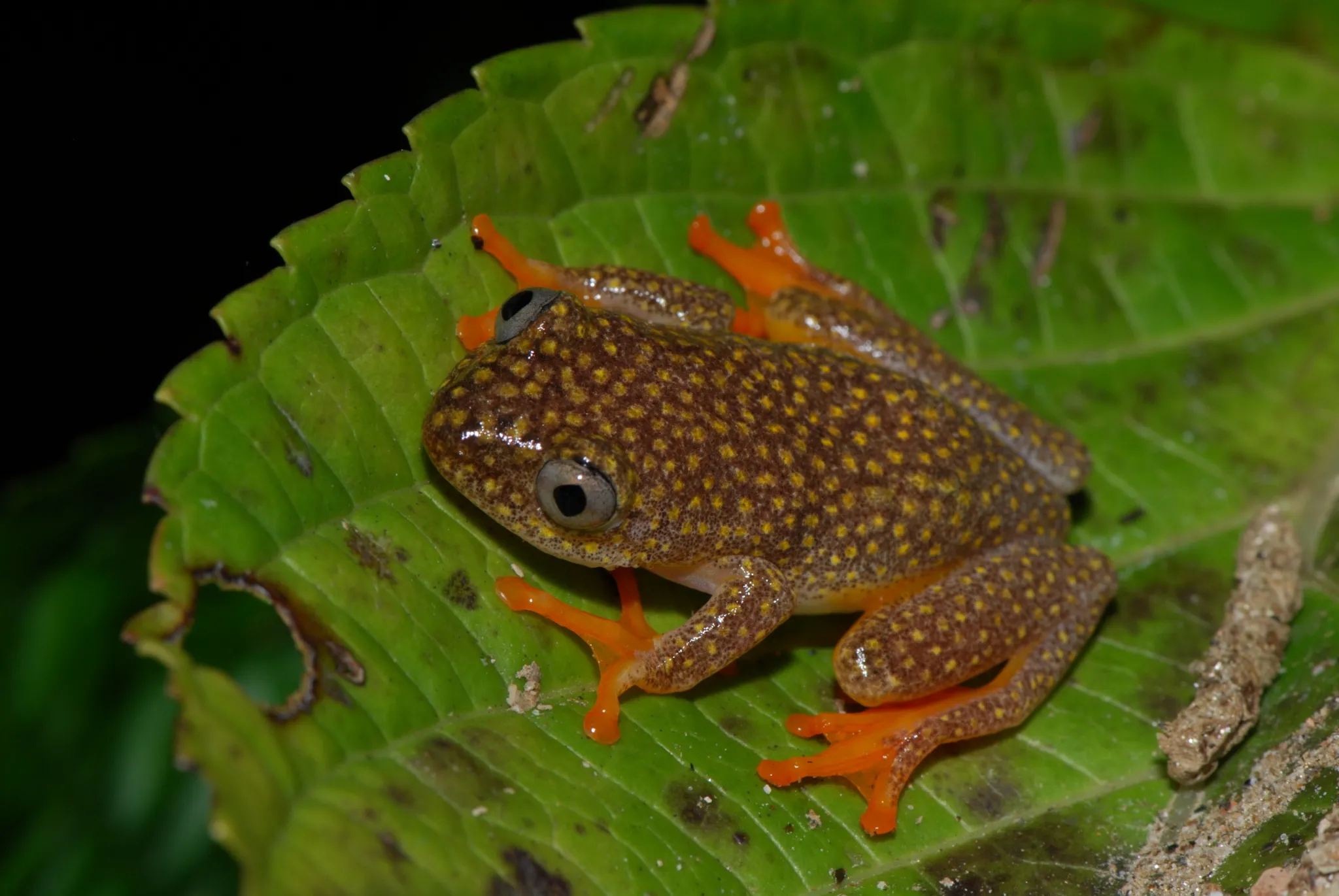
Hyperolius viridiflavus, the common reed frog, is a small treefrog of the family Hyperoliidae1. It occupies ponds and lakes from northwestern Ethiopia through Southern Sudan to western Kenya, Rwanda, Uganda, Burundi, northwestern Tanzania and the northeastern Democratic Republic of the Congo. Its genome paper describes a superspecies complex of approximately 150 taxa3, recognized species and subspecies with unclear taxonomic standing, and the taxonomy of the group has been the subject of much debate2.
Identification
This is a small to medium frog with an average mass of 2 g and a body length of 15 to 30 mm, depending on the subspecies. Males are slightly smaller than females2.
This frog shows considerable polymorphism in color pattern. Taxa in the complex are exceptionally brightly colored compared with other Hyperolius, in reds, greens, yellows, blacks, whites and browns, with spots, splotches, stripes, and “immaculate” forms. Subspecies range from solid light green in H. v. mwanzae2 to light brown in H. v. pantherinus and brightly spotted and striped in H. v. tauniatus. The Ethiopian H. v. viridiflavus is yellow-green with red flash points3.
The sexes are also colored or patterned differently. Adult females carry Phase F, a highly variable pattern with several distinct morphs, while mature males frequently remain in the juvenile phase (Phase J)2, brownish to green with paired light dorsolateral lines.
Other features are horizontal pupils, extensive webbing of the feet, a brief snout and a very large gular flap. Males have a large dilatable vocal sac. All subspecies show a subdermal dark bluish lateral streak2, which is sometimes difficult to see on heavily pigmented flanks.
Habitat and range
It lives in the tropical African savanna, among emerging vegetation in savanna, grasslands, and at the margins of forests, lakes, rivers and swamps, where it may live in high densities. It also lives on cultivated land and gardens. It ranges from low altitudes to 2,400 m in Ethiopia2; the frog sequenced for its genome was collected in a pond overgrown with high reeds near Jimma, Ethiopia, at 2,216 m3.
Beyond the core range, the species is possibly found in the Central African Republic, Chad, and Eritrea1.
Behaviour and breeding
Breeding takes place during the wet season and typically lasts several months. Males move to shallow ponds and form calling choruses to attract mates, and they hold an individual calling site through intense and prolonged combat. The call is melodic, like a xylophone2; females cannot make sounds.
Females approach males and initiate amplexus, and the eggs are laid on vegetation under the water in ponds, lakes and slow-moving streams. A clutch averages 330 eggs, and a female produces a new clutch every 10 to 20 days during the season. Eggs hatch two to five days after laying, and tadpoles take eight weeks to metamorphose. Adults eat insects, including flies in the genera Drosophila, Musca and others; the tadpoles of H. v. nitidulus eat algae2.
This reed frog has been shown to experience protogyny, or female-to-male sex change, in the laboratory, and the new males were able to fertilize the eggs of females2. This sex change has only been noted once and in a captive colony1.
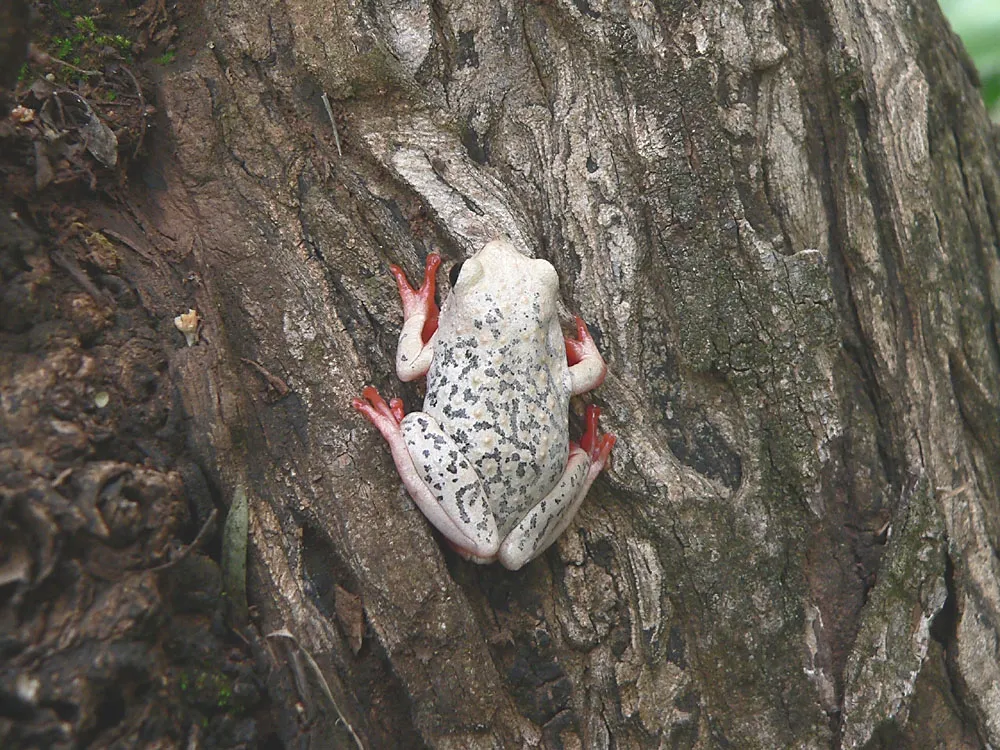
Adults are semelparous, but may breed multiple times in their one breeding season. An account last updated in 2011 states that no adults had been documented surviving the annual, harsh dry season. Only juveniles get through it: they aestivate on dry vegetation in exposed positions instead of burrowing, and do not move, eat, urinate or defecate. In that season the skin turns white because of built-up purine crystals. Fluid held in the bladder can be used when water becomes unavailable1. Adults can also regenerate fully functional digits after amputation2.
Conservation
The common reed frog is listed as Least Concern4 on the IUCN Red List (2022.2). An account last updated in 20112 gave its very wide distribution and tolerance of a broad range of habitats as the reasons for its IUCN listing, and judged that it likely had a large population with no significant threats. The same account found it occasionally in the international pet trade, but not at a level high enough to threaten it.
Similar species
- Hyperolius viridiflavus destefanii, an Ethiopian member of the complex, is blue-green with blue flash points rather than yellow-green with red ones, and has a narrow distribution within the rift valley3.
- The arum lily frog, Hyperolius horstockii, is endemic to South Africa, far south of this species’ range, and adults grow larger, to 40 mm in length5.